You just got two quotes from two contractors, and the prices are miles apart. One says house washing. The other says power washing. You are left wondering what is going on, and that confusion can cost you real money or even damage your siding.
At Bay Softwash, house washing uses low-pressure water and gentle cleaning solutions to safely clean siding and other delicate surfaces. Power washing uses hot, high-pressure water to remove stubborn dirt and stains from tough surfaces like concrete and brick.
What Is House Washing?
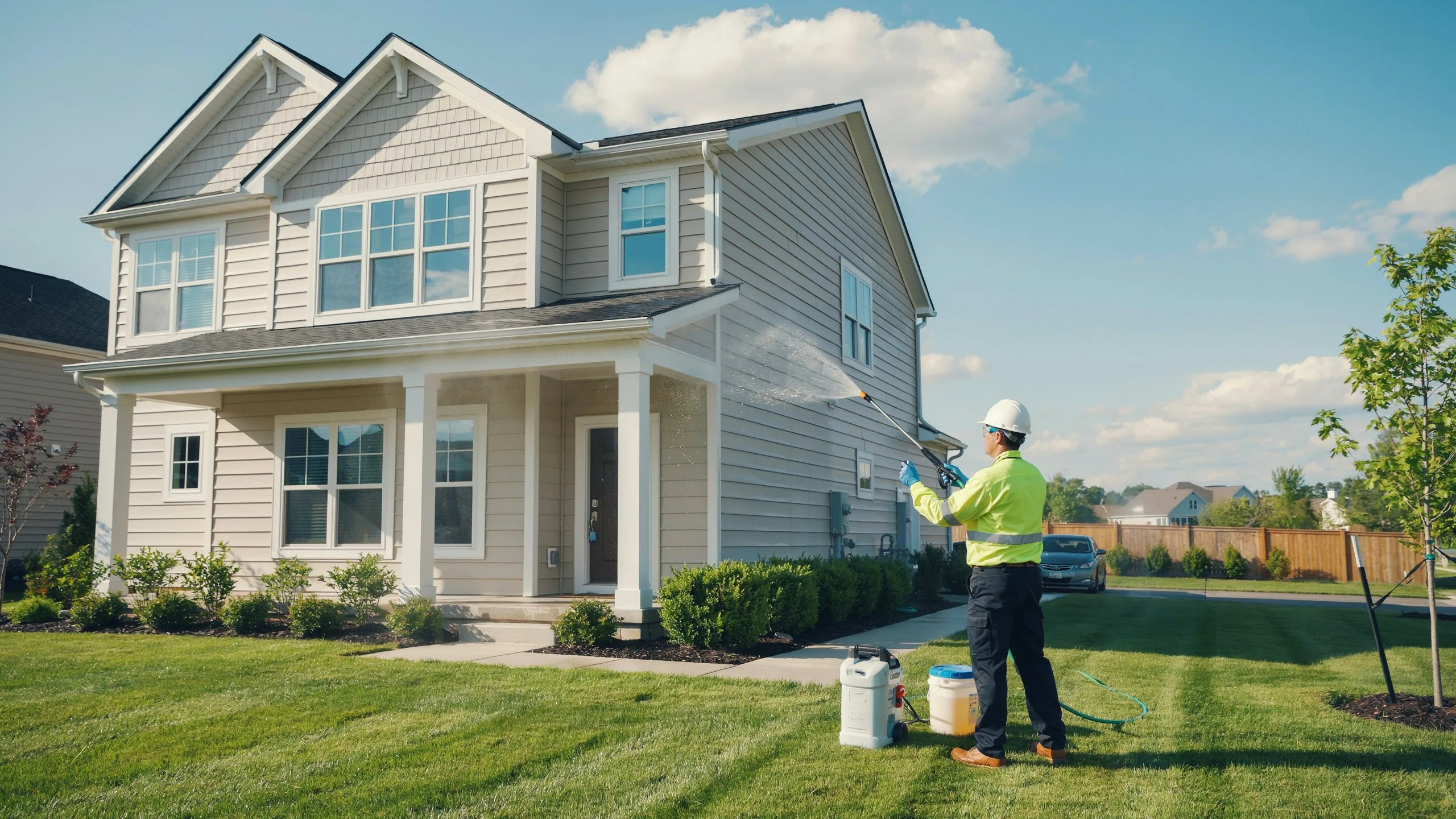
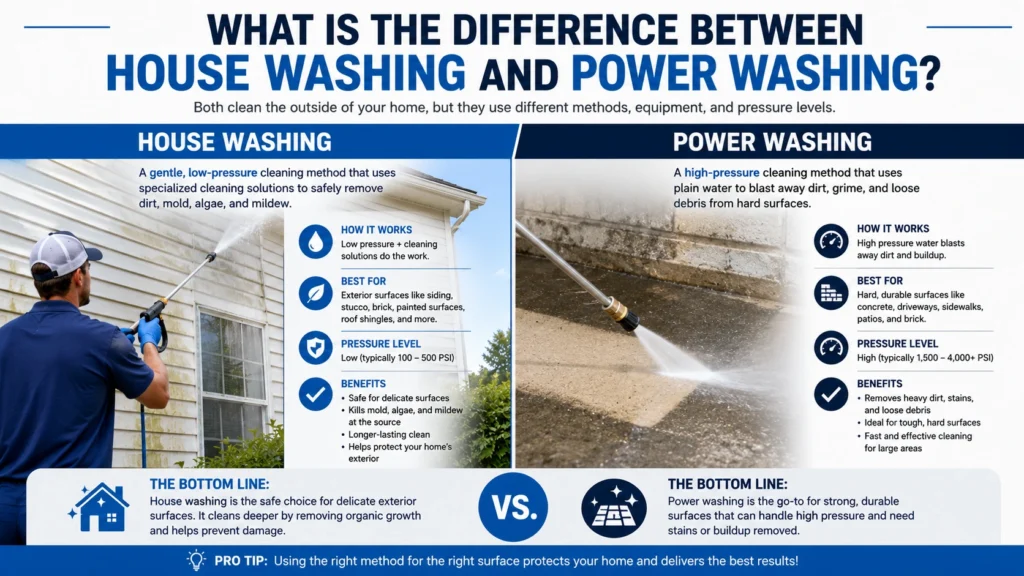
House washing is a gentle cleaning method built for your home’s exterior. It uses low water pressure, usually under 500 PSI, mixed with cleaning solutions that break down algae, mold, and dirt. The solution does the hard work. The water just rinses it away.
This method protects vinyl siding, painted wood, stucco, and other soft surfaces from cracks or dents. A pressure washer set too high can strip paint, crack siding, or force water behind panels. That kind of damage is expensive to fix.
Most homeowners search for house washing services in north bay when they notice black streaks, green algae, or dusty buildup on their siding. At Bay Softwash, we use a soft washing process that cleans deep without putting your home at risk. This approach is also called exterior house cleaning, since it covers siding, trim, gutters, and other outdoor surfaces in one visit.
House washing works best for yearly maintenance. It keeps mold from spreading and stops dirt from eating into your paint over time.
What Is Power Washing?
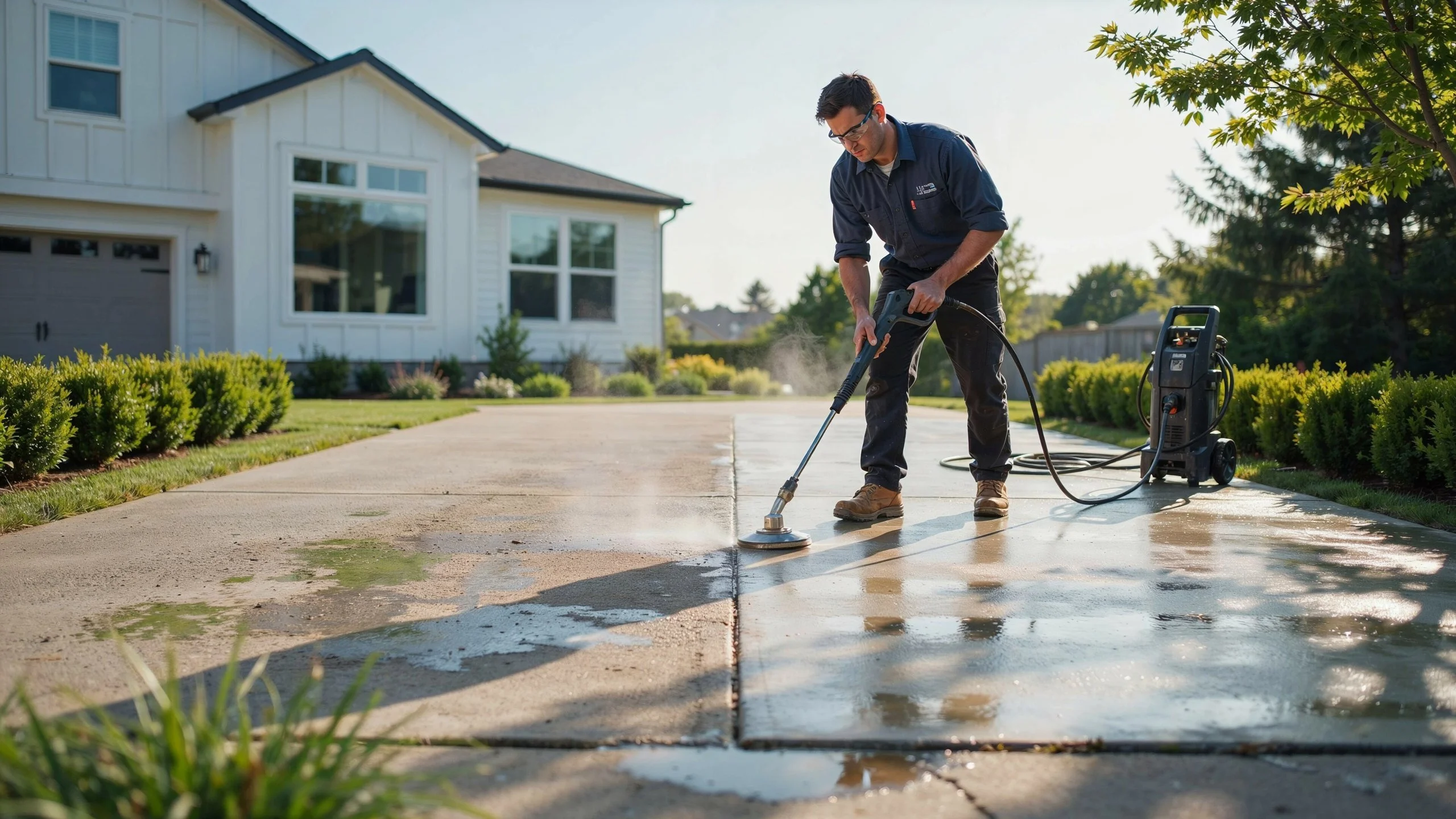
Power washing uses hot water under high pressure, often between 1,500 and 4,000 PSI. The heat combined with force strips away grease, gum, mildew, and years of built-up grime. This method shines on hard, tough surfaces that can handle strong water pressure.
Think driveways, sidewalks, brick walls, and concrete patios. Power washing also works well on decks before staining, since it strips old finish and opens the wood grain. The hot water cuts through oil stains and sticky residue that cold water alone cannot touch.
Power washing is not gentle. Used on the wrong surface, it can gouge wood, chip paint, or push water into cracks it should not reach. That is why knowing when to use it matters as much as knowing how.
House Washing vs. Power Washing: Key Differences
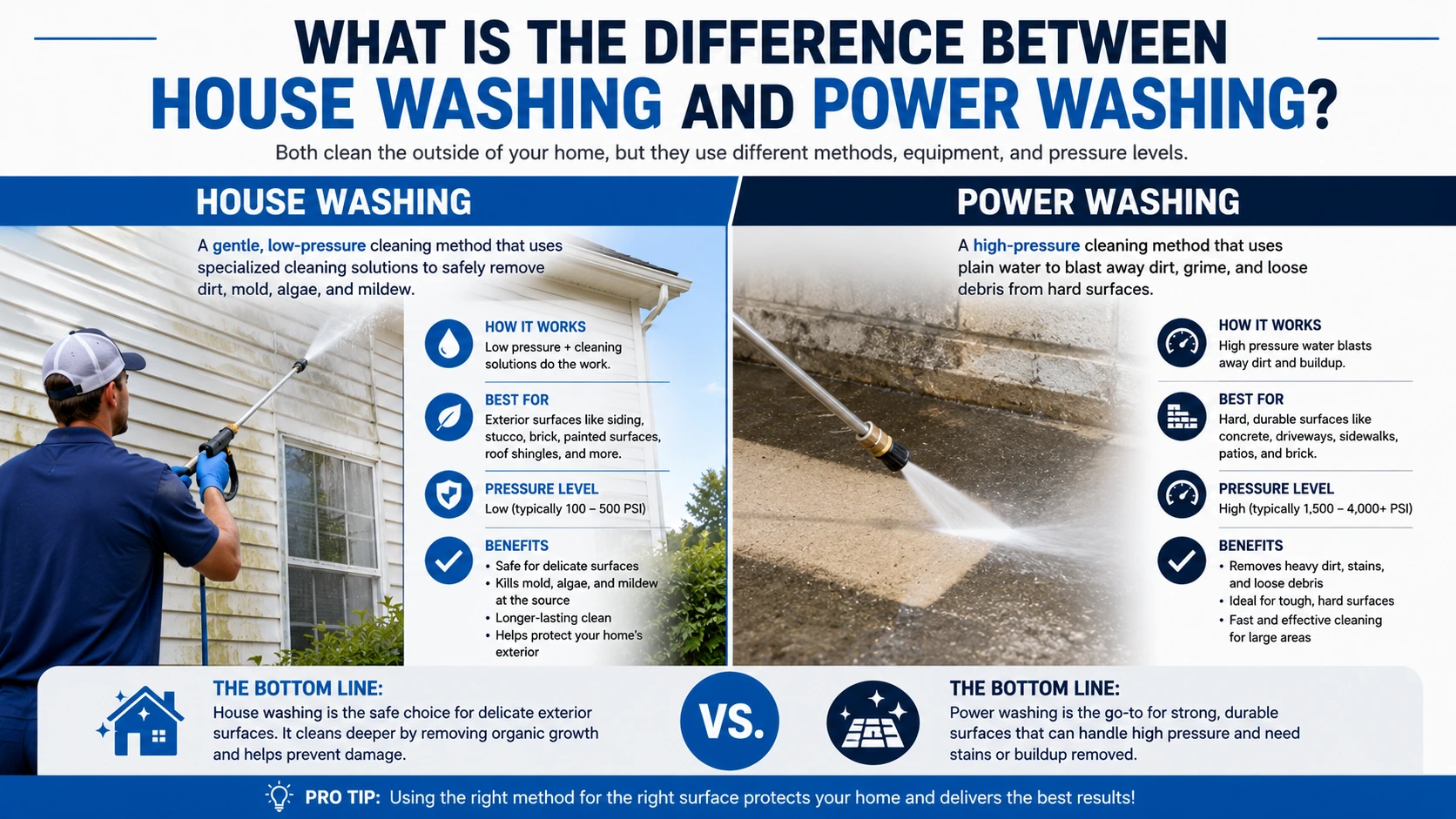
Here is where the difference between house washing and power washing gets clear. House washing relies on chemistry and low pressure. Power washing relies on heat and high pressure.
- Pressure level: House washing stays under 500 PSI. Power washing can reach 4,000 PSI.
- Water temperature: House washing uses cold or room temperature water. Power washing uses heated water.
- Best surfaces: House washing suits siding, stucco, and painted wood. Power washing suits concrete, brick, and stone.
- Cleaning method: House washing depends on soft washing services and cleaning agents. Power washing depends on mechanical force.
- Risk level: House washing is low risk for delicate materials. Power washing can damage soft surfaces if used carelessly.
Many homeowners search pressure washing vs power washing thinking they are separate things. They are actually close cousins. Pressure washing is the general term for washing with pressurized water. Power washing is pressure washing with heat added. House washing sits apart from both, since it trades pressure for cleaning solution.
Which Surfaces Should Be House Washed?
Not every surface can handle a blast of high pressure water. Some materials need a lighter touch to stay in good shape.
- Vinyl siding
- Painted wood siding and trim
- Stucco and EIFS exteriors
- Window screens and frames
- Outdoor light fixtures
- Aluminum siding
- Roof shingles, when done by a trained crew using low pressure
These surfaces are common in most homes, which is why residential pressure washing companies often start every job by checking what the exterior is made of. Guessing wrong can mean a costly repair bill later.
Benefits of House Washing
House washing does more than make your home look clean. It protects your investment in ways that are easy to overlook.
It stops mold and algae early. Left alone, algae eats into paint and siding over months. Regular house washing keeps that growth from taking hold.
It extends the life of your paint job. Dirt and grime trap moisture against your siding. That moisture speeds up peeling and fading. Washing it off regularly slows that process down.
It boosts curb appeal fast. A clean exterior makes your whole property look cared for, which matters if you plan to sell or just want to enjoy your home more.
It is safer for your family and pets. The cleaning solutions used in soft washing services are designed to rinse clean and break down safely, unlike leftover residue from harsh scrubbing.
It saves money over time. Catching mold and dirt early is far cheaper than repainting or replacing damaged siding.
Benefits of Power Washing
Power washing earns its place for the tough jobs house washing cannot handle.
It removes stubborn stains. Oil spots on driveways, gum on sidewalks, and grease near garages need heat and pressure to lift completely.
It preps surfaces for new coatings. Before sealing a deck or staining a fence, power washing strips old finish so the new coat sticks properly.
It clears heavy buildup fast. Years of moss on a patio or grime packed into brick joints often need the extra force power washing provides.
It works on large hard surfaces efficiently. Driveways, parking pads, and walkways cover a lot of ground, and power washing clears them quickly without needing repeated passes.
How to Choose the Right Cleaning Method
Choosing between these two comes down to one question: what are you cleaning? If it is your siding, roof, or anything painted, house washing is the safer, smarter pick. If it is concrete, brick, or a surface built to handle force, power washing gets the job done faster.
This is really the heart of what is the difference between house washing and power washing. One protects delicate materials. The other tackles tough, durable surfaces. Mixing them up is where most homeowner mistakes happen.
A good contractor will walk your property first and tell you which method fits each area. Some jobs even need both. Your siding might get a soft wash while your driveway gets a full power wash on the same visit.
Common Mistakes to Avoid
Using high pressure on siding. This is the most common and costly mistake. It can force water behind panels, leading to mold growth you cannot see until it is a real problem.
Skipping the cleaning solution on algae-heavy siding. Plain water pressure alone will not kill mold spores. Without the right solution, algae grows back within weeks.
Hiring anyone with a pressure washer. Not every provider understands the difference between house washing and power washing. Ask what pressure and method they plan to use before they start.
Washing in direct sunlight. Cleaning solutions can dry too fast in the heat, leaving streaks. Early morning or late afternoon works better.
Ignoring window seals and outlets. Both washing methods need careful attention around these spots to avoid water intrusion.
Conclusion
Knowing what is the difference between house washing and power washing helps you avoid damage and wasted money. House washing protects your siding with low pressure and cleaning solutions built for soft surfaces. Power washing tackles concrete, brick, and stubborn stains with heat and force.
The right choice depends on the surface in front of you. When in doubt, let the professionals at Bay Softwash inspect your property and recommend the safest, most effective cleaning method for each area. Contact us today for a free estimate and expert exterior cleaning services.
FAQs
Is power washing bad for siding?
Yes, in most cases. The high pressure can crack panels, strip paint, or push water behind your siding. House washing is the safer option for most exterior walls.
Can I power wash my driveway myself?
You can, but renting equipment without experience often leads to uneven results or damage to grout lines and soft concrete. A residential pressure washing service knows the right pressure and angle for each surface.
How often should I get my house washed?
Most homes benefit from house washing once a year. Homes in shaded, humid areas with heavy algae growth may need it twice a year.
What is soft washing, and how is it different from house washing?
Soft washing and house washing are largely the same thing. Both use low pressure and cleaning solutions instead of force to clean exterior surfaces safely.
Does power washing remove mold permanently?
Not always. Power washing can blast mold off the surface, but without a proper cleaning solution, spores can return. Combining the right chemicals with the right pressure gets longer lasting results.