Concrete does not stay clean on its own. Sun, rain, oil drips, and years of foot traffic all leave their mark. The good news is that dull, stained concrete is fixable. This guide walks you through how to make concrete look new again using the same steps professionals use, without hiring anyone or spending a fortune.
You do not need a full replacement to fix tired concrete. In most cases, cleaning, repairing, and sealing bring back the look of a fresh pour. This guide covers every step, from checking damage to picking the right sealer.
Assess the Condition of the Concrete
Before you grab a hose or a scrub brush, take a walk around your slab. Look closely at the surface in daylight, since shadows hide small problems.
Check for these issues:
- Cracks. Hairline cracks are cosmetic. Cracks wider than a quarter inch may signal a deeper problem.
- Stains. Oil, rust, and algae stains all need different cleaning methods.
- Pitting and flaking. Small pits often come from de-icing salt or old age.
- Uneven settling. Sections that have sunk or lifted point to soil movement underneath.
Take photos of any damage. This helps you track your progress and decide if you need a contractor for structural issues instead of a weekend project. Most homeowners find that surface problems, not structural ones, are what make concrete look old, which is good news if your goal is to make concrete look new again without a full replacement.
Gather the Right Tools and Materials
Having the right supplies on hand before you start saves you back and forth trips to the hardware store. Here is a basic list:
- Stiff-bristle push broom
- Garden hose or pressure washer
- Concrete cleaner or degreaser
- Concrete crack filler or patching compound
- Trowel or putty knife
- Concrete sealer (acrylic, epoxy, or penetrating, depending on your needs)
- Paint roller or pump sprayer for sealer application
- Safety goggles and rubber gloves
A pressure washer speeds things up, but a hose and stiff brush work fine for smaller jobs. For a driveway with years of buildup, renting a pressure washer for a day is worth the cost.
Repair Surface Damage
Cleaning a cracked or pitted surface only gets you so far. Repairs come first, because dirt and grime settle deep into cracks and will resurface if you skip this step.
For small cracks:
- Clear out loose debris with a wire brush.
- Apply a concrete crack filler using a caulk gun.
- Smooth it flush with a putty knife.
- Let it cure based on the product label, usually 24 hours.
For larger cracks or holes:
- Widen the crack slightly with a chisel so the patch has room to bond.
- Mix a concrete patching compound according to the package directions.
- Pack it into the crack with a trowel.
- Smooth the surface and let it cure fully before walking on it.
For pitted or flaking areas, a concrete resurfacer works well. It is a thin cement-based coating that fills shallow damage and gives you an even base. This step is where real concrete restoration begins, since repairs restore structural integrity before any product touches the surface for looks.
Clean the Concrete Thoroughly
This is the step that makes the biggest visual difference. A clean surface alone can make old concrete look years younger.
Start by sweeping away loose dirt and leaves. Then wet the entire area with a hose. Apply a concrete cleaner or degreaser, working in small sections so it does not dry out before you scrub.
For general cleaning:
- Mix the cleaner as directed on the label.
- Spread it evenly with a push broom.
- Let it sit for the recommended time, usually 10 to 15 minutes.
- Scrub with a stiff-bristle broom, focusing on darker patches.
- Rinse thoroughly with a hose or pressure washer.
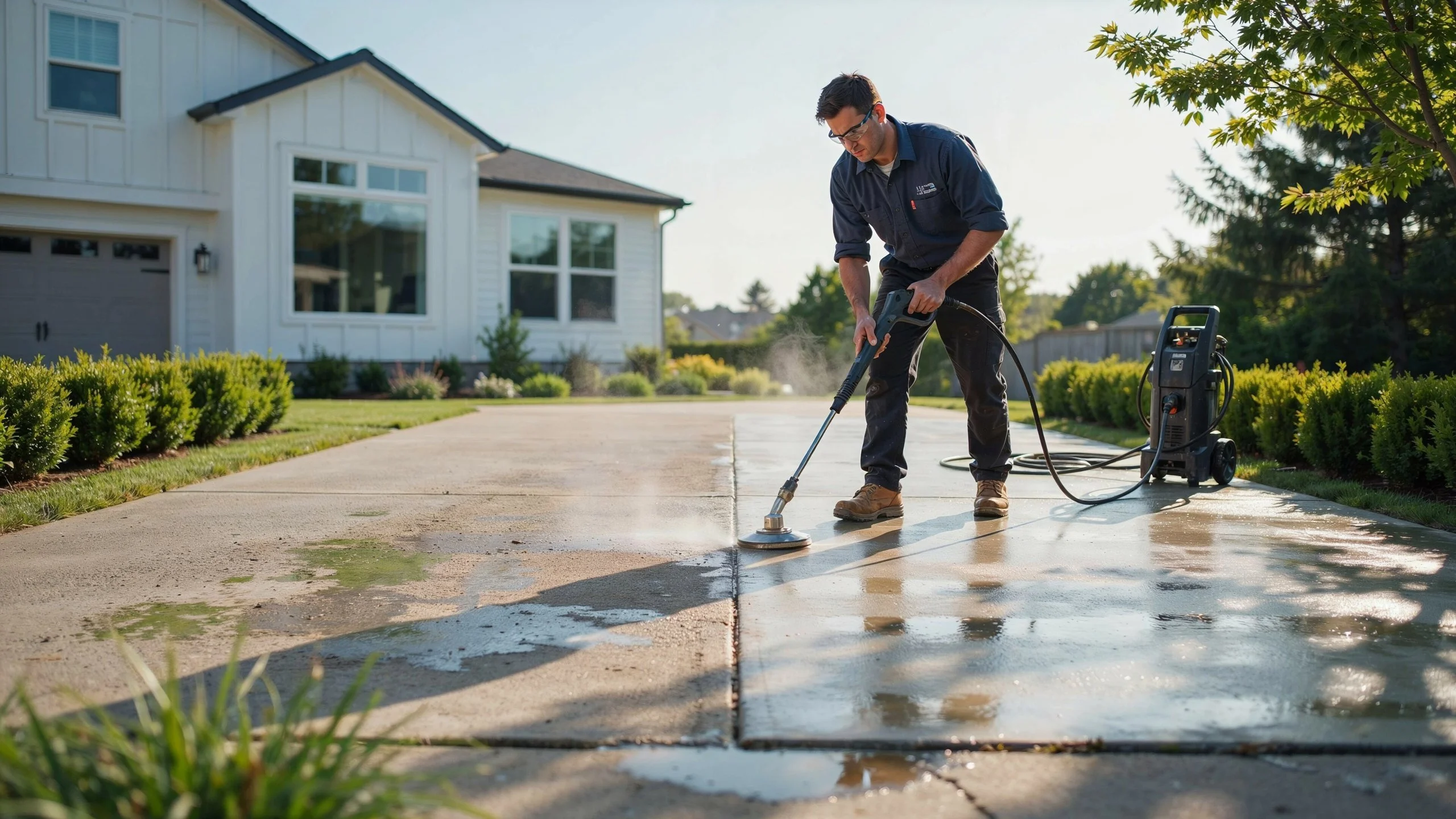
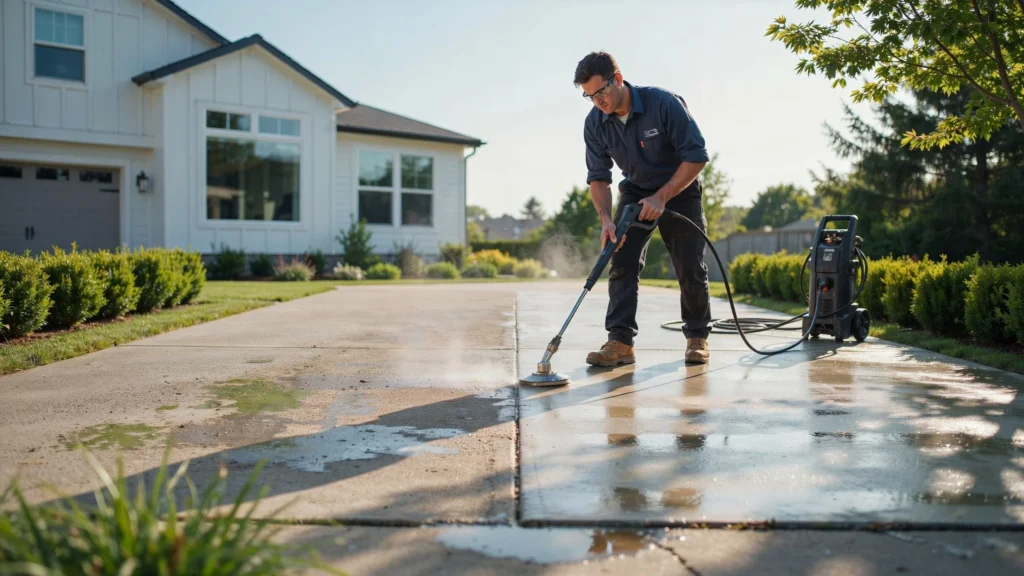
If you are searching for how to clean concrete on a driveway with years of tire marks and oil residue, use a wide fan tip and hold the nozzle 12 to 18 inches from the surface. Move in steady, overlapping strokes. Standing too close in one spot can etch the concrete.
If you are in the North Bay area, concrete cleaning services in north bay from Bay Softwash use soft washing techniques that lift grime, oil stains, and algae without damaging the surface. It saves you a weekend and gets a more even result than most DIY attempts, especially on large driveways or pool decks.
Remove Tough Stains
Some stains need more than a general cleaner. Here is how to handle the most common culprits.
Oil and grease stains: Cover the stain with baking soda or cat litter to absorb fresh oil. Once absorbed, scrub with a degreaser made for concrete. For old, set-in stains, a poultice made from baking soda and water left overnight often pulls the oil out.
Rust stains: Use a rust remover formulated for concrete, since regular cleaners will not touch rust. Apply, let it sit, then scrub and rinse.
Algae and mildew: A mix of water and oxygen bleach works well here. Avoid chlorine bleach on concrete near plants or grass, since it can kill vegetation and discolor the surface over time.
Paint splatters: A concrete-safe paint stripper or a plastic scraper removes small drips without damaging the slab underneath.
Always test any cleaner or stain remover on a small, hidden section first, since concrete color and porosity vary. This one habit protects your results as you work through how to make concrete look new again.
Seal the Concrete for Lasting Protection
Once the surface is clean and repaired, sealing locks in that fresh look and protects against future stains. This step is often skipped, but it is one of the most important parts of any plan to make concrete look new again, and it makes a real difference in how long your results last.
There are three main sealer types:
- Acrylic sealers are affordable, easy to apply, and give a light sheen. They work well for driveways and walkways.
- Epoxy sealers create a thick, durable coating, ideal for garage floors that see heavy use.
- Penetrating sealers soak into the concrete rather than sitting on top. They are the best concrete sealer choice for surfaces that need to stay slip-resistant, like pool decks.
Apply sealer with a roller or sprayer in thin, even coats. Most products need two coats, with a few hours of drying time between each. Keep foot and vehicle traffic off the surface for at least 24 to 48 hours after the final coat.
Ongoing Maintenance Tips
Once you know how to make concrete look new again, keeping it that way is easier than restoring it a second time. A little regular care goes a long way.
- Sweep debris weekly to prevent buildup and staining.
- Rinse off spills, especially oil and antifreeze, right away.
- Reseal every two to three years, depending on the sealer type and traffic level.
- Avoid de-icing salts in winter, since they cause pitting over time. Use sand for traction instead.
- Address small cracks as soon as you spot them, before water and freezing temperatures make them worse.
Concrete driveway cleaning on a regular basis, even a quick rinse every few weeks, prevents the kind of deep staining that requires heavy scrubbing later.
Common Mistakes to Avoid
A few missteps can undo your hard work fast.
- Skipping repairs before cleaning. Cracks trap dirt, and cleaning around them leaves the job half done.
- Using the wrong cleaner. Chlorine bleach can discolor concrete and harm nearby plants.
- Sealing wet concrete. Trapped moisture under a sealer causes cloudy patches and peeling.
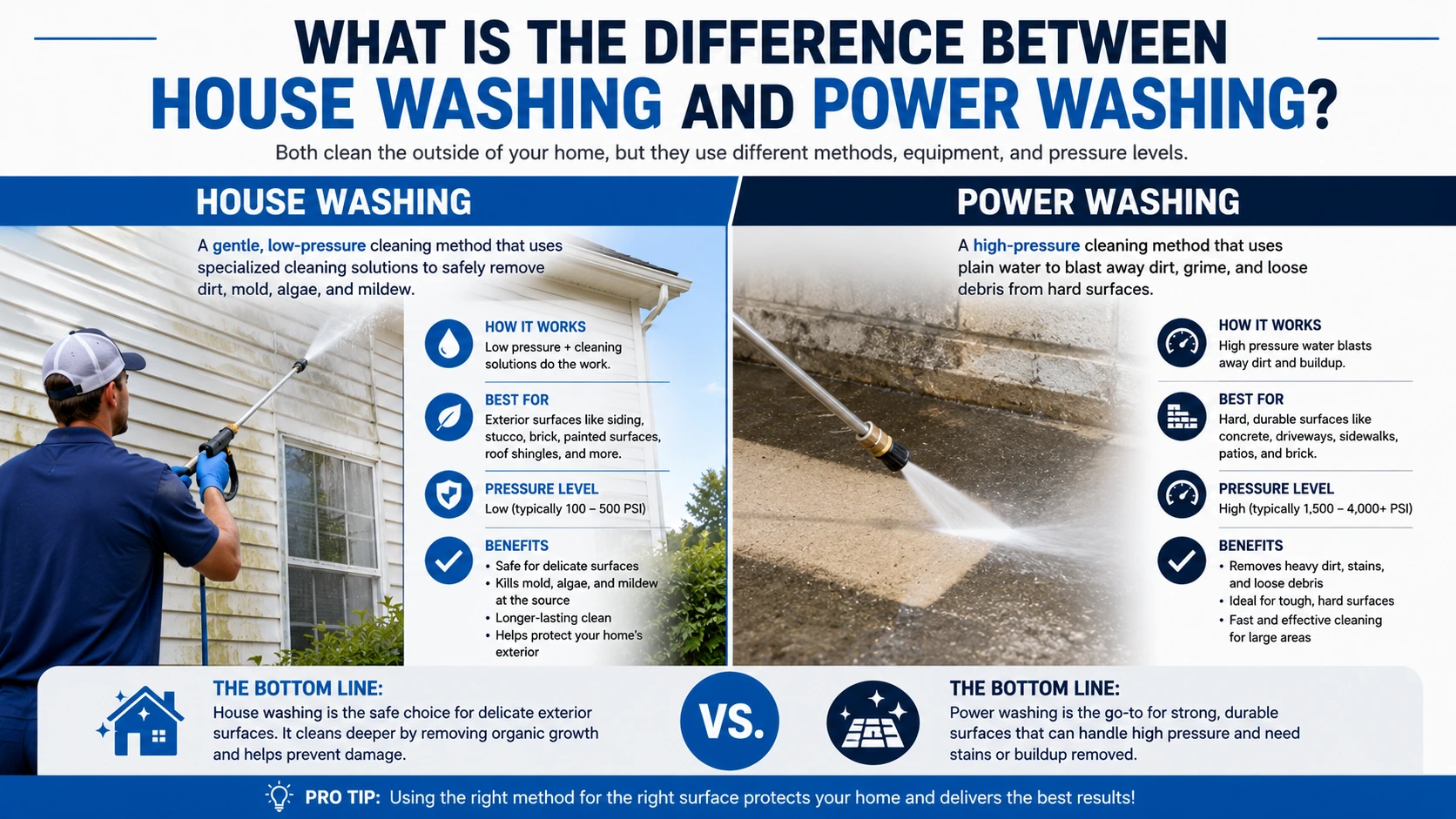
- Pressure washing too close. High pressure at a short distance can etch or gouge the surface.
- Ignoring the weather. Sealing in direct sun or high heat causes the product to dry too fast and bond poorly.
Avoiding these mistakes is often the real answer to how to make concrete look new again without wasted time or a redo.
Conclusion
Restoring old concrete is a project most homeowners can handle over a weekend. Start by checking for cracks and damage, then repair, clean, and seal in that order. Skipping steps or rushing the process is what leads to disappointing results.
Knowing how to make concrete look new again is simple. Clean it well, remove stubborn stains, and apply a quality sealer. With regular maintenance, your concrete will stay cleaner and last longer. Need professional help? Contact Bay Softwash today for expert concrete cleaning and restoration services.
FAQs
How often should I clean my concrete driveway?
A light sweep weekly and a full wash two to four times a year keeps most driveways looking fresh.
Can I use a pressure washer on all concrete surfaces?
Most concrete handles pressure washing well, but stamped or decorative concrete needs a lower setting to avoid damaging the texture.
What is the best concrete sealer for a driveway?
Acrylic sealers are the most common choice because they are affordable and easy to apply. For heavier traffic, a penetrating sealer offers more durable protection.
How long does concrete restoration take?
A basic cleaning and sealing project usually takes a weekend, including drying time. Larger repairs may add an extra day for curing.
Do I need to reseal every year?
No. Most sealers last two to three years before they need a fresh coat.
Is it better to hire a professional for concrete cleaning?
For large driveways, pool decks, or heavily stained surfaces, a professional service saves time and often delivers a more even result than DIY methods.