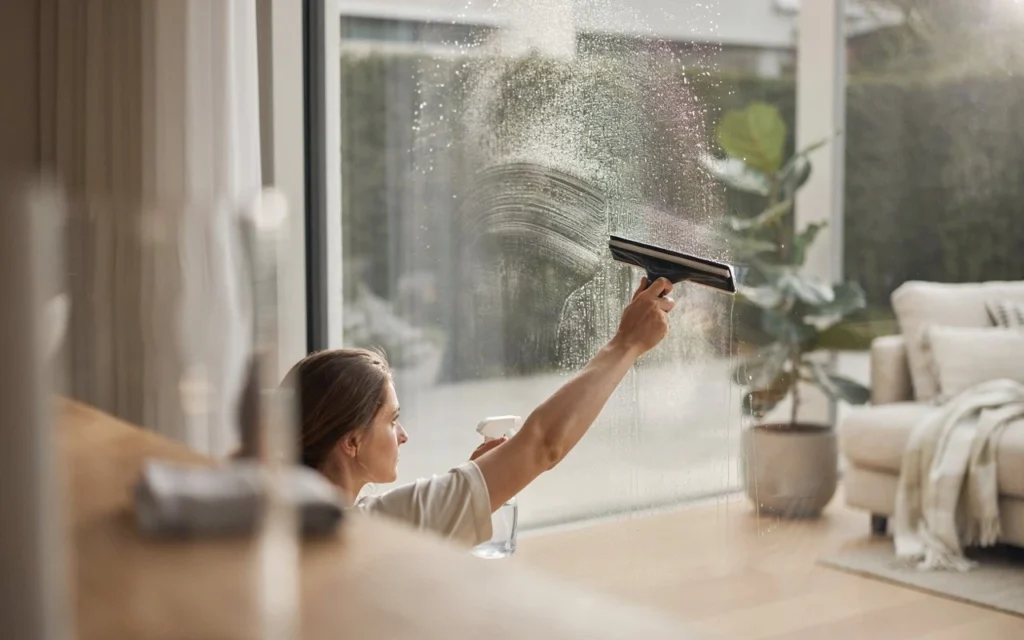
The best way to clean your windows is with a mix of dish soap and warm water, a soft squeegee, and a microfiber cloth for the edges. Work top to bottom, wipe the squeegee dry after each stroke, and clean on a cloudy day so the solution doesn’t dry too fast.
That’s the quick answer. But what is the best way to clean your windows if you want a truly streak-free finish every time? The right tools and techniques make all the difference. Keep reading as Bay Softwash shares the step-by-step method to help you achieve crystal-clear windows that stay cleaner for longer.
Why Regular Window Cleaning Matters
Clean windows do more than look nice. Dirt and grime block sunlight, which makes rooms feel darker and colder. Buildup on the glass can also trap moisture, which leads to mold around window frames over time.
Windows facing the street also affect how your home looks from the outside. A home with clear, bright windows feels more cared for, even if the rest of the exterior looks the same. Regular cleaning also helps you spot small problems early, like cracked seals or peeling caulk, before they turn into bigger repairs.
What Is the Best Way to Clean Your Windows?
So, what is the best way to clean your windows without leaving streaks or spots? The answer comes down to three things: the right solution, the right tools, and the right technique.
Skip the harsh chemical sprays. A simple mix of dish soap and warm water works just as well, if not better, and it won’t leave a chemical film behind. Use a squeegee instead of paper towels or newspaper. A squeegee pulls water off in one clean pass, while paper towels just push dirt around and leave lint behind.
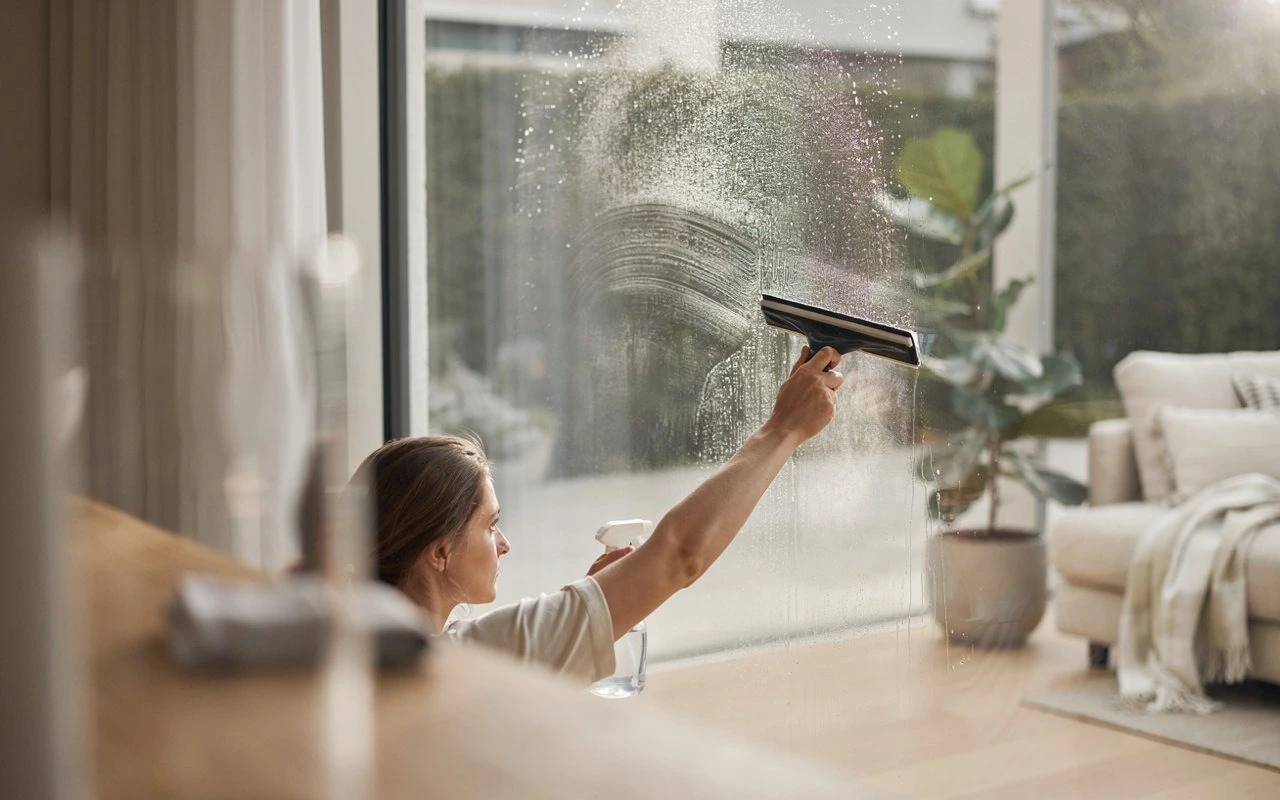
Technique matters as much as the product. Work in sections, use a figure-eight or straight-line motion, and always wipe your squeegee blade dry between strokes. This one small habit is often the biggest reason some people get streak-free windows and others don’t.
Factors That Affect Your Window Cleaning Results
A few things influence how clean your windows end up, no matter what method you use.
Weather. Cleaning windows in direct sun causes the solution to dry too fast, leaving streaks. Cloudy days or early mornings give you more time to wipe before it dries.
Water quality. Hard water leaves mineral spots on glass. If you have hard water, add a splash of vinegar to your solution or switch to distilled water for a final rinse.
Window type. Older single-pane windows scratch more easily than modern double-pane glass, so avoid abrasive scrubbers on older frames.
Buildup level. Windows that haven’t been cleaned in a while may need a first pass to loosen dirt before a second pass gets them truly clear.
Tools used. A worn-out squeegee blade or a dirty cloth can undo all your hard work, so replace them when they start leaving lines.
Step-by-Step Guide to Cleaning Windows
Here’s a simple process that works for most homes.
- Remove dust and loose dirt with a dry cloth or brush first.
- Mix a few drops of dish soap into a bucket of warm water.
- Dip a sponge or soft cloth into the mix and wash the glass in circular motions.
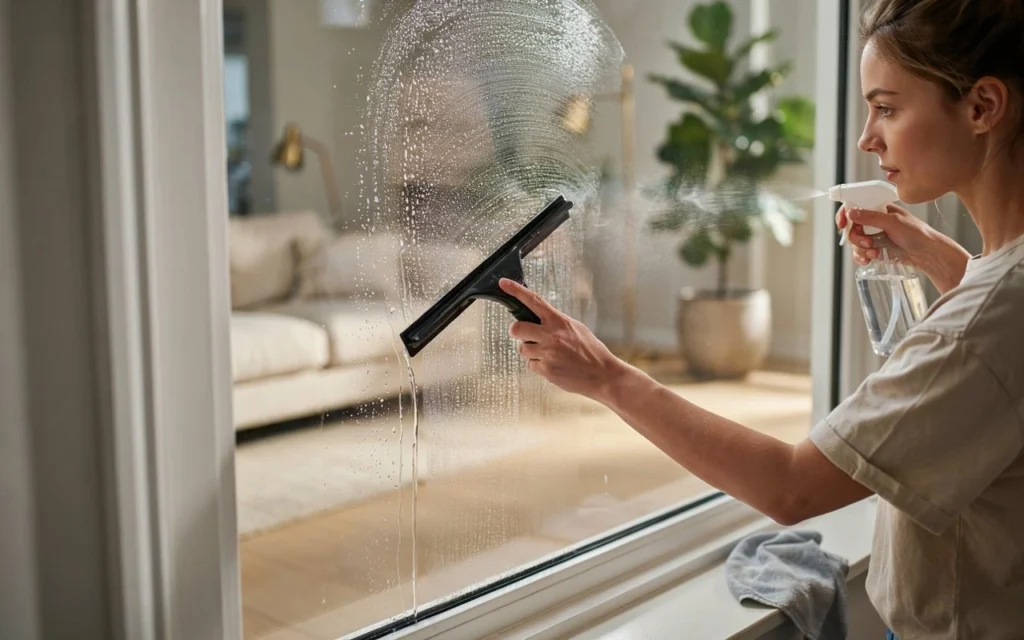
- Use your squeegee starting at the top corner, pulling straight down in one motion.
- Wipe the blade dry after every stroke to avoid streaks.
- Dry the edges and corners with a microfiber cloth, since squeegees miss these spots.
- Step back and check for streaks in natural light before moving to the next window.
This method works on most glass types and takes about five to ten minutes per window once you get the hang of it.
Best Homemade Window Cleaning Solution
If you want the best soap to clean windows without buying a commercial product, mix these:
- 2 cups of warm water
- A few drops of dish soap
- 1 tablespoon of white vinegar for extra shine
This combination cuts through grease, dust, and bug residue without leaving a soapy film. Vinegar helps break down hard water spots, and it dries clear instead of cloudy. Avoid using too much soap, since extra suds are one of the main causes of streaky glass.
Common Window Cleaning Mistakes to Avoid
Even careful homeowners make small errors that lead to streaky results.
Using too much soap is the most common mistake. More suds mean more residue left behind. Cleaning in direct sunlight is another issue, since the fast drying time leaves marks before you can wipe them away.
Skipping the frame and sill is another mistake people make. Dirt sitting in the tracks can wash down onto clean glass during the next rain. Using old newspaper instead of a proper squeegee also leaves lint and ink streaks that are hard to see until the sun hits the glass.
How Often Should You Clean Your Windows?
Most homes do well with a window cleaning every 2 to 3 months. Homes near busy roads, construction, or heavy tree cover may need it monthly, since dust and sap build up faster.
Coastal homes also need more frequent care, since salt air leaves a film on glass that regular rain won’t rinse off. If you notice haze building up faster than usual, that’s a sign to shorten your cleaning schedule.
Professional Window Cleaning vs. DIY
DIY window cleaning works fine for single-story homes with easy access. It’s affordable and lets you handle small touch-ups anytime.
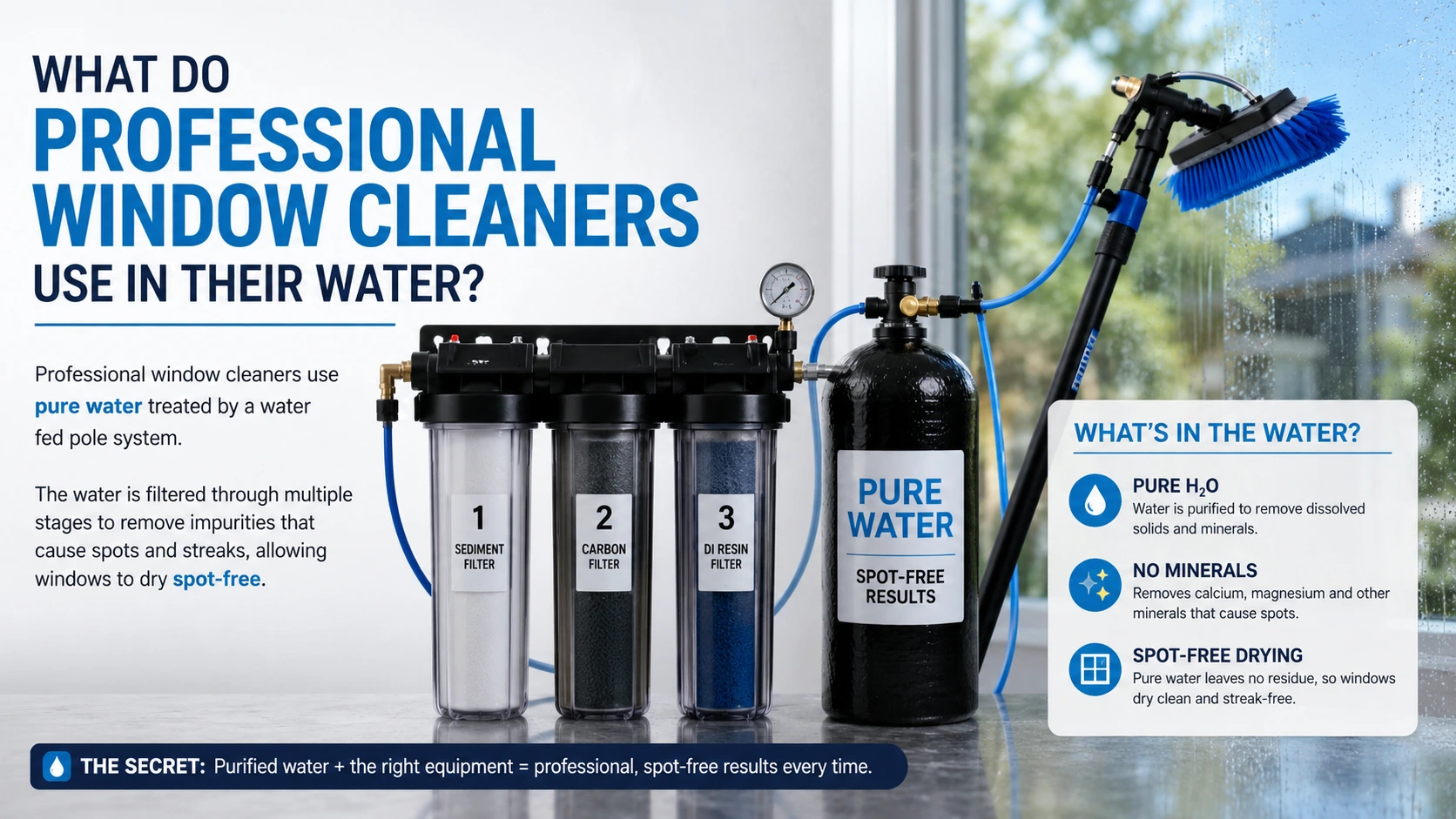
Professional window cleaning services make more sense for multi-story homes, homes with hard-to-reach windows, or anyone who wants a deeper clean without the hassle. Professionals use purified water systems and specialized tools that leave glass spot-free, even on large picture windows.
Cost is often the deciding factor. DIY costs almost nothing beyond basic supplies, while professional service costs more but saves time and avoids the risk of climbing ladders for upper-floor windows.
Tips to Keep Windows Cleaner Longer
A few habits can stretch the time between cleanings.
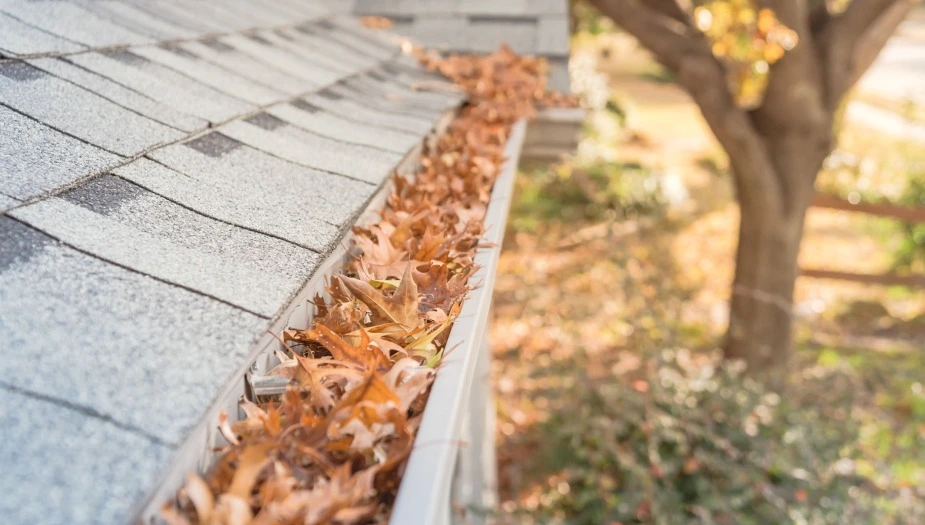
Trim back trees and bushes near windows to cut down on pollen and leaf debris landing on the glass. Rinse windows with a garden hose between full cleanings to remove loose dust before it sticks. Keep gutters clear, since overflow can streak down onto windows below. Close windows during high pollen days or nearby construction work to reduce buildup.
When You Should Hire Professional Window Cleaning Services
If your windows are hard to reach, covered in hard water stains, or haven’t been cleaned in over a year, it’s time to call in help. Heavy buildup often needs more than a basic soap and squeegee pass to fully clear.
This is where window cleaning services in North Bay can make a real difference. At Bay Softwash, we handle everything from ground-floor windows to upper-story glass that’s tough to reach safely on your own. A professional visit resets your windows and makes your regular upkeep routine much easier going forward.
Benefits of Professional Window Cleaning
Hiring a professional does more than save you a Saturday afternoon. It extends the life of your window seals by removing buildup that can wear down frames over time. It also improves natural light indoors, which can make rooms feel brighter and more welcoming.
Professional cleaning catches issues you might miss, like cracked caulking or early signs of seal failure between double-pane glass. For homes preparing to sell, clean windows are one of the simplest ways to boost curb appeal without a big investment.
Conclusion
So, what is the best way to clean your windows? The best results come from a simple soap and water solution, a squeegee, and a steady top-to-bottom technique on a cloudy day. Avoid common mistakes like using too much soap or cleaning in direct sun, and your windows will stay streak-free longer.
If your windows need more than a quick wipe down, a professional cleaning can restore their clarity and make regular maintenance much easier. Clean windows brighten your home, improve curb appeal, and help protect the glass over time. Contact Bay Softwash today to schedule professional window cleaning and enjoy sparkling, streak-free windows that last.
FAQs
What is the best homemade window cleaning solution?
A mix of warm water, a few drops of dish soap, and a tablespoon of white vinegar works well for most homes and leaves a streak-free finish.
How often should windows be cleaned?
Most homes should aim for every 2 to 3 months, though homes near roads, trees, or the coast may need it more often.
Is vinegar or soap better for cleaning windows?
Both work well together. Soap cuts through grease and dirt, while vinegar helps remove hard water spots and adds extra shine.
Should I clean windows on a sunny day?
No. Direct sun dries the solution too fast and leaves streaks. Cloudy days or early mornings give better results.
When should I call a professional window cleaner?
If your windows are hard to reach, covered in hard water stains, or haven’t been cleaned in over a year, professional help gets better and safer results.