Your windows look streaky no matter how hard you scrub. You’ve tried vinegar, dish soap, and three different glass sprays. Nothing works. So what do professional window cleaners use in their water that makes glass dry crystal clear every time?
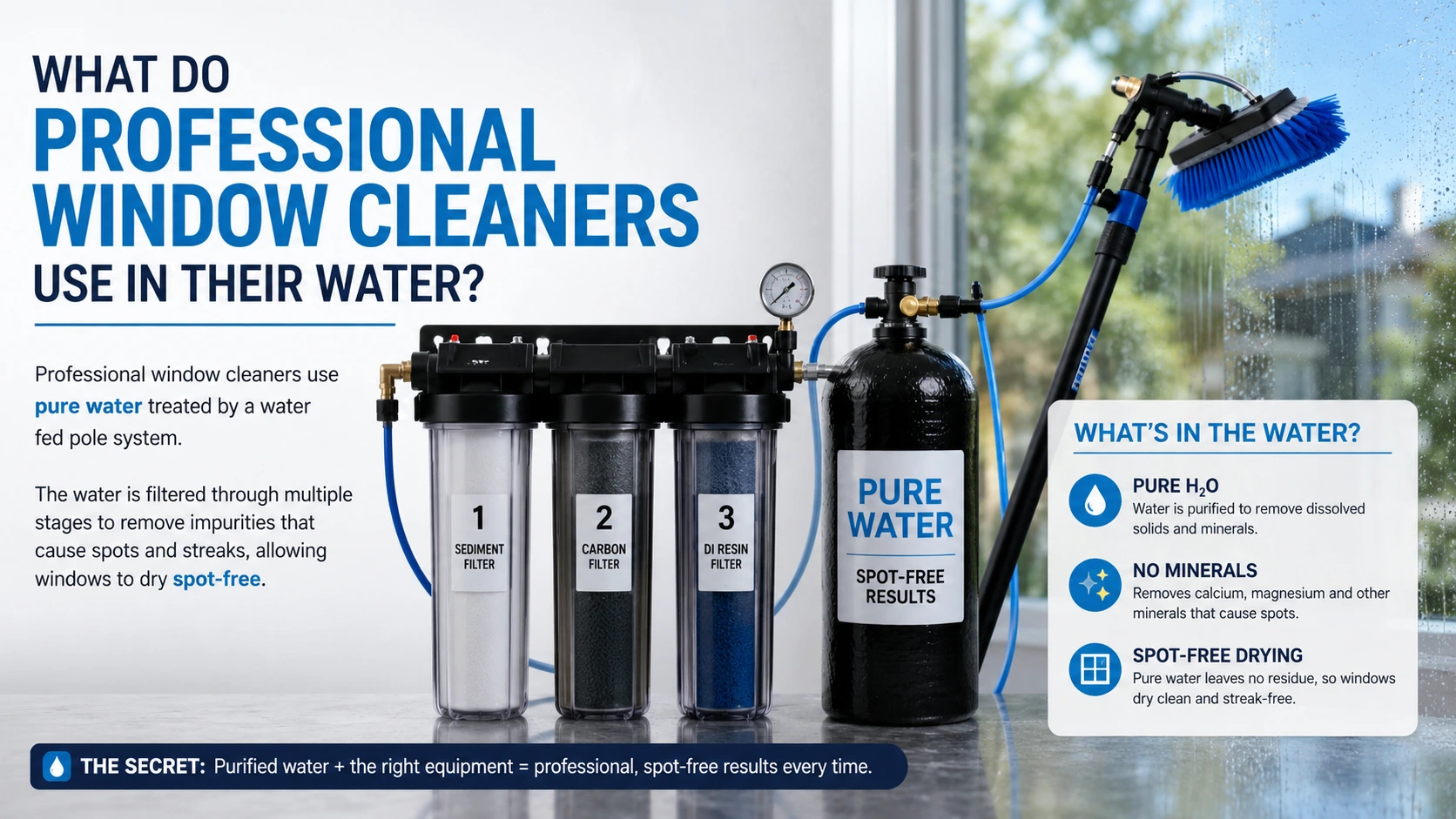
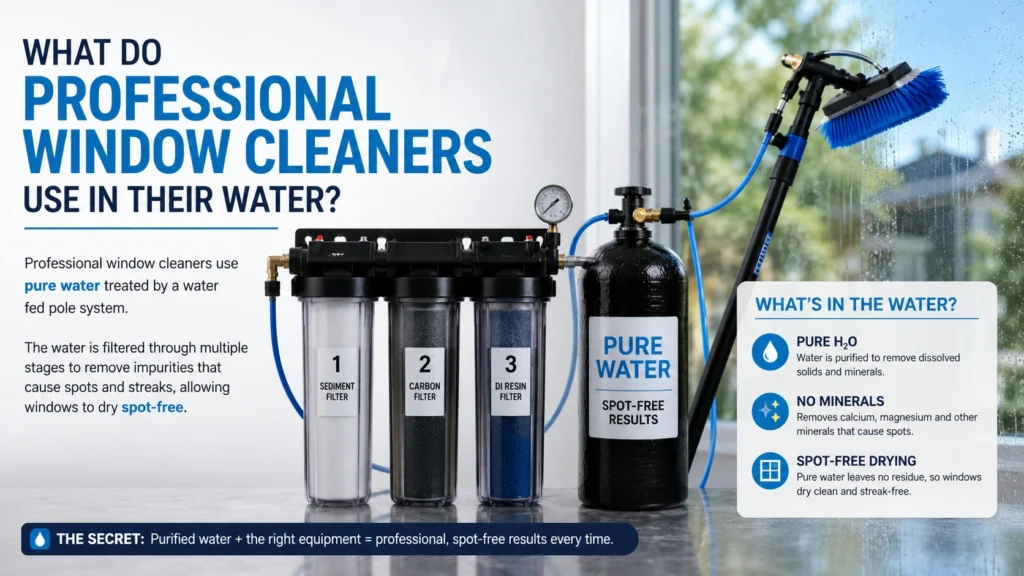
The short answer is purified water, usually deionized or filtered through reverse osmosis. What do professional window cleaners use in their water? Pure water with almost zero dissolved minerals, applied through a water-fed pole system.
What Is Usually Added to the Water?
Most people assume pros mix up a secret cleaning solution. That’s not quite true anymore. Older methods relied on dish soap, ammonia, or trisodium phosphate mixed into a bucket of tap water. A squeegee then pulled the mixture off the glass.
Modern crews skip the additives entirely. They run tap water through a filtration system that strips out minerals, salts, and other dissolved particles. What’s left is pure water with a total dissolved solids reading close to zero. No soap. No streak-causing residue. Just water stripped down to its cleanest form.
This shift happened because pure water solves the problem that soap and chemicals never could. It dries without leaving spots behind.
Why Purified Water Works So Well
Tap water carries calcium, magnesium, and other minerals. When it evaporates off a window, those minerals stay behind as a chalky film. That’s the streaking you see after washing with a hose or a bucket of soapy water.
Purified water flips this process. Because it has no dissolved minerals, it actually wants to bond with them. When a window cleaner applies pure water to glass, it pulls dirt and grime into itself instead of leaving deposits behind. As the water dries, it evaporates cleanly, leaving nothing on the surface.
That’s the core reason so many companies switched their whole approach. Once you understand this, the question of what do professional window cleaners use in their water starts to make a lot more sense.
What Is a Professional Window-Cleaning Solution?
A true professional window-cleaning solution today is rarely a “solution” in the traditional sense. It’s filtered water run through one of a few purification stages before it ever touches the glass.
Here’s what typically happens before the water reaches a window:
- Tap water enters a carbon pre-filter that removes chlorine and larger particles.
- The water then passes through a deionization (DI) resin tank, a reverse osmosis (RO) membrane, or both.
- A TDS meter checks the output. Readings near 0 parts per million confirm the water is pure enough to use.
- The purified water gets stored in a tank on a service vehicle or fed straight from an on-site unit.
Some crews still use a small amount of eco-friendly soap for stubborn grease or bird droppings, followed by a rinse of pure water. But the base of any modern professional window-cleaning solution is the purification stage, not the soap.
Common Water-Purification Methods
There are two main paths companies use to get pure water: deionization and reverse osmosis. Each one works differently, and many crews combine both.
Deionization (DI) uses resin beads that trap mineral ions through an ion-exchange process. Water flows through the resin tank and comes out mineral-free. DI systems are compact and simple to maintain, which makes deionized water window washing popular for smaller crews and residential jobs.
Reverse osmosis (RO) forces water through a fine membrane that filters out roughly 90 to 95 percent of dissolved solids. RO systems produce a steady supply of pure water without needing resin replacements, though they do create some wastewater in the process.
Many companies run a combined RO/DI system. The RO stage removes most of the minerals first, then the DI resin finishes the job. This combo stretches resin life and keeps the output consistently at 0 ppm, even on large commercial jobs.
A common question homeowners ask is do window cleaners use distilled water instead. Distilled water is technically pure, but it’s expensive to produce in the volume a cleaning business needs. Deionized and reverse osmosis water deliver the same spot-free result at a fraction of the cost, which is why they’re the industry standard.
Do Professional Cleaners Ever Use Tap Water?
Sometimes, yes. Tap water still shows up in a few situations. Crews may use it for a first rinse to knock off heavy dirt, dust, or cobwebs before the pure water stage begins. It also gets used with a squeegee and a small amount of soap on interior glass, where mineral spotting matters less because the window dries indoors, away from sun and wind.
That said, tap water alone is a poor choice for a final finish on exterior glass. Minerals in the water almost always leave spots once it dries. This is exactly why a trained window cleaning service in North Bay leans on purified water systems for the finishing pass, saving tap water for the rough pre-rinse only.
At Bay Softwash, this two-stage approach (a rough rinse followed by pure water) is standard practice on both residential and commercial jobs. It keeps results consistent no matter how hard the local water supply is.
What About Vinegar, Dish Soap, or Other DIY Additives?
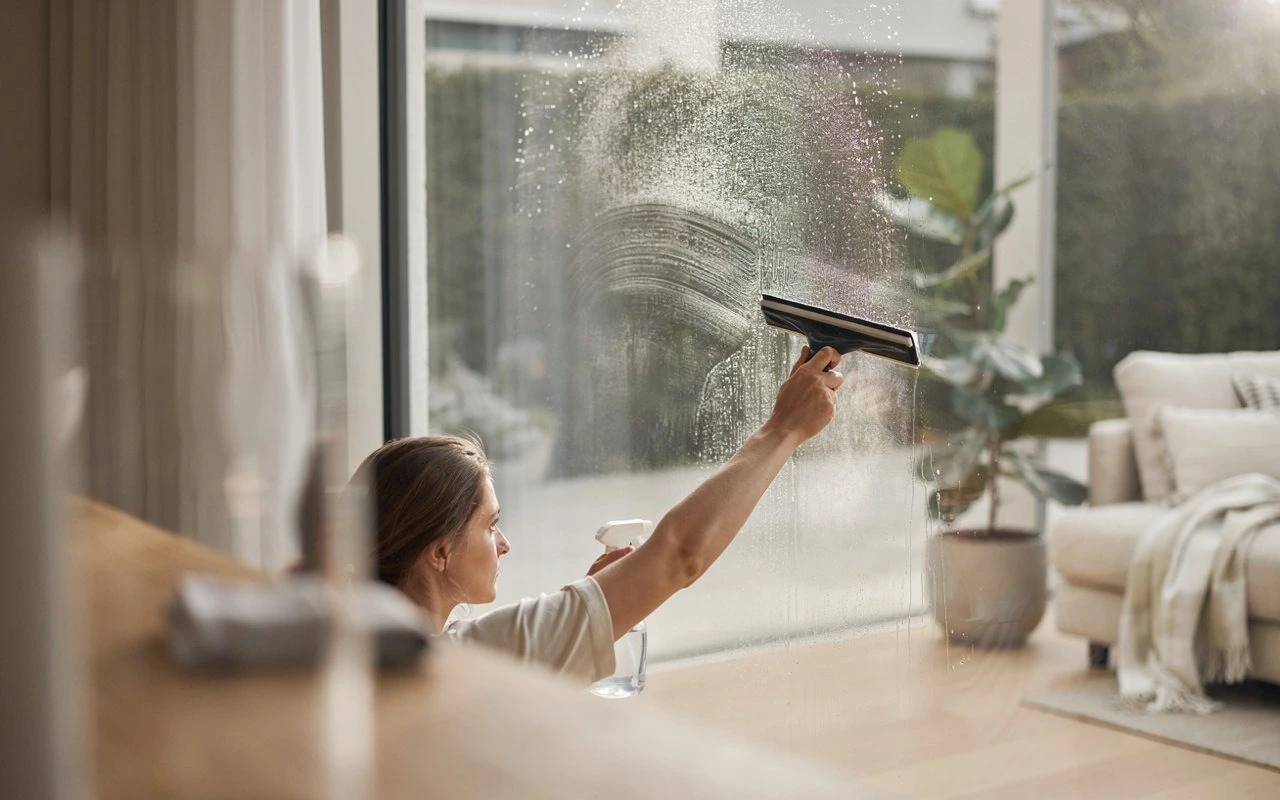
A homemade window cleaning solution usually means vinegar, dish soap, or rubbing alcohol mixed with tap water. These recipes can work fine for a quick touch-up on a small, low window. They struggle on larger jobs or multi-story buildings.
The problem isn’t the vinegar or soap itself. It’s the tap water carrying it. Even a well-mixed DIY spray still evaporates and leaves mineral spots behind, especially in areas with hard water. Add a windy day or direct sun, and streaks show up before you even finish the next pane.
Professionals skip this trial and error by removing the minerals at the source. If you want DIY results that come close to a professional finish, start with distilled or purified water instead of tap water in your homemade window cleaning solution.
Water-Fed Pole Cleaning
Pure water alone isn’t the whole system. Most professional crews pair it with a water-fed pole, a lightweight carbon fiber pole with a brush head on top.
Here’s how a typical job runs:
- Purified water travels from a tank through a hose inside the pole.
- A soft brush head scrubs the glass while releasing a steady flow of pure water.
- The brush lifts away, and jets rinse the glass with a final pure water flush.
- The window air-dries completely clear, with no squeegee needed.
Water-fed poles reach up to five or six stories from the ground. That means a technician never needs a ladder for most low and mid-rise buildings. It also cuts labor time significantly, since there’s no drying or wiping step at the end.
This method has become the backbone of how to clean windows on commercial buildings, high-rise storefronts, and homes with hard-to-reach upper floors.
Choosing the Right Water for Different Jobs
Not every job calls for the same setup. A single-story home with a few windows might only need a basic DI resin tank and a short pole. A three-story office building needs a stronger combined RO/DI system with a bigger storage tank to keep up with demand.
Interior glass is a different story altogether. Since sun exposure and wind aren’t a factor indoors, a squeegee with a small amount of soap and warm water often gets the job done just as well. Exterior glass, especially in direct sunlight, almost always calls for pure water to avoid fast-drying mineral spots.
Weather matters too. On hot, sunny days, water evaporates fast, so any minerals left behind show up almost instantly. This is when purified water earns its keep the most, since it leaves nothing behind to show.
Conclusion
So, what do professional window cleaners use in their water? Purified water, cleaned through deionization, reverse osmosis, or a combination of both, applied with a water-fed pole. It’s not a fancy trick. It’s simply water with the minerals removed, which lets it dry spot-free without soap or scrubbing chemicals.
If you’re tired of streaky windows after every DIY attempt, the fix usually isn’t a better spray. It’s better water. Skip the tap, and the guesswork about what do professional window cleaners use in their water disappears along with the streaks. Contact us today for professional window cleaning and enjoy cleaner, streak-free windows without the hassle.
FAQs
What do professional window cleaners use in their water most often?
Most use deionized or reverse osmosis water, sometimes combined, to reach a near-zero mineral reading before it touches the glass.
Do window cleaners use distilled water?
Rarely, since distilled water costs more to produce in bulk. Deionized and reverse osmosis water give the same spot-free result for less.
Can I make a homemade window cleaning solution that works as well?
You can get close by mixing vinegar or soap with distilled water instead of tap water, though results still vary with sun and wind.
Is deionized water window washing safe for tinted or coated glass?
Yes. Pure water contains no harsh chemicals, which makes it gentle on tinted film, coatings, and window seals.
Why does my window still streak after I use tap water and a squeegee?
Minerals in tap water stay behind as it dries. A squeegee removes most of the water but can’t remove dissolved minerals from what remains.