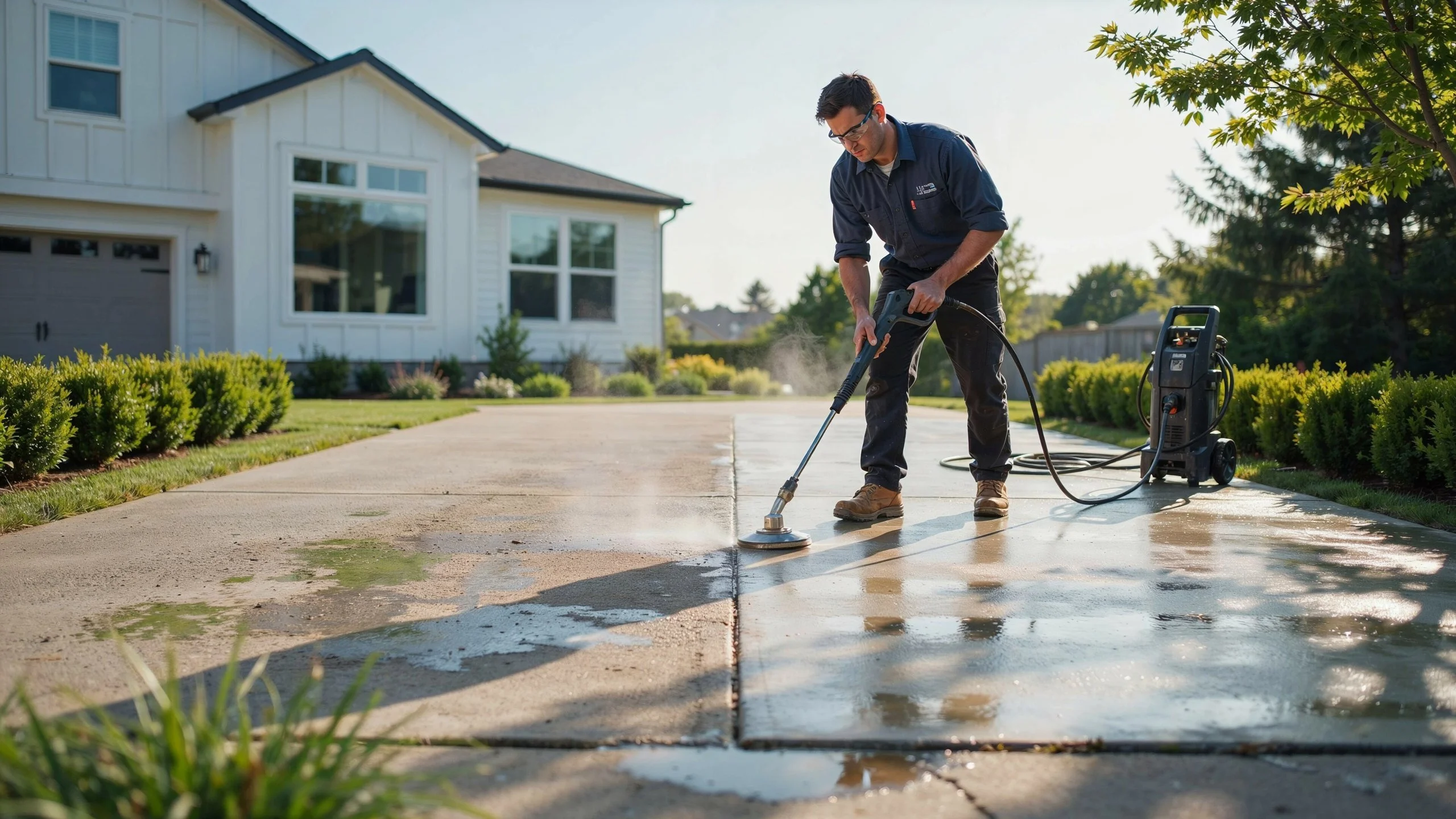
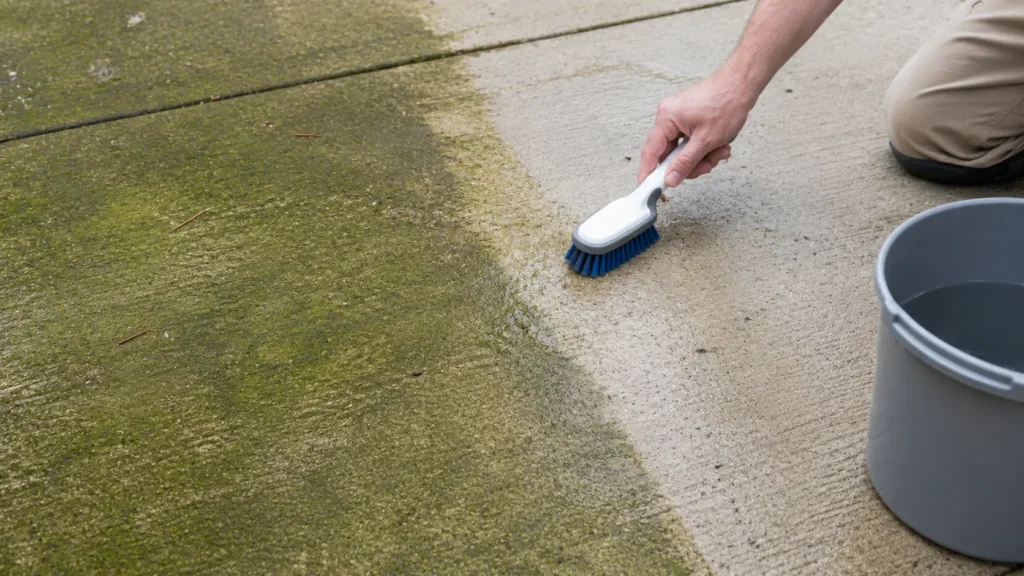
Green stains on concrete come from algae, moss, or mildew. These grow in damp, shaded spots like driveways, patios, and walkways. Left alone, they turn slick and stain the surface for good.
So does vinegar clean concrete? Yes, in mild cases. But knowing how to clean green off concrete the right way keeps your surface safe and stops the growth from returning fast.
What Causes Green Stains on Concrete?
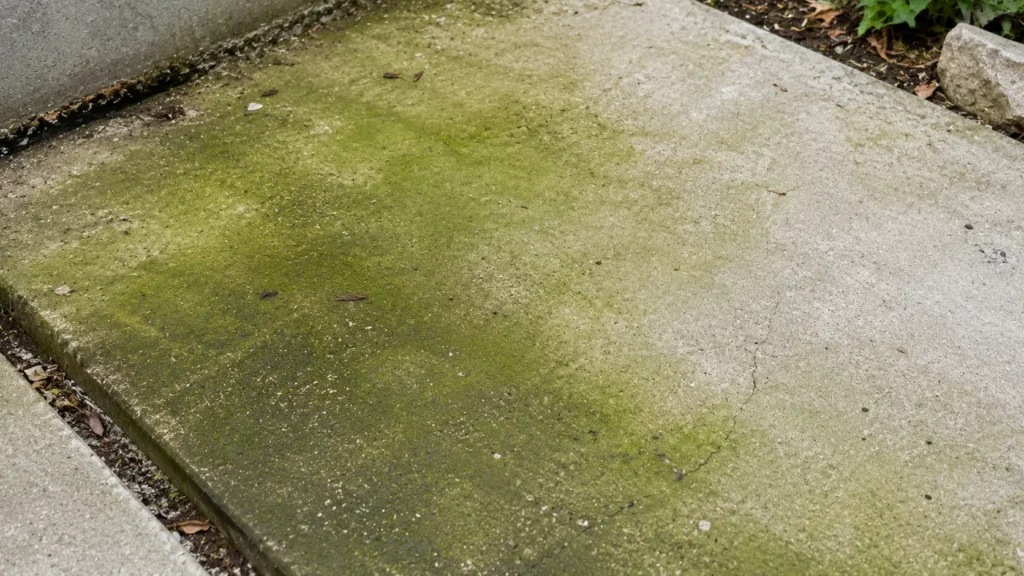
Green growth needs three things: moisture, shade, and a rough surface to grip. Concrete is porous, so it soaks up water and holds it. That trapped moisture feeds algae and moss spores that land on the surface from wind, rain, or nearby plants.
Areas under trees, near sprinklers, or beside gutters stay damp longer than open spots. This is why north-facing walkways and shaded patios usually show the worst buildup. Poor drainage makes it worse. If water pools after rain instead of running off, you have a algae problem waiting to happen.
Age plays a role too. Older concrete develops small cracks and rough patches. These tiny gaps trap dirt and moisture, giving algae and moss an easy place to root.
Identify the Type of Green Growth
Before you grab a cleaner, figure out what you are dealing with. Each type responds differently to treatment.
Algae looks slimy and spreads in a thin film. It feels slippery when wet and is common on pool decks and shaded patios.
Moss grows in raised, fuzzy clumps. It holds moisture like a sponge and often shows up in cracks or along edges where dirt collects.
Mildew appears as a dusty, blotchy stain. It thrives in humid, poorly ventilated spots like covered porches or areas next to fences.
Knowing the difference matters. A method that works to remove green algae from concrete may not fully clear moss, since moss has roots that grip into the surface.
Supplies You’ll Need
Gather these before you start:
- A stiff push broom or scrub brush
- A garden hose with a spray nozzle
- A pressure washer (optional but helpful)
- Baking soda or oxygen bleach
- White vinegar (for light stains)
- A store-bought concrete cleaner labeled safe for outdoor use
- Rubber gloves and eye protection
- A plastic tarp to protect nearby plants
Skip wire brushes on decorative or stamped concrete. They can scratch the surface and leave marks that are hard to fix.
Step-by-Step: How to Clean Green Off Concrete
Step 1: Clear the area. Sweep away loose dirt, leaves, and debris. This keeps grit from scratching the surface while you scrub.
Step 2: Wet the concrete. Spray the whole area with your hose. Wet concrete helps cleaning solutions spread evenly instead of soaking into one spot.
Step 3: Apply your cleaner. Pour or spray your chosen solution over the stained area. Let it sit for 10 to 15 minutes so it can break down the growth.
Step 4: Scrub the surface. Use a stiff push broom in small circles. Focus on cracks and rough patches where algae and moss cling tightly.
Step 5: Rinse thoroughly. Wash away all cleaner and loosened debris with your hose or pressure washer. Rinse twice if the concrete still feels slippery.
Step 6: Let it dry and inspect. Check for spots you missed once the concrete dries. Repeat the process on any stubborn areas.
This method works well for most homes trying to remove green algae from concrete without renting heavy equipment.
Can You Use Vinegar to Remove Green Algae?
Plain white vinegar works on light, fresh algae stains. Mix one part vinegar with one part water in a spray bottle. Spray it directly on the green film and let it sit for 15 minutes before scrubbing.
Vinegar’s acid breaks down algae cells and loosens their grip on the surface. It will not fully kill moss roots, though, so it works best as a first pass or for small touch-up jobs.
One thing to watch: vinegar can eat away at sealed or decorative concrete over time. Test a small hidden spot first, and never use it on stamped or colored concrete without checking the finish.
Best Concrete Cleaners for Green Growth
If vinegar and elbow grease are not cutting it, a stronger product may be the best cleaner for green concrete in your case. Look for these options:
Oxygen bleach cleaners lift stains without damaging the surface color. Mix with water per the label and apply with a stiff brush.
Chlorine bleach solutions work fast on algae and mildew but can harm nearby grass and plants. Use only in well-ventilated outdoor spaces and rinse plants beforehand.
Commercial concrete and driveway cleaners are formulated to handle mold, algae, and moss in one pass. Many come in a ready-to-spray bottle, which saves prep time.
Sodium percarbonate powder dissolves in water and works well for large driveways since it covers more ground per gallon than liquid cleaners.
Whatever product you choose, check the label for safety around pets, kids, and plants before applying.
How to Prevent Green Buildup from Coming Back
Cleaning solves the problem for now, but prevention keeps it from returning.
Trim back trees and bushes that shade your concrete. More sunlight dries the surface faster and makes it harder for spores to take hold.
Fix drainage issues so water does not pool. Redirect downspouts and check that your yard slopes away from walkways and patios.
Seal your concrete once a year. A quality sealant fills in tiny pores that trap moisture, which cuts down on future algae and moss growth.
Rinse high-risk areas monthly during wet seasons. A quick hose-down removes spores before they settle and multiply.
When to Call a Professional
Some jobs go beyond a weekend project. Large driveways, stained patios that keep coming back, or concrete near a pool often need commercial-grade equipment and treatments homeowners do not have access to.
If you have tried to clean mold and mildew from concrete more than once with no lasting results, it is worth calling in help. A professional crew can spot the root cause, whether it is drainage, shade, or an aging seal coat, and fix it at the source.
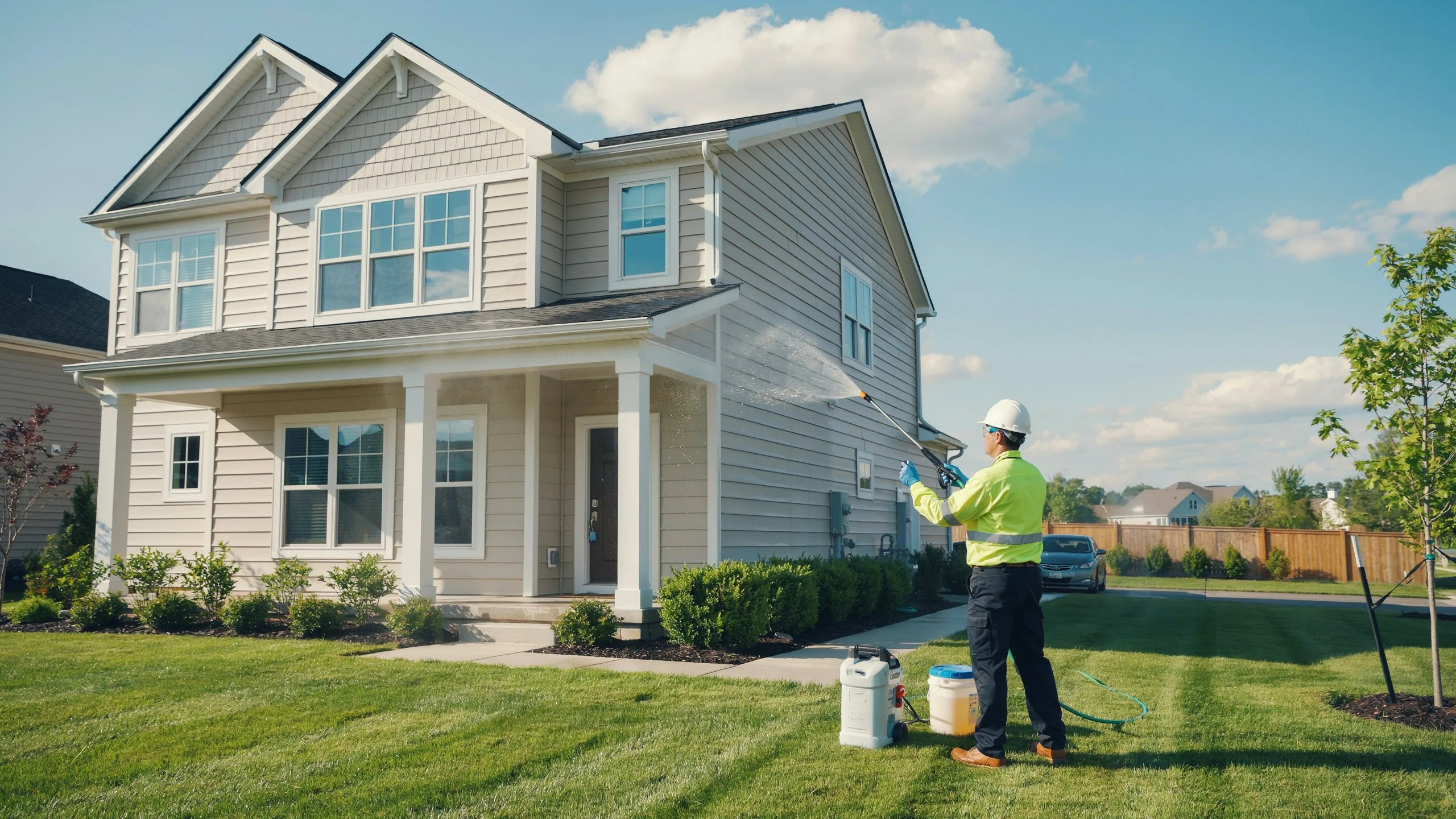
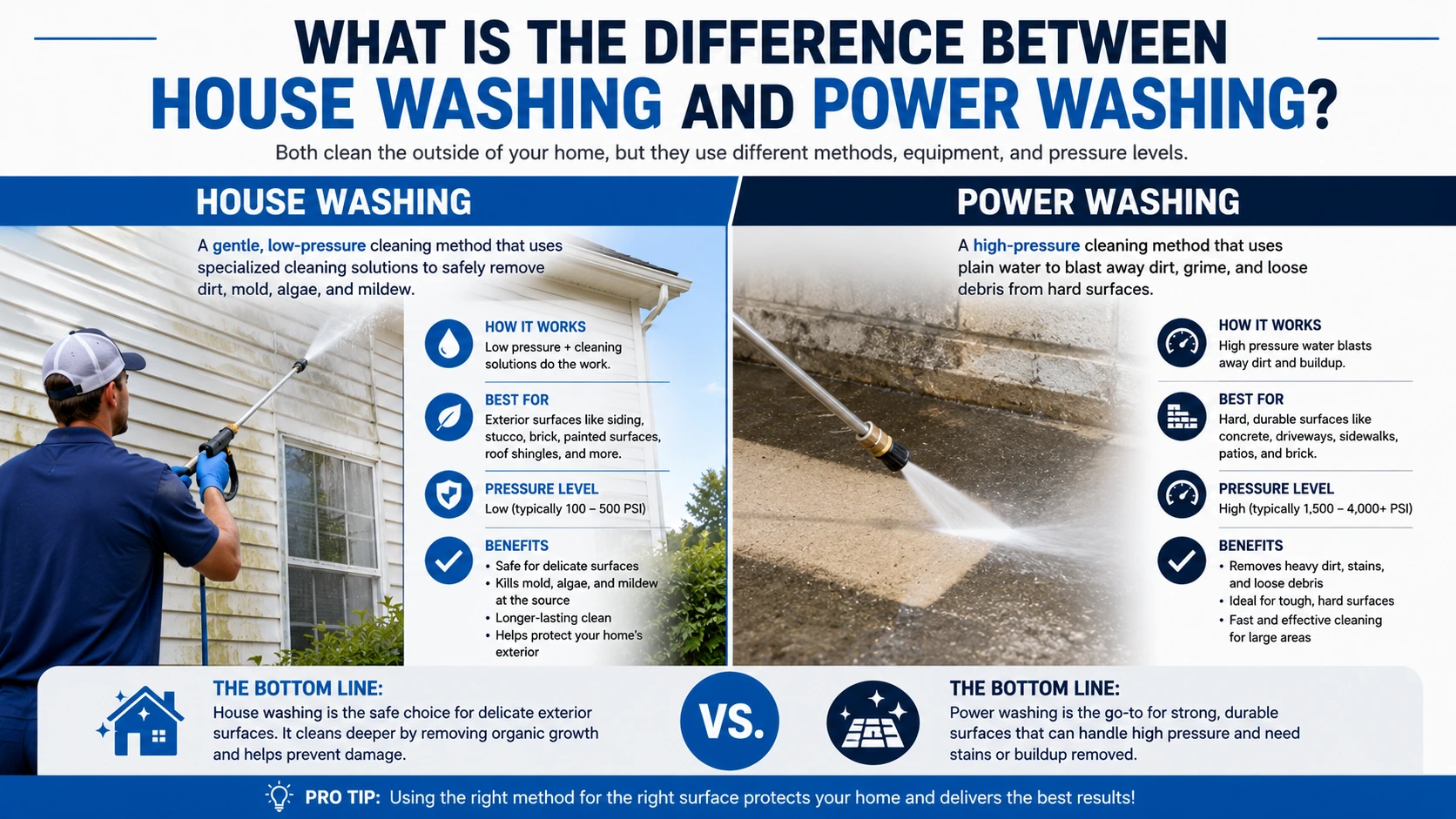
Bay Softwash offers concrete cleaning services in North Bay for homeowners dealing with stubborn algae, moss, and mildew stains. Our team uses low-pressure softwashing methods that clean deep without damaging the concrete surface, so your driveway or patio looks new again and stays that way longer.
Common Mistakes to Avoid
Using a pressure washer on high settings. Too much pressure can etch or pit the concrete surface, leaving marks that are permanent.
Skipping the rinse step. Leftover cleaner residue can attract more dirt and moisture, which speeds up future growth.
Mixing bleach and vinegar. This combination creates toxic fumes. Never combine these two products in the same container or on the same surface without rinsing between uses.
Ignoring drainage problems. Cleaning without fixing the water issue means the stains will return within weeks.
Using the wrong cleaner for stamped or colored concrete. Always check the label and test a small spot first to avoid discoloring your surface.
Conclusion
Green stains on concrete are common, but they do not have to be permanent. With the right supplies, a bit of scrubbing, and a plan to reduce moisture buildup, you can keep your driveway or patio looking clean. If the problem keeps coming back or covers a large area, Bay Softwash can help.
Our professional soft washing service removes algae, moss, and other organic growth safely without damaging your concrete. Contact us today for a free estimate and let us restore your concrete to its best condition.
FAQs
Does vinegar clean concrete?
Yes, vinegar works on light algae stains. Mix it with water and apply directly, but avoid it on sealed or decorative concrete.
How often should I clean green algae off my concrete?
Check high-risk shaded areas every month during wet seasons. A quick rinse often prevents heavy buildup.
Is bleach safe for all concrete surfaces?
No. Bleach can fade colored or stamped concrete. Always test a small area first and rinse nearby plants before applying.
Can pressure washing alone remove moss?
It removes surface growth but often leaves moss roots behind. Pair it with a cleaning solution for full removal.
What is the fastest way to remove green algae from concrete?
A commercial concrete cleaner combined with a stiff brush and thorough rinse gives the fastest, most complete results.