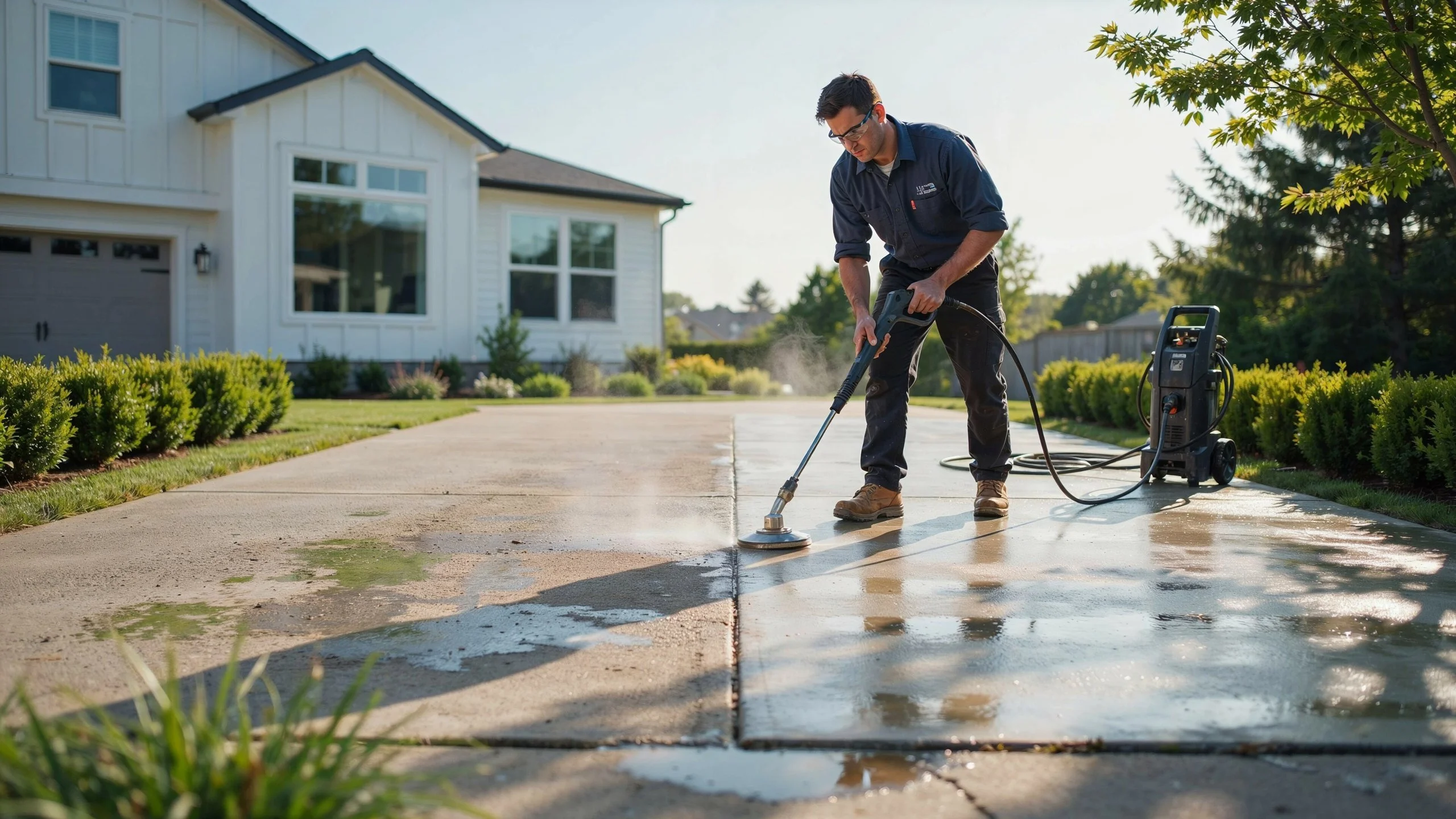
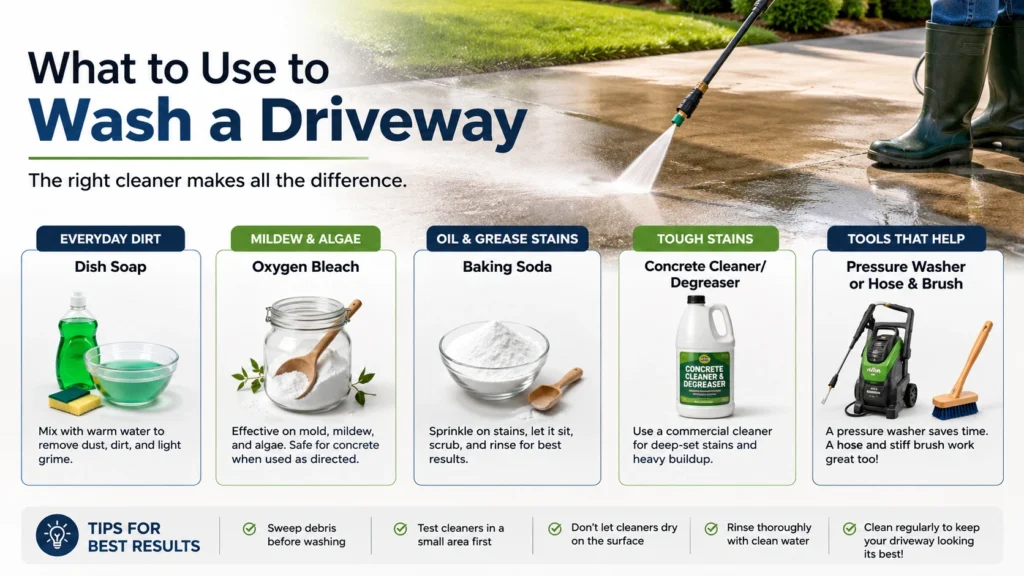
Use a mix of dish soap and warm water for light dirt, or an oxygen bleach cleaner for tougher grime and oil marks. A garden hose works for small jobs. A pressure washer speeds things up on large concrete slabs.
That’s the short answer. But what to use to wash a driveway really depends on the stains you’re dealing with, the type of concrete you have, and how much time you want to spend on the job. Let’s break it all down.
Basic Supplies You’ll Need
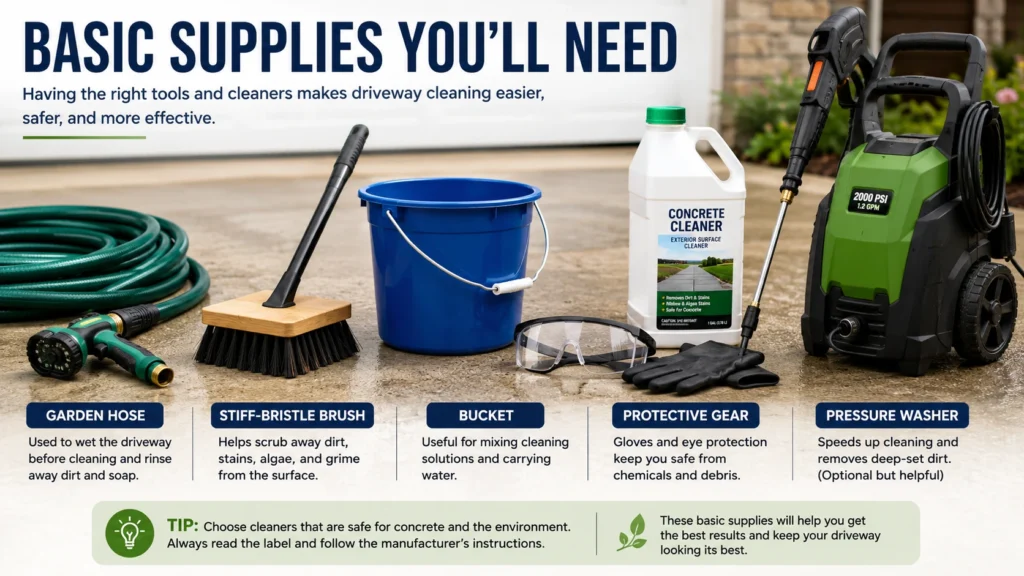
Before you start, gather a few basic items. You probably already own most of them.
- A stiff-bristled push broom
- A garden hose with a spray nozzle
- A bucket
- Dish soap or a concrete cleaner
- Baking soda (for oil spots)
- Rubber gloves
- Safety glasses
If you own a pressure washer, that helps too. It’s not required, but it cuts your cleaning time in half. A driveway squeegee also comes in handy for pushing water and suds off the surface once you’re done scrubbing.
Sweep the driveway first. Remove loose leaves, dirt, and gravel. This step alone makes the rest of the job faster and stops grit from scratching the concrete while you scrub.
Choosing the Right Cleaner
This is the part most homeowners get wrong. They grab whatever is under the sink and hope for the best. That works fine for dust and light dirt. It won’t touch grease, rust, or mildew.
Here’s a simple guide for what to use to wash a driveway based on the mess you’re facing:
Dish soap and water. Good for everyday dirt and light stains. Mix a few tablespoons into a bucket of warm water.
Oxygen bleach. Great for mildew, algae, and general grime. It’s safer for plants and pets than chlorine bleach and won’t strip the color from stamped or colored concrete.
Baking soda paste. Works well on fresh oil stains. Mix it with water until it forms a thick paste, then let it sit before scrubbing.
Trisodium phosphate (TSP). A stronger option for old, set-in stains. Wear gloves and eye protection, since it’s a heavy-duty cleaner.
Commercial concrete cleaner. Look for one built for driveways specifically. These are formulated to lift oil, rust, and tire marks without damaging the surface.
Skip straight bleach on colored or stamped concrete. It can fade the finish and leave blotchy patches behind. Test any new cleaner on a small, hidden section first.
How to Wash a Driveway
Now for the actual process. Follow these steps in order for the best results.
- Sweep the surface. Clear off leaves, dirt, and debris.
- Pre-treat stains. Apply your chosen cleaner directly to oil spots, rust marks, or dark patches. Let it sit for 10 to 15 minutes.
- Wet the driveway. Use your hose to soak the whole surface before scrubbing.
- Apply cleaner. Spread your soap mixture or concrete cleaner across the driveway with a push broom.
- Scrub in sections. Work on one small area at a time so the cleaner doesn’t dry out.
- Rinse thoroughly. Use your hose or pressure washer to wash away suds and loosened grime. Work from the top of the driveway down toward the street.
- Check for missed spots. Some stains need a second round. Repeat the process if needed.
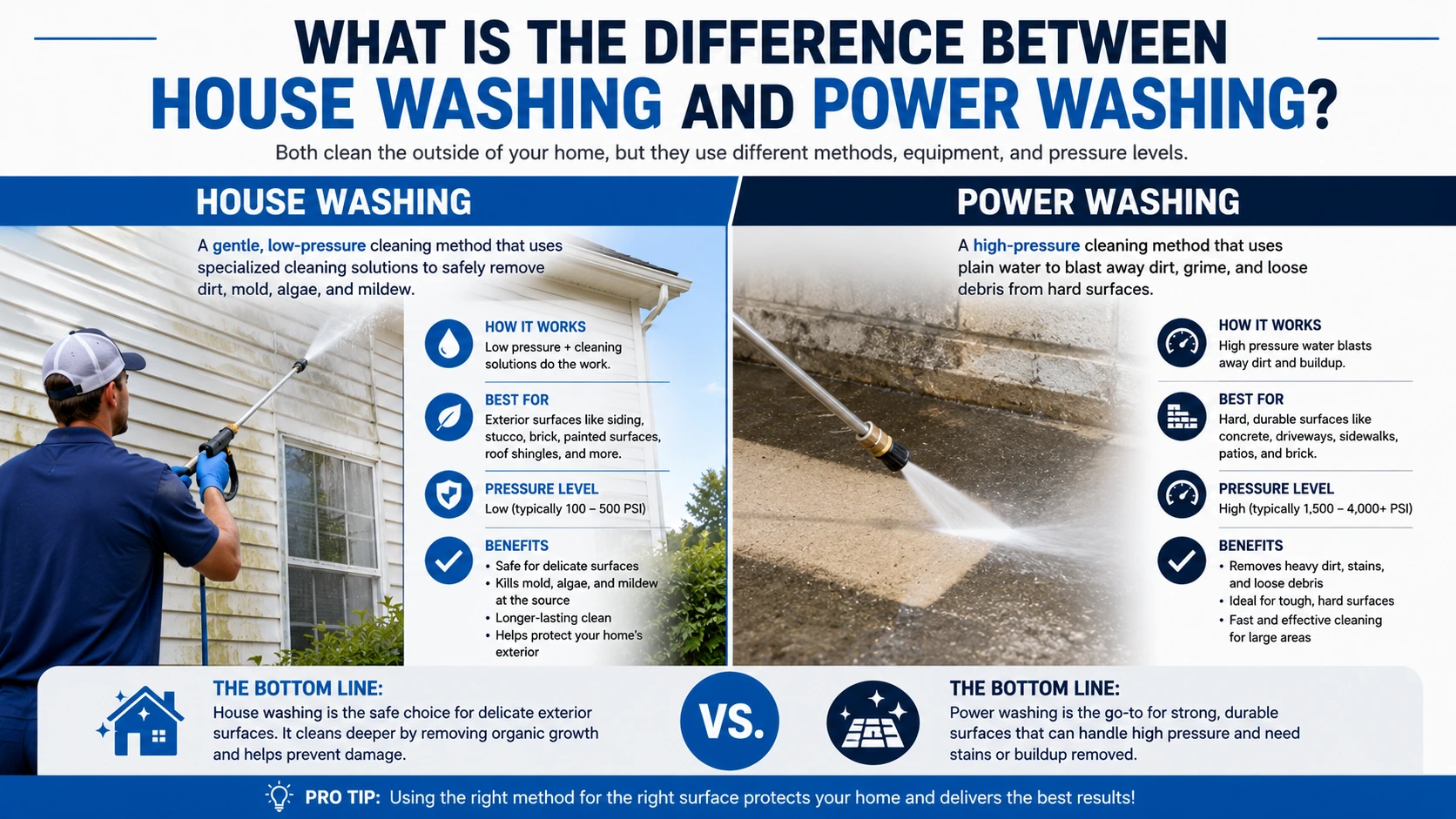
If you’re using a pressure washer, keep the nozzle about 12 inches from the surface and use a fan tip, not a pinpoint one. A narrow stream can gouge softer concrete and leave visible lines.
For stains that won’t budge no matter what you try, it may be time to call in help. A professional concrete cleaning service in North Bay has the equipment and cleaning agents to handle deep-set stains without damaging your driveway. Companies like Bay Softwash use soft washing methods that clean thoroughly while protecting the surface underneath, which is worth considering if your driveway hasn’t been cleaned in years.
Removing Oil Stains from a Driveway
Oil stains deserve their own section because they’re the most common complaint homeowners have. Fresh oil spots come up easier than old ones, so speed matters.
For a new spill, cover it with cat litter or baking soda right away. Let it absorb the oil for a few hours, then sweep it up. Follow with a baking soda paste scrub.
For older, set-in stains, mix baking soda with dish soap to form a paste. Spread it over the stain, let it sit overnight, then scrub with a stiff brush the next morning. Degreasers made for concrete work well here too, since they break down the oil at a molecular level instead of just masking it.
Driveway Cleaning Without a Pressure Washer
Not everyone owns a pressure washer, and that’s fine. A hose and some elbow grease still get the job done, just with more effort.
Mix your cleaner in a bucket, apply it with a push broom, and let it soak. Scrub hard in circular motions, focusing on stained areas. Rinse with a hose set to a strong spray pattern. It takes longer than a pressure washer, but the results hold up just as well for most residential driveways.
A garden sprayer, the kind used for weed killer, also helps spread cleaner evenly across large areas without wasting product.
Tips for Better Results
- Clean on an overcast day. Direct sun dries the cleaner too fast before it can work.
- Always scrub against the grain of the concrete texture for deeper cleaning.
- Rinse tools between uses so you’re not reapplying dirt.
- Reseal your driveway after a deep clean to protect it from future stains.
- Sweep regularly between deep cleans to keep dirt from building up.
Common Mistakes to Avoid
Even careful homeowners run into trouble here. Watch out for these:
- Using bleach on colored concrete. It fades and discolors the surface.
- Skipping the pre-soak. Dry cleaner just sits on top and doesn’t lift stains.
- Standing too close with a pressure washer. This can etch or gouge the concrete.
- Ignoring nearby plants. Some cleaners harm grass and flower beds. Rinse plants beforehand or cover them.
- Waiting too long on oil stains. The longer oil sits, the deeper it soaks into the concrete pores.
Conclusion
Knowing what to use to wash a driveway comes down to matching your cleaner to the stains. Dish soap handles daily dirt. Oxygen bleach and baking soda can help tackle mildew and oil. A pressure washer speeds up the job, but a hose and some scrubbing work fine too.
Stay consistent with cleaning, and your driveway will look better and last longer. Need professional help? Contact Bay Softwash today for reliable driveway cleaning services.
FAQs
What is the best thing to use to wash a driveway?
For most driveways, a mix of dish soap and warm water handles everyday dirt. For oil stains or mildew, oxygen bleach or a dedicated concrete cleaner works better.
Can I use laundry detergent to wash my driveway?
Yes, in small amounts. It cuts through grease similarly to dish soap, though it can leave more suds to rinse away.
How often should I wash my driveway?
Twice a year works for most homes, once in spring and once in fall. High-traffic driveways may need a third cleaning in summer.
Will a pressure washer damage my driveway?
Not if used correctly. Keep the nozzle at a safe distance and use a wide fan tip instead of a narrow, concentrated stream.
Is it safe to use bleach on driveway stains?
Chlorine bleach can discolor stamped or colored concrete. Oxygen bleach is a gentler, safer alternative for most surfaces.