Straight answer: yes, vinegar can clean concrete, but only for certain jobs. It works well on light stains, mineral buildup, and some mold or algae. It struggles with grease, deep-set stains, and years of built-up grime. Vinegar is acidic, so it needs care on colored, stamped, or sealed concrete.
So does vinegar clean concrete for every job on your property? Not really. This guide covers what it removes, what it can’t touch, and how to use it the right way on your driveway, patio, or walkway.
Does Vinegar Clean Concrete?
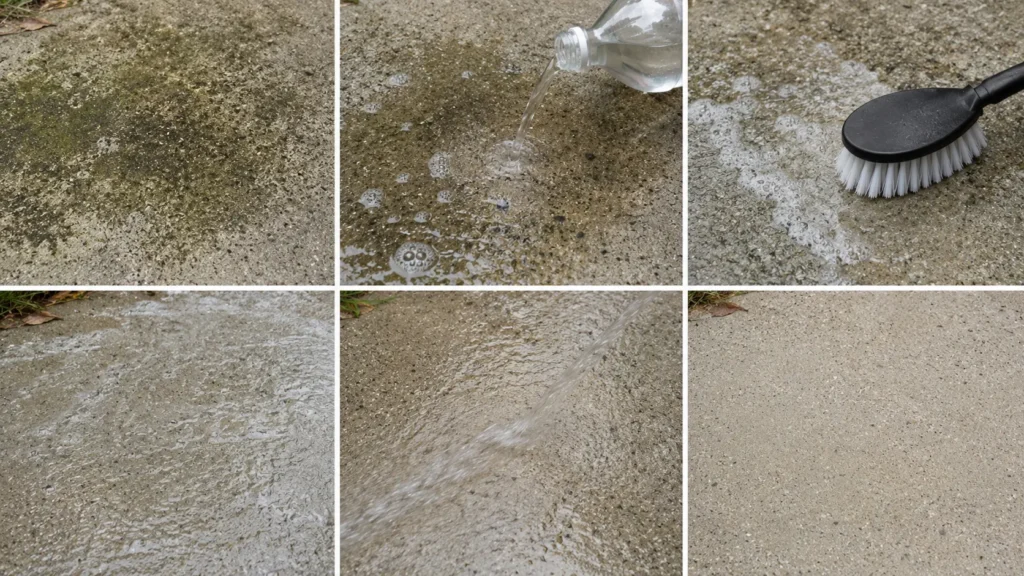
Vinegar can clean concrete, but its power depends on the stain. White household vinegar contains about 5% acetic acid, which breaks down mineral deposits, light rust, soap scum, and some mold spores on contact.
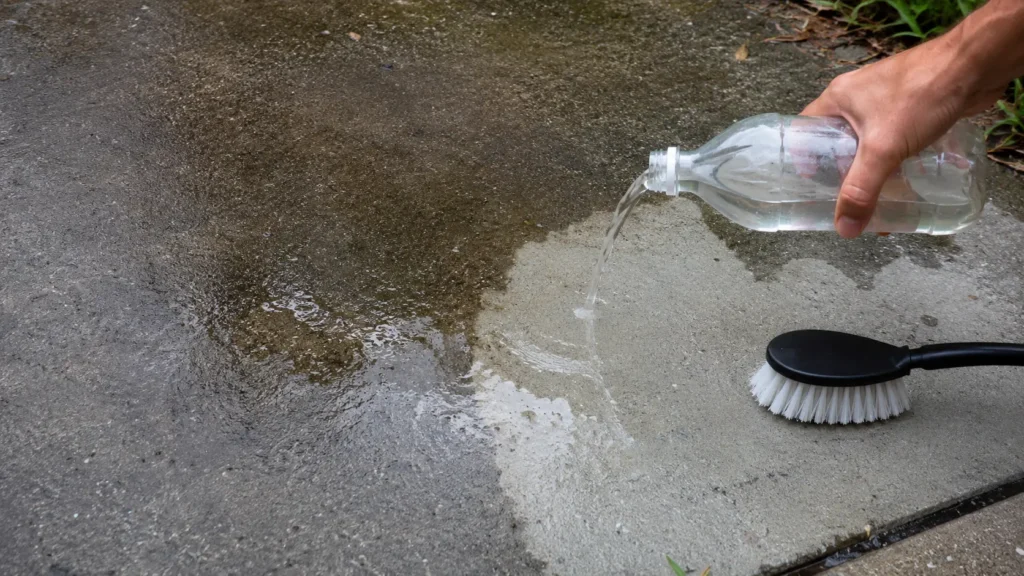
For everyday grime, cleaning concrete with vinegar works fine. Mix it with warm water, scrub the surface, and rinse well. You will see a real difference on light dirt and hard water spots.
But vinegar is not a cure-all. Oil stains, tire marks, and old paint need stronger methods, and vinegar won’t lift stains that have soaked deep into porous concrete over several years. For those jobs, you need a degreaser or a professional cleaning method.
Is Vinegar Safe for Concrete?
This is where homeowners get tripped up. Plain, unsealed concrete can usually handle diluted vinegar without lasting harm, but there are exceptions worth knowing first.
Does vinegar damage concrete? Yes, especially with repeated use or full-strength application. Concrete is alkaline by nature, and vinegar’s acid reacts with that alkalinity to slowly wear down the surface. Over time, this etching can leave the concrete rough, dull, or pitted.
Does vinegar stain concrete? Vinegar itself won’t stain concrete. The real risk is the opposite problem: vinegar can strip color from stamped or stained concrete, or dull a glossy sealer. If your concrete has a decorative finish, test vinegar on a small hidden spot first.
Here’s a simple rule. Dilute it, never use it full strength, and rinse the area right after cleaning. Don’t let vinegar sit on the surface for long periods, and skip it entirely on new concrete that’s less than a month old. Fresh concrete is still curing and reacts more easily to acid.
What Can Vinegar Remove From Concrete?
Vinegar handles a specific range of concrete problems well. Here’s what it’s genuinely good at:
- Efflorescence. That white, chalky residue on concrete is a mineral deposit. Vinegar’s acid dissolves it quickly.
- Light mold and mildew. Vinegar kills many common mold spores on contact and helps prevent regrowth for a short period.
- Hard water stains. Sprinkler overspray and mineral-rich water leave spots that vinegar breaks down well.
- Soap scum. Around outdoor sinks or pool decks, vinegar cuts through soap residue fast.
- Light surface rust. Small rust spots from patio furniture or tools often respond to a vinegar soak.
For these jobs, a vinegar concrete cleaner solution is a low-cost, low-toxicity option most households already have on hand.
What Should You Not Clean With Vinegar?
Some surfaces and stains should never meet vinegar. Skip it in these situations:
- Stamped or colored concrete. The acid can fade dye and strip color from decorative finishes.
- Sealed concrete. Vinegar can dull or break down certain sealants, especially acrylic-based ones.
- Natural stone next to concrete. If your concrete borders marble, limestone, or travertine, keep vinegar away. It can etch these stones badly.
- Deep oil and grease stains. Vinegar won’t break the bond between oil and porous concrete.
- Large-scale mold or algae coverage. For heavy growth, vinegar alone usually isn’t strong enough.
If your concrete falls into any of these categories, a gentler cleaner or a professional service is the safer route.
How to Clean Concrete With Vinegar
Cleaning concrete with vinegar is simple if you follow the right steps.
- Sweep the area first. Clear loose dirt, leaves, and debris so the vinegar can reach the stain directly.
- Mix your solution. Combine one part white vinegar with one part warm water in a spray bottle or bucket.
- Apply and wait. Spray or pour the mixture over the stained area. Let it sit for 10 to 15 minutes.
- Scrub the surface. Use a stiff-bristle brush, not a wire brush, to work the solution into the concrete.
- Rinse thoroughly. Hose down the area completely so no vinegar residue remains.
- Repeat if needed. Stubborn spots may need a second round, but avoid more than two applications in one day.
Always test a small, hidden patch first, especially on older or decorative concrete.
Can Vinegar Remove Oil Stains From Concrete?
Not on its own. Oil soaks into the pores of concrete and bonds with the surface, and vinegar’s acid isn’t strong enough to break that bond.
For fresh spots, absorbent materials like cat litter or baking soda work better as a first step, followed by degreasing dish soap and hot water. For old, dark oil stains, a commercial degreaser or a pressure washing service is more reliable than vinegar.
Can Vinegar Remove Rust From Concrete?
Vinegar can handle small, light rust spots. The acid reacts with rust and loosens it, which works well for faint marks from patio chairs or garden tools.
For heavier stains, like those from old metal equipment, vinegar alone usually falls short. Try mixing it with baking soda for a mild abrasive paste, or switch to a rust-specific concrete cleaner for deep, set-in marks.
Can Vinegar Remove Mold and Algae From Concrete?
Yes, vinegar is genuinely useful here. Its acidity kills a wide range of mold and algae spores on contact, and it’s a common choice for shaded patios, north-facing walkways, and areas near sprinklers.
Spray full-strength vinegar directly on the mold, let it sit for 30 minutes, then scrub and rinse. Spores can return within weeks in damp, shaded spots, so this often needs to become a regular task. If mold keeps coming back despite regular cleaning, that usually points to a moisture problem worth a professional look.
Vinegar vs. Other Concrete Cleaners
Does vinegar clean concrete better than other options? Not always. Here’s how it stacks up:
Vinegar vs. bleach: Bleach kills mold more thoroughly and works faster on stains, but it’s harsher on plants, pets, and nearby metal. Vinegar is gentler but less powerful.
Vinegar vs. dish soap: Dish soap is safer for regular cleaning and won’t etch the surface. It’s better for general dirt but weaker against mineral stains and mold.
Vinegar vs. commercial concrete cleaners: Store-bought concrete cleaners are formulated to avoid etching and handle tougher stains. They cost more but often deliver better results on old or heavy stains.
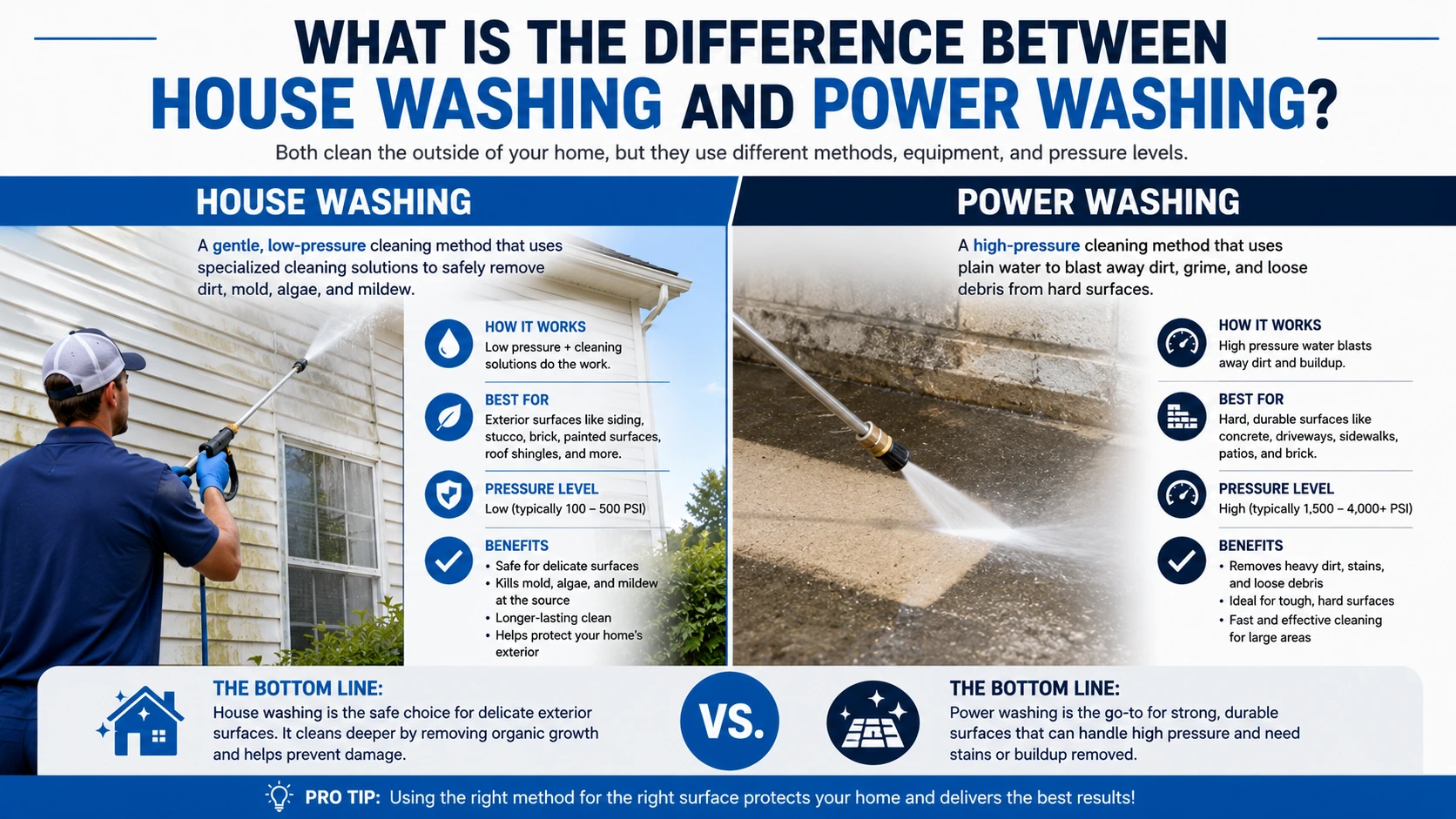
Vinegar vs. pressure washing: Pressure washing uses force instead of chemicals, making it safer for sealed and decorative concrete. It’s also far more effective on large areas.
When Should You Pressure Wash Concrete Instead?
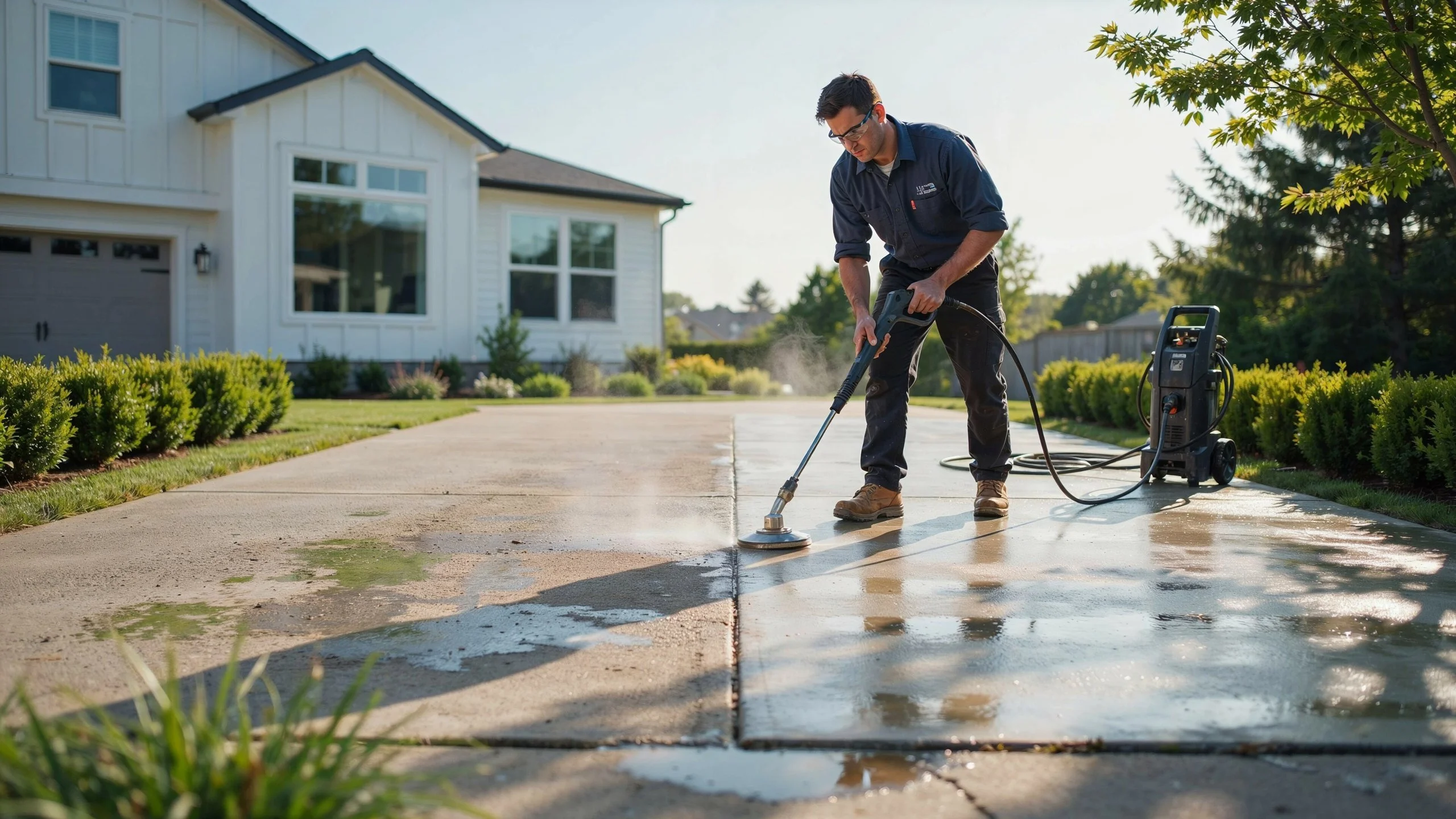
Pressure washing is the better choice for large areas, old stains, or sealed and decorative surfaces. It also works faster and needs less scrubbing than a vinegar solution.
Choose pressure washing over vinegar for:
- Driveways or patios larger than a few hundred square feet
- Years of built-up dirt, algae, or grime
- Oil stains, tire marks, or paint
- Sealed or stamped concrete that vinegar could damage
For homes in our area, our team offers Concrete cleaning services the north bay that use soft washing methods safe for sealed and decorative surfaces.
How to Prevent Concrete Stains
Once you know does vinegar clean concrete stains well, the next step is stopping them before they start. A few habits go a long way:
- Seal your concrete every two to three years. A good sealant blocks stains before they set in.
- Clean spills right away. Oil, wine, and rust-prone metal items should be wiped up quickly.
- Trim back plants and trees. Overhanging branches drop debris that feeds mold and algae growth.
- Improve drainage. Standing water leads to mineral buildup and mold, so make sure water flows away from the slab.
- Sweep regularly. Dirt and organic debris hold moisture against the surface, which speeds up staining.
When to Hire a Professional Concrete Cleaning Service
Some jobs go beyond what vinegar, or any DIY method, can safely handle. Call in a professional when you notice deep oil stains, widespread mold, cracking, or discoloration that won’t lift with scrubbing.
A professional service also brings the right equipment for large driveways, commercial lots, or decorative concrete that needs a gentle touch. At Bay Softwash, we use softwashing techniques designed to clean concrete thoroughly without the etching risk that comes with harsh acids or high-pressure equipment.
Common Mistakes When Cleaning Concrete With Vinegar
Even a simple method like vinegar cleaning can go wrong. Watch for these:
- Using full-strength vinegar on sealed concrete. One of the fastest ways to dull a sealant.
- Skipping the rinse. Leftover vinegar keeps reacting with the surface after you’re done.
- Mixing vinegar with bleach. This creates dangerous fumes and should never happen.
- Scrubbing with metal brushes. Wire bristles can scratch soft or aging concrete.
- Ignoring a patch test. Skipping this step is how stamped and colored concrete gets damaged.
Conclusion
So, does vinegar clean concrete? Yes, for light stains, mold, mineral buildup, and rust spots, it’s a solid, low-cost option. For oil stains, sealed surfaces, or large areas, it falls short and can even cause damage if used the wrong way.
Know your concrete type before you clean. Test a small area first, dilute your solution, and rinse well every time. For anything beyond light maintenance, a professional cleaning service can protect your concrete and save you the guesswork. Contact us today for professional concrete cleaning and get your surface looking its best.
FAQs
Is vinegar safe for all concrete surfaces?
No. Avoid it on sealed, stamped, or colored concrete, and always test a hidden spot first.
How long should vinegar sit on concrete before rinsing?
About 10 to 15 minutes for most stains, and up to 30 minutes for mold or algae.
Can I mix vinegar with baking soda for tougher stains?
Yes. The combination creates a mild abrasive paste that helps with rust and light stains, though it should still be rinsed off promptly.
Will vinegar damage concrete sealant?
It can. Repeated or full-strength use may dull or break down certain sealants over time.
What’s a better option for large driveways?
Pressure washing or a professional softwashing service handles large areas faster and more evenly than vinegar.