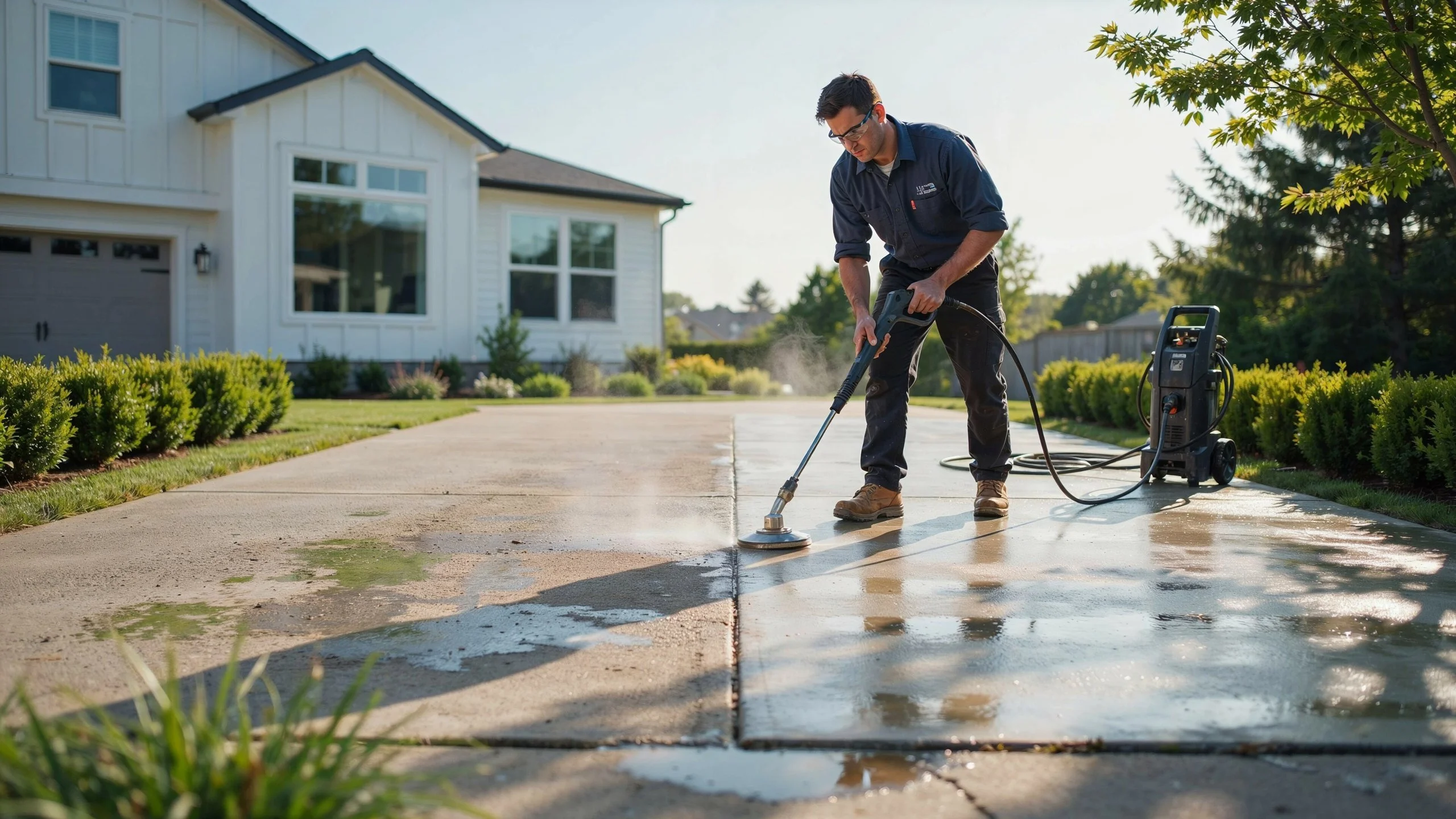
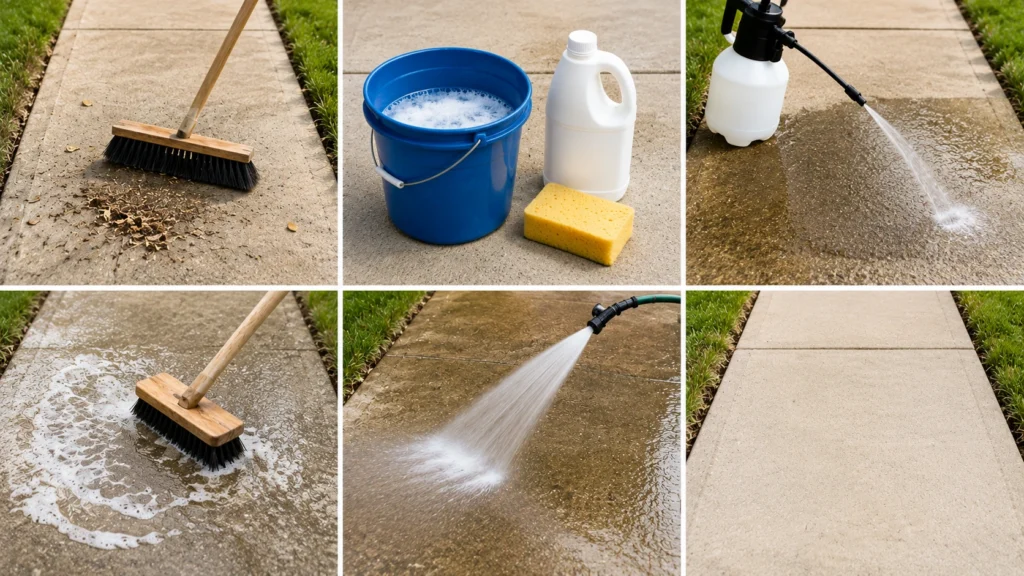
Grab a stiff broom, a hose, and a degreasing cleaner, then scrub in small sections and rinse before the solution dries. That’s the short version. It works on light dirt, but stained or oil-soaked concrete needs a stronger plan.
Knowing how to clean a concrete sidewalk the right way saves you money and stops small stains from turning into permanent ones. This guide walks you through every step, from picking supplies to deciding when to call a pro.
Why a Clean Sidewalk Matters More Than You Think
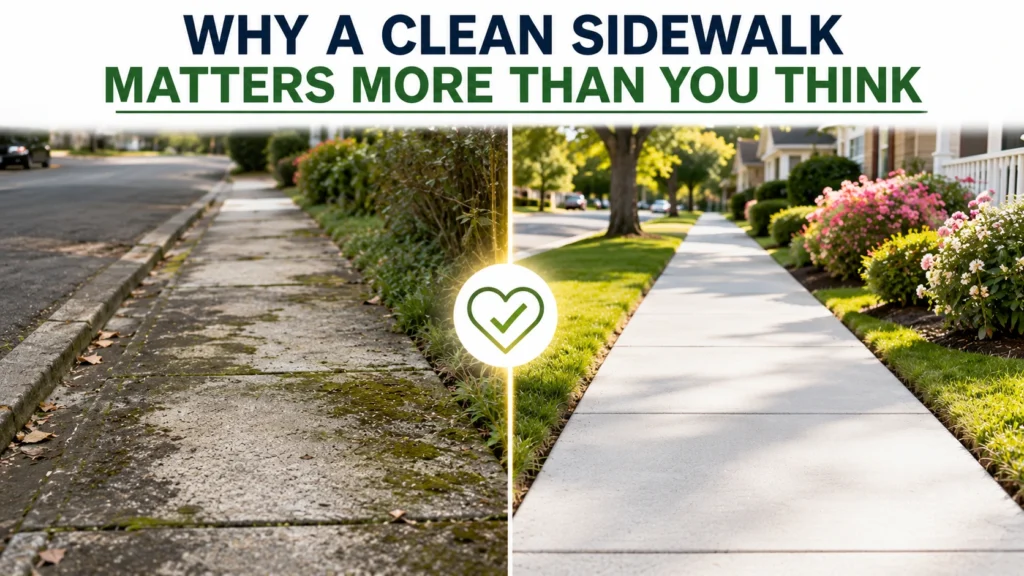
A dirty sidewalk isn’t just an eyesore. Algae and moss make the surface slick, and that’s a real trip hazard for anyone who walks up to your door. Grime also holds moisture against the concrete, which speeds up cracking during freeze-thaw cycles. In North Bay and other cold-climate towns, that cycle is brutal on untreated slabs. Cleaning your sidewalk regularly protects your property and keeps visitors safe.
Gather Your Supplies
Before you start, line up everything you need. Running back and forth for tools halfway through the job wastes time and lets your cleaning solution dry out.
You’ll want:
- A stiff-bristle push broom or deck brush
- A garden hose with a spray nozzle
- A bucket
- Dish soap or a dedicated concrete cleaner
- Baking soda or oxygen bleach for stains
- Rubber gloves and eye protection
- A pressure washer, if you have access to one
Skip wire brushes. They can scratch and pit the concrete surface, which actually traps more dirt over time.
Remove Loose Dirt
Start by sweeping the entire sidewalk with your push broom. Clear away leaves, twigs, sand, and loose debris. This step sounds basic, but it matters. Scrubbing wet dirt into concrete just grinds it deeper into the pores.
If you have a leaf blower, use it first to clear larger debris. Then follow with the broom to catch fine dust and grit. A clean starting surface makes every step after this one easier and faster.
Apply a Cleaning Solution
Mix warm water with a few tablespoons of dish soap in your bucket, or use a store-bought concrete sidewalk cleaning product built for outdoor use. Pour or spray the solution across a small section, about four to six feet at a time. Working in sections stops the cleaner from drying before you scrub it in.
For general dirt and light grime, dish soap works fine. For oil stains or heavier buildup, look for the best concrete cleaner you can find that’s labeled safe for exterior use and won’t harm nearby grass or plants.
Let the solution sit for five to ten minutes. This gives it time to break down grease and ground-in dirt before you start scrubbing.
Scrub the Concrete
Grab your stiff-bristle brush and scrub in a circular motion, then switch to straight strokes along the direction of the concrete’s texture. Put some weight behind it, especially on darker patches.
Work in the same small sections you used for the cleaning solution. This keeps the process organized and stops you from missing spots. For wide sidewalks, a long-handled scrub brush saves your back and lets you cover more ground per pass.
Rinse Thoroughly
Rinse each section right after scrubbing it, using a hose with a spray nozzle set to a strong, direct stream. Don’t let soapy water sit and dry on the surface. Dried soap leaves a hazy film that’s almost as annoying as the original dirt.
If you own a pressure washer, this step goes much faster. Pressure washing concrete sidewalk sections gets into small cracks and rough spots that a hose alone can miss. Keep the nozzle moving and hold it about a foot from the surface to avoid gouging the concrete.
Treat Stubborn Stains
Some stains laugh at soap and water. Oil, rust, and old tire marks need a targeted approach.
Oil and grease stains: Cover the stain with baking soda or cat litter to soak up fresh oil. Let it sit overnight, sweep it away, then scrub the area with dish soap and a stiff brush.
Rust stains: Mix lemon juice with baking soda into a paste. Apply it directly to the rust mark, let it sit for fifteen minutes, then scrub and rinse.
Dark, ground-in stains: For learning how to remove stains from concrete that have set in over months or years, oxygen bleach is your best bet. Mix it with warm water per the package directions, pour it over the stain, and let it sit for fifteen to twenty minutes before scrubbing and rinsing.
Avoid chlorine bleach on concrete near grass or garden beds. It kills plants and can leave white residue on the slab itself.
Let It Dry
Give your sidewalk at least a few hours to dry fully before walking on it or setting furniture back down. Wet concrete shows footprints and can trap dirt right back into the surface you just cleaned.
If rain is in the forecast, try to time your cleaning for a stretch of dry weather. A freshly cleaned sidewalk that gets rained on right away just collects new dirt and pools water in low spots.
Maintain the Sidewalk
A clean sidewalk doesn’t stay that way on its own. Sweep it once a week to keep loose dirt from building up. Rinse it down with a hose every couple of weeks during spring and summer, when pollen, mud, and plant debris pile up fastest.
Applying a concrete sealer every two to three years also helps. Sealer fills tiny pores in the surface, so dirt and stains have a harder time soaking in. It’s one of the simplest ways to keep concrete sidewalk cleaning fast and easy in the long run.
Common Mistakes to Avoid
A few habits slow down your results or damage the concrete:
- Using a metal wire brush. It scratches the surface and creates rough spots that collect more grime.
- Scrubbing dry concrete. Always wet the surface first so the cleaner can actually work.
- Skipping the rinse step. Leftover soap attracts dirt just as fast as the original stain did.
- Using too much pressure washer force. High settings can etch lines into softer or older concrete.
- Cleaning right before rain. Fresh cleaning solution gets washed away before it finishes working.
When to Hire a Professional
Some jobs go beyond a broom and a bucket. If your sidewalk covers a large area, has deep-set stains from years of buildup, or shows signs of cracking, a professional service saves you time and gets a more even result.
This is especially true if you’re dealing with oil stains from a driveway that has spread onto the connecting sidewalk. Professional driveway and sidewalk cleaning uses commercial-grade equipment and cleaning solutions that go deeper than anything available at a hardware store, without damaging the concrete surface.
Bay Softwash handles this kind of work for homeowners who want a thorough clean without the weekend labor. A trained crew can also spot early signs of concrete damage, like spalling or cracking, that are easy to miss until they turn into costly repairs.
Conclusion
Cleaning a concrete sidewalk is straightforward once you know the steps: clear debris, apply the right cleaner, scrub in sections, rinse well, and treat tough stains separately. Regular upkeep, a few times a season, keeps your sidewalk looking sharp and stops small stains from setting in for good.
For bigger jobs or stubborn buildup, calling in a professional crew is often the faster and safer choice. Need help getting your sidewalk clean? Contact us today for professional exterior cleaning services.
FAQs
How often should I clean my concrete sidewalk?
Sweep weekly and do a full wash every one to two months. Areas under trees or near gardens may need more frequent attention.
What is the best concrete cleaner for oil stains?
An enzyme-based degreaser or oxygen bleach solution works best. Both break down oil without harming the surrounding grass or plants.
Can I use a pressure washer on old concrete?
Yes, but keep the pressure setting moderate and the nozzle at least a foot from the surface. Older or crumbling concrete can chip under high pressure.
Is vinegar safe for cleaning concrete?
Vinegar works for light stains, but its acid can etch the surface over repeated use. Save it for small spot treatments rather than the whole sidewalk.
Does sealing a sidewalk stop future stains?
Sealing doesn’t make concrete stain-proof, but it slows how fast stains soak in, giving you more time to clean spills before they set.