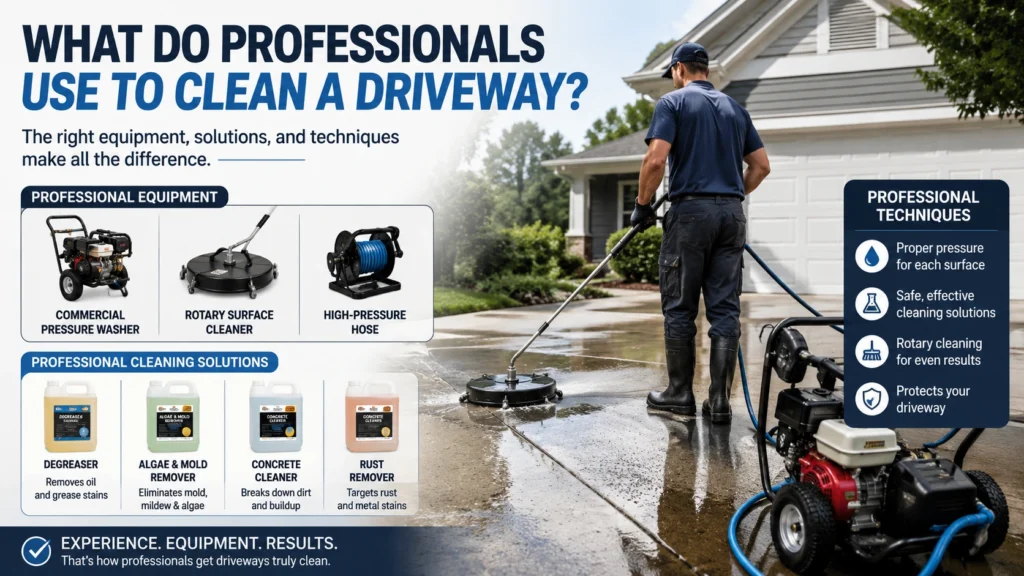
Your driveway takes a beating every single day. Cars drip oil. Rain leaves mud. Algae creeps in along the shady edges. After a while, that concrete or pavers surface looks tired and gray. So, what do professionals use to clean a driveway? Professionals use commercial pressure washers, pH-balanced cleaning solutions, and rotary surface cleaners to remove stubborn dirt and stains without damaging the surface.
At Bay Softwash, we pair professional equipment with the right cleaning methods to deliver safe, long-lasting results for every driveway.
Types of Driveway Surfaces
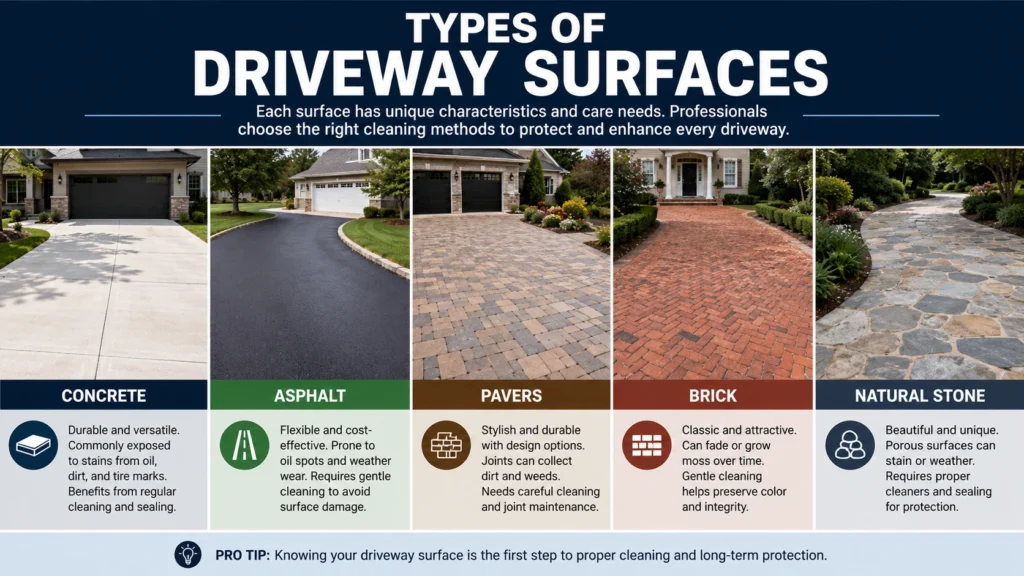
Not every driveway is the same, and that changes how a professional approaches the job.
Concrete
Concrete is the most common surface in North America. It’s porous, which means stains soak in deep. It needs a cleaner that can lift oil and rust without eating through the top layer.
Asphalt
Asphalt is softer and more sensitive to heat and pressure. Too much force can chew up the surface, so pros dial back the PSI and use wider spray patterns.
Pavers
Pavers have joints filled with sand or polymeric jointing compound. High pressure blasts that filler right out, so professionals use lower pressure and often re-sand the joints after cleaning.
Stamped or Decorative Concrete
Stamped or decorative concrete has texture and sometimes a sealer coating. Cleaning it wrong can strip the sealer or fade the color, so a gentler touch is standard here.
Knowing the surface first is what separates a professional from someone with a rental pressure washer and good intentions.
Professional Driveway Cleaning Equipment
This is where most people expect the answer to start, and for good reason. Professional driveway cleaning equipment is built for volume and control, not just raw power.
A commercial-grade pressure washer is the backbone of the job. These machines run higher flow rates than consumer models, usually between 4 and 8 gallons per minute, paired with adjustable pressure settings from 2,000 to 4,000 PSI depending on the surface.
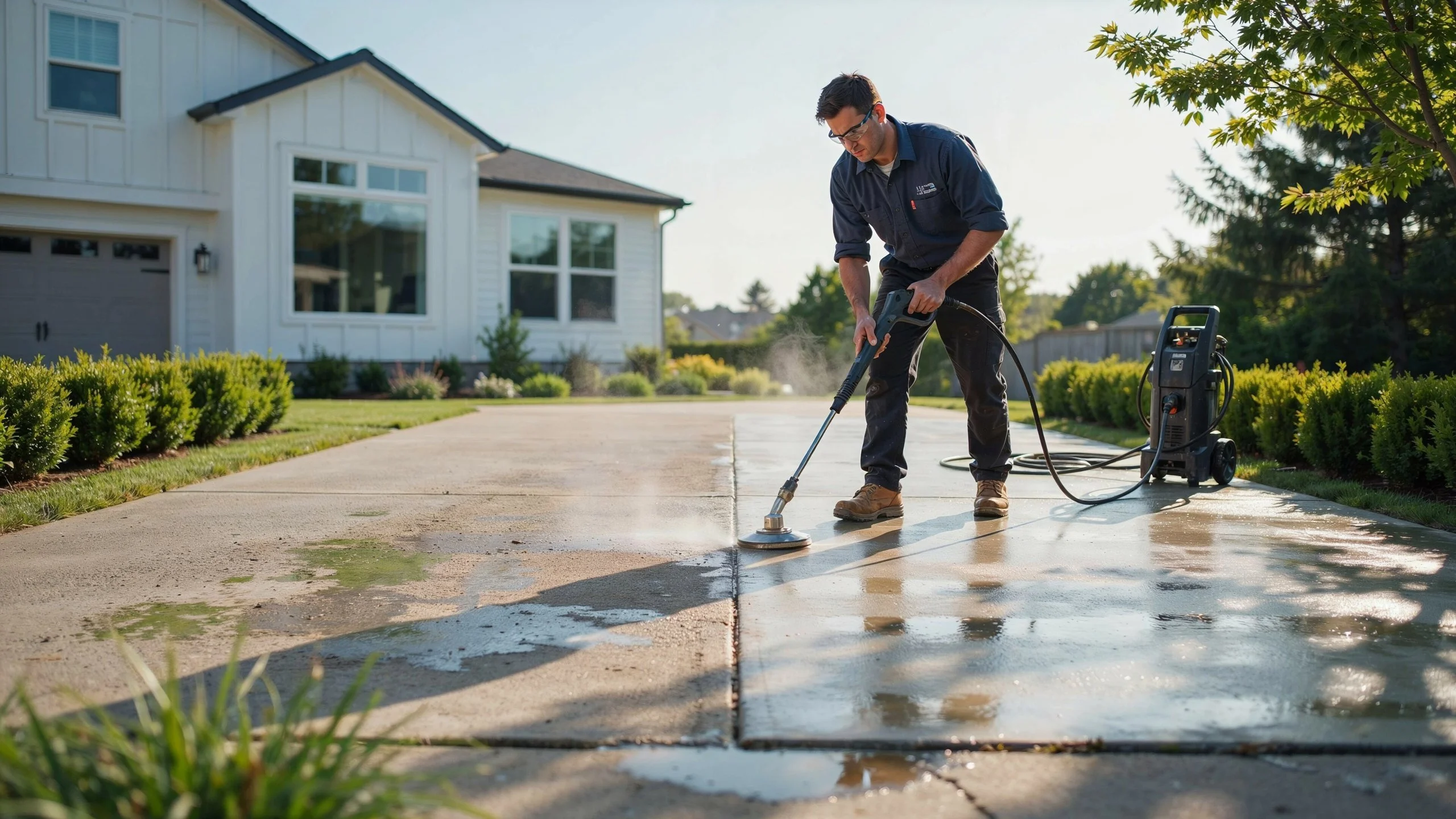
Surface cleaners are the attachment that makes the biggest visual difference. Picture a spinning disc with two or three nozzles underneath, gliding across the concrete in even passes. This tool prevents the streaky, zebra-stripe look you get from a handheld wand, and it covers ground far faster.
Hot water pressure washers are another step up. Heat breaks down grease and oil stains that cold water alone can’t touch, which matters a lot for driveways with years of car fluid buildup.
Chemical injectors let a technician apply a cleaning solution evenly before the rinse passes, so the product has time to work instead of getting blasted away instantly.
Professional Cleaning Solutions
Equipment only does half the job. The best driveway cleaning solution depends on what’s actually staining the surface.
For general dirt, algae, and mildew, a sodium hypochlorite based cleaner diluted to a safe ratio does most of the heavy lifting. It kills organic growth at the root instead of just rinsing the surface layer.
For oil and grease, professionals often reach for a degreaser with surfactants that break the bond between the stain and the concrete pores. This gets worked into the stain, left to sit, then rinsed with controlled pressure.
Rust stains need a different approach entirely. An acidic rust remover, applied carefully and rinsed fast, converts the iron oxide into a soluble form that washes away without bleaching the surrounding concrete.
Efflorescence, that chalky white residue you sometimes see on pavers, calls for a mild acid wash followed by a thorough rinse.
Good technicians also test a small hidden section first. Every batch of concrete reacts a little differently, and that quick test avoids surprises on the visible parts of the driveway.
How to Remove Driveway Stains
Since stain removal is usually the whole reason someone calls a pro in the first place, it’s worth breaking down the actual process.
The technician identifies the stain type first, because oil, rust, and organic growth all need different chemistry. Then they pre-treat the area, giving the solution dwell time to break the bond between the stain and the surface. After that, they agitate stubborn spots with a stiff brush if needed, since chemistry alone doesn’t always finish the job.
The final step is a controlled rinse using the right pressure for that specific surface. Rinsing too fast leaves residue behind. Rinsing too aggressively can etch soft concrete or blow out paver joints.
Old, set-in stains sometimes need a second treatment. That’s normal, and it’s one reason DIY attempts often fall short after just one pass.
The Professional Cleaning Process
A full driveway cleaning job follows a pattern that experienced crews repeat on nearly every visit.
First comes an inspection. The technician walks the driveway, checks for cracks, loose pavers, or sealant issues, and notes any spots that need special attention.
Next is pre-treatment, where cleaning solution goes down on stains and heavily soiled zones. This step alone often does 50 percent of the visible work before the pressure washer even turns on.
Then comes the main wash, using a surface cleaner for broad areas and a wand for edges, corners, and tight spots near garage doors or landscaping.
After the wash, there’s a rinse pass to clear away loosened dirt and chemical residue. Some companies finish with an optional sealant application, which protects the surface and makes future cleanings easier.
The whole process usually takes one to three hours depending on driveway size and how bad the staining is.
Safety Equipment Professionals Use
Pressure washing looks simple from the sidewalk, but the equipment involved carries real risk. A jet of water at 3,000 PSI can cut skin, which is why trained crews treat safety gear as non-negotiable.
Closed-toe, slip-resistant boots keep footing steady on wet surfaces. Safety glasses protect against flying debris and chemical splashback. Chemical-resistant gloves shield hands during solution mixing and application.
Many technicians also wear hearing protection during long jobs, since commercial pressure washer motors run loud for hours at a time. It’s a small detail, but it shows the difference between a rushed weekend job and a company that treats this as a real trade.
Eco-Friendly Cleaning Options
More homeowners are asking about eco-friendly cleaning now, and professionals have answers beyond just harsh bleach.
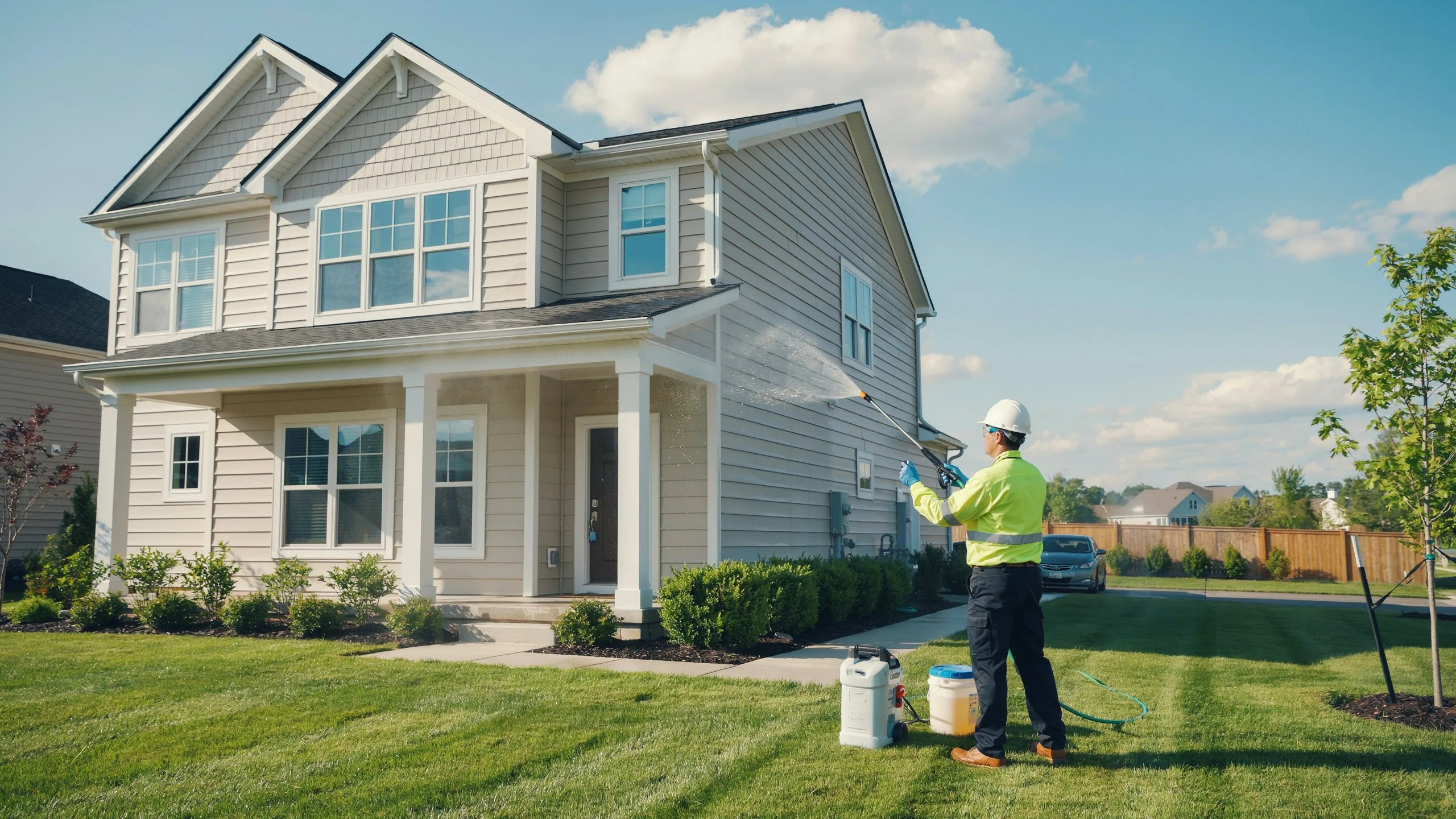
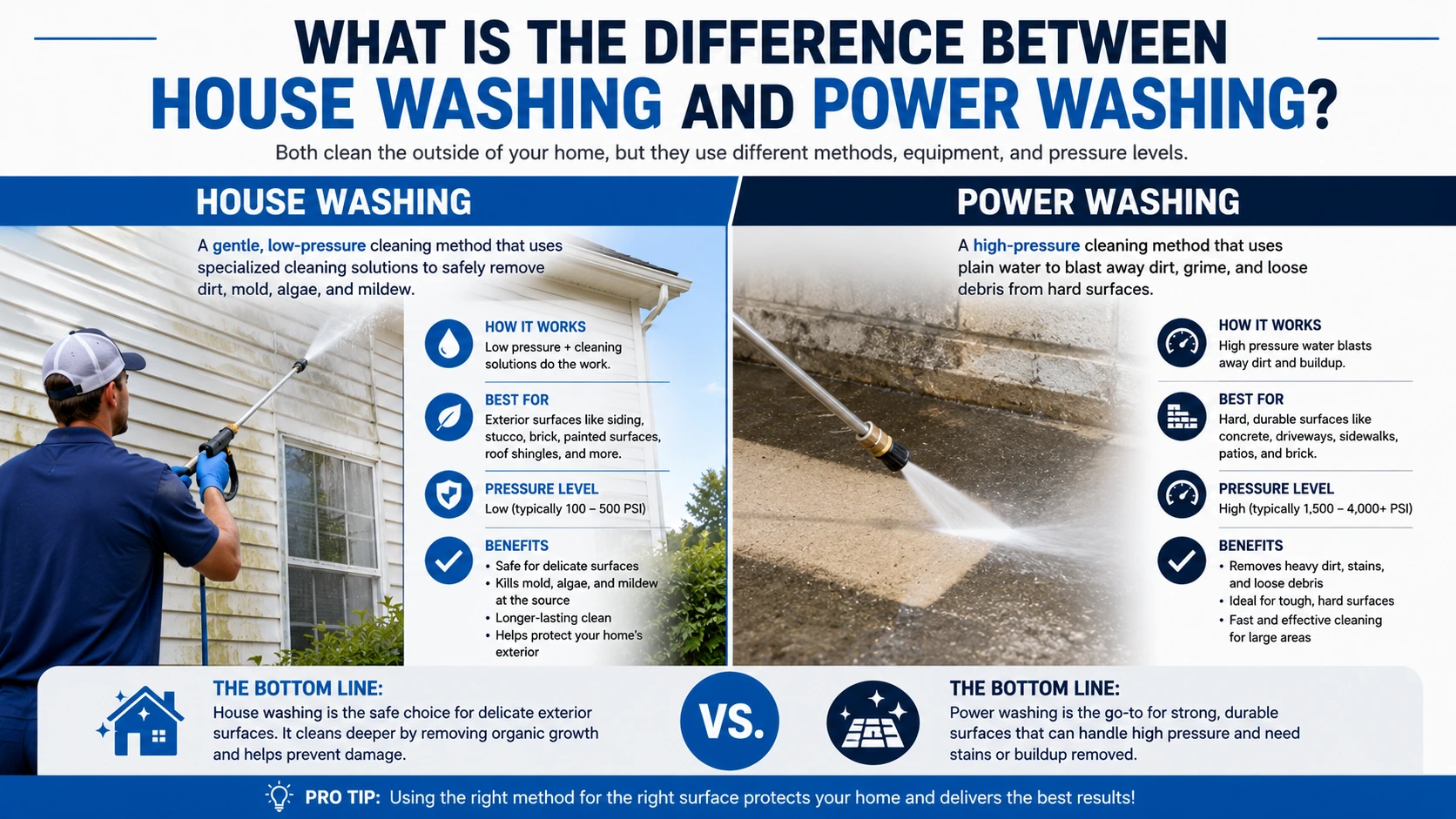
Biodegradable surfactants break down stains without leaving persistent chemical residue in the soil or nearby plants. Softwashing, which uses lower pressure combined with a targeted cleaning solution, reduces water waste compared to blasting a driveway at max PSI for an hour.
Some companies also use water reclamation systems on commercial jobs, capturing runoff so oil and chemical residue don’t wash straight into storm drains. This matters more than people realize, since driveway runoff often flows directly into local waterways.
Asking your provider about their chemical dilution ratios and runoff practices is a fair question, and a good company will answer it without hesitation.
Common Mistakes Professionals Avoid
Watching what pros don’t do is just as informative as watching what they use.
They don’t use a single narrow spray tip at close range on soft concrete, since that etches the surface fast. They don’t skip the pre-treatment step, because trying to blast away oil with plain water just spreads it around. They don’t ignore joint sand on pavers, since blowing it all out creates a bigger repair job than the original stains.
They also don’t mix chemicals randomly. Combining certain cleaners creates dangerous fumes, and experienced technicians know exactly which products can and can’t be paired.
Benefits of Hiring Professionals
DIY pressure washing may seem like an easy option, especially with rental equipment available at most hardware stores. But there’s a big difference between a rental machine and the tools and experience professionals bring to the job. Professionals use commercial-grade equipment, specialised cleaning solutions, and the right pressure for your driveway surface. They can also spot early signs of cracks, drainage problems, or surface damage before they become costly repairs.
There’s also the time savings. A job that might take a homeowner an entire afternoon often takes a trained crew just a couple of hours, with far better results.
If you’re looking for driveway washing in North Bay, Bay Softwash uses professional equipment and proven cleaning methods to remove stubborn stains without damaging your driveway. The result is a cleaner surface that lasts longer and looks its best.
Conclusion
So, what do professionals use to clean a driveway? It comes down to the right combination: commercial pressure washers, surface cleaners, targeted chemical solutions, and a process built around the specific surface in front of them. That combination is what separates a driveway that looks new again from one that still has faint stains and streaks after a weekend of DIY effort.
If your driveway has stains that won’t budge, or you just want it done without the guesswork, calling in a professional crew usually pays for itself in time saved and results that actually last. Contact us today for a free quote and let us restore your driveway to a like-new finish.
FAQs
How often should a driveway be professionally cleaned?
Most driveways benefit from a professional cleaning once or twice a year, depending on tree cover, traffic, and local weather.
Is pressure washing safe for all driveways?
No. Asphalt and stamped concrete need lower pressure than plain concrete, and pavers need special care around the joints.
Can professionals remove old oil stains?
Yes, in most cases. Set-in oil stains often need a degreaser treatment and sometimes a second pass, but they usually lift with the right chemistry.
Do I need to be home during the cleaning?
Not always. Many companies just need access to an outdoor water spigot and clear space to work.
Is softwashing better than regular pressure washing?
For sensitive surfaces, yes. Softwashing uses lower pressure and targeted chemicals, which reduces the risk of etching or damage while still lifting stains effectively.