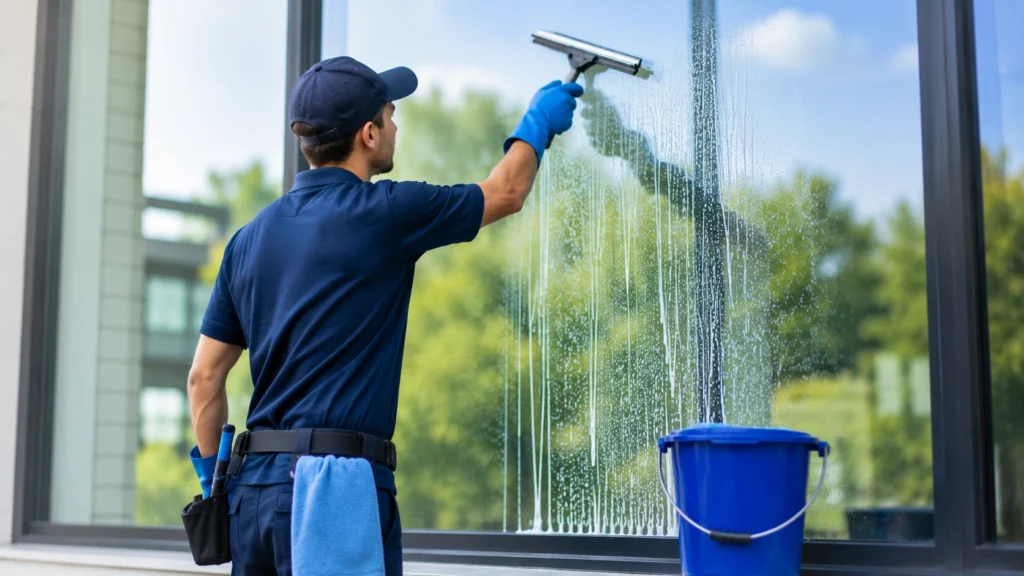
Clean windows can make a home or business look brighter, cleaner, and better cared for. But professional window cleaning involves more than wiping glass with a cloth. A trained cleaner uses the right tools, methods, and safety steps to remove dirt without damaging the glass or frames.
So, what does a window cleaner do? A window cleaner cleans interior and exterior glass, removes marks and buildup, cleans frames and sills, checks for visible problems, and works safely on hard-to-reach windows. The job can range from simple home cleaning to specialist work on large buildings.
What Does a Window Cleaner Do?
A window cleaner is responsible for keeping windows clean, clear, and presentable. At Bay SoftWash, our window cleaning work may include glass, frames, sills, tracks, screens, and other parts of a window system. For a typical home, our team first checks the windows for heavy dirt, paint spots, hard-water marks, damaged seals, or areas that need extra care. We then choose the right cleaning method and equipment for the surface. This careful approach helps deliver clean windows while protecting the glass and surrounding areas.
Exterior glass often needs more work than interior glass. Outdoor windows collect dust, pollen, rain marks, insects, and other debris. Indoor glass may have fingerprints, cooking grease, pet marks, and dust. A professional also considers the type and condition of the glass. Some surfaces need gentle tools or special cleaning methods. The goal is not just to make the window look clean. It is to clean it without causing scratches, streaks, or other damage.
What Are the Main Duties of a Window Cleaner?
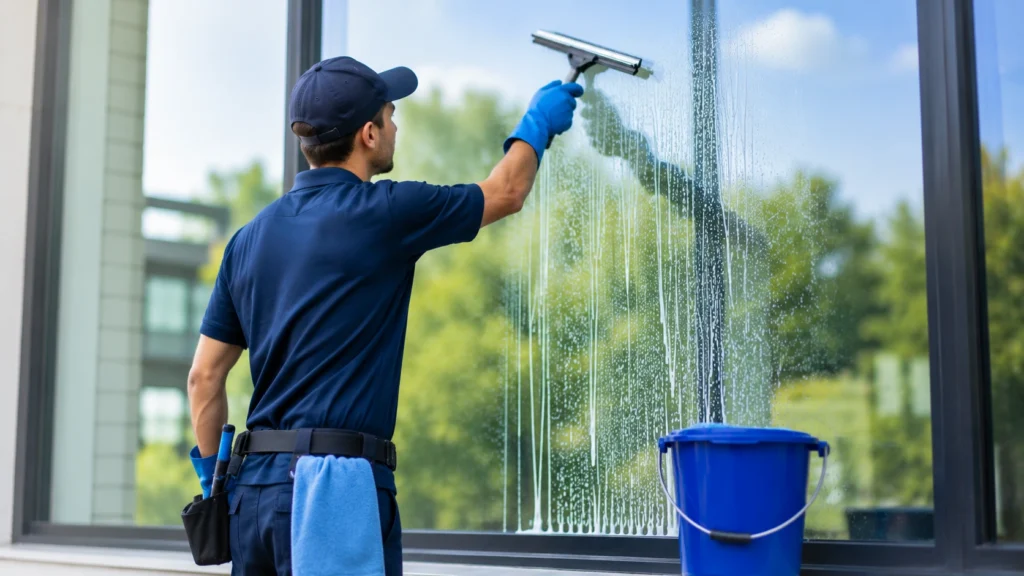
The exact window cleaner responsibilities depend on the property and the type of service requested. Common duties include:
Cleaning Interior and Exterior Glass
The main task is removing dirt and marks from glass surfaces. Cleaners may use a washer, squeegee, microfiber cloth, and suitable cleaning solution. They work in sections to reduce streaks and missed spots. They also pay attention to corners and edges where dirt can collect.
Cleaning Frames, Sills, and Tracks
Glass is only one part of a window. Dirt can build up around frames, tracks, and sills.
Cleaning these areas can improve the overall result. It can also prevent loose dirt from getting back onto freshly cleaned glass.
Removing Stubborn Marks
Some windows have marks that normal washing cannot remove. These may include mineral deposits, insect residue, paint specks, or other buildup. A trained cleaner knows when a mark needs extra treatment. They should also know when not to scrape or use a strong chemical because the surface could be damaged.
Working on Hard-to-Reach Windows
Some windows cannot be reached safely from the ground. Cleaners may use extension poles, water-fed systems, ladders, or other access equipment. Higher buildings may require specialist access methods and extra safety measures. The equipment used should match the height, building design, and working conditions.
Checking for Visible Window Problems
Window cleaners are not usually window repair specialists. However, they may notice problems during their work. They might spot cracked glass, damaged screens, loose seals, or other visible issues. A good cleaner can tell the customer about these concerns rather than ignoring them.
Where Do Window Cleaners Work?
Window cleaners work in many different settings. Their work is not limited to houses.
Common locations include:
- Single-family homes
- Apartments and condominiums
- Offices
- Shops and retail buildings
- Restaurants
- Hotels
- Schools
- Warehouses
- Commercial properties
- Large multi-story buildings
Residential work often involves smaller windows and direct contact with homeowners. Commercial work can involve larger glass areas and regular cleaning schedules.
Some cleaners also focus on specialist work. This can include high windows, skylights, glass doors, screens, or buildings with difficult access.
What Tools Does a Window Cleaner Use?
Good results depend on using suitable window cleaning equipment. A cleaner does not need every tool for every job.
Common equipment includes:
- Squeegees
- Window washers and scrubbers
- Buckets
- Microfiber cloths
- Extension poles
- Scrapers for suitable surfaces
- Cleaning solutions
- Water-fed poles
- Ladders
- Safety equipment
Water-fed poles can help cleaners reach some exterior windows from the ground. The system uses purified water and a brush to clean the glass. It can reduce the need for ladders in suitable situations. The right tool depends on the window, building, height, surface condition, and weather. Professional cleaners also need to keep their equipment clean and in good working order.
What Skills Does a Window Cleaner Need?
Window cleaning may look simple, but good work requires practice and care. A cleaner needs strong attention to detail. Small streaks or missed areas can be easy to see when sunlight hits the glass. They also need good hand control. Using a squeegee takes the right pressure and movement to remove water without leaving marks.
Physical fitness matters too. Cleaning can involve reaching, bending, carrying equipment, climbing, and standing for long periods. Safety awareness is one of the most important skills. Working near heights, wet surfaces, traffic, or electrical hazards can create serious risks. Good communication also matters. Cleaners need to understand what the customer wants and explain what their service includes.
Is Window Cleaning a Difficult Job?
Window cleaning can be physically demanding. The difficulty depends on the property and the type of work. A small home with ground-level windows is very different from a large building with high exterior glass. Weather can also affect the job. Strong wind, rain, extreme heat, or icy conditions may make certain work unsafe or unsuitable.
Height is another major factor. Cleaners should never take unnecessary risks to reach a window. Proper equipment and safe work methods are essential. The job also requires patience. Rushing can lead to streaks, missed areas, damaged surfaces, or unsafe movements.
Why Hire a Professional Window Cleaner?
Many homeowners can clean basic windows themselves. Professional help becomes more useful when windows are large, numerous, difficult to reach, or heavily soiled. Professional window cleaning can save time. A trained cleaner already has the tools and experience needed for the job.
Safety is another reason. Hard-to-reach windows can be dangerous when cleaned without suitable equipment. Professional cleaners can also provide a more consistent result. They know how to work around frames, screens, corners, and difficult marks.
For businesses, regular window cleaning services can help keep the property looking clean for customers, staff, and visitors. A professional service may also help you avoid buying equipment that you only use a few times each year.
How Often Should Windows Be Professionally Cleaned?
There is no single schedule that works for every property. The right frequency depends on the building, local weather, nearby trees, traffic, dust, and personal preference. Many homes benefit from professional cleaning once or twice a year. Some properties may need more frequent service because they collect dirt quickly. Commercial properties often need a regular schedule because clean glass affects the appearance of the business. If you live near busy roads, construction, trees, or coastal areas, your windows may become dirty faster.
For customers looking for a Window Cleaning service in north bay, Bay SoftWash can be considered when planning a local cleaning schedule. The best schedule should be based on how quickly your windows become dirty, not simply on a fixed calendar.
Window Cleaner vs. DIY Window Cleaning
DIY cleaning can work well for easily reached windows. It may be a practical choice when you have only a few small windows. The main challenge is time. Washing, drying, moving furniture, cleaning frames, and reaching every window can take longer than expected.
Safety is another concern. Using a ladder without proper training or stable conditions can create unnecessary risk.
A professional has the equipment and experience to handle many of these tasks more efficiently. They can also recognize when a particular window needs a different cleaning method. A simple rule is useful: if the window is easy to reach and safe to clean, DIY may be reasonable. If it is high, difficult to access, or heavily soiled, professional help is often the better option.
What Should You Ask Before Hiring a Window Cleaner?
Before booking a service, ask what the price includes. Some companies clean only the glass, while others include frames, sills, screens, or tracks. Ask whether the service covers both interior and exterior windows. Also ask about difficult-to-reach windows and any additional charges.
It is also useful to check whether the company carries suitable insurance and uses safe working practices. Look for clear service information rather than vague promises. A trustworthy cleaner should be able to explain what they will do, what equipment they use, and what customers should expect.
Conclusion
So, what does a window cleaner do? They clean glass and related window areas while using suitable tools and safe work methods. Their duties can include removing dirt, stains, dust, and buildup from interior and exterior surfaces. job requires more skill than simply wiping a window. Cleaners need attention to detail, physical ability, equipment knowledge, and a strong focus on safety.
For easy-to-reach windows, homeowners may handle the work themselves. For large properties, high windows, or regular cleaning needs, professional window cleaning can save time and reduce safety concerns. The best service clearly explains its work, uses the right equipment, and puts safe, careful cleaning first. Need clean, streak-free windows? Contact us today to schedule your professional window cleaning service and give your property a cleaner, brighter look.
FAQs
What does a window cleaner do every day?
A window cleaner typically washes glass, removes dirt and marks, cleans window edges, handles equipment, and checks finished areas for streaks or missed spots. The daily work changes based on the properties being serviced.
What equipment does a window cleaner use?
Common equipment includes squeegees, scrubbers, buckets, microfiber cloths, extension poles, cleaning solutions, and water-fed systems. Ladders and other safety equipment may be used when suitable.
Do window cleaners clean window frames?
Some do, but it depends on the service. Many professional services include basic cleaning of frames and sills. Customers should confirm what is included before booking.
Do window cleaners work on high-rise buildings?
Yes, some cleaners specialize in high-rise and other difficult-access work. These jobs require specialist training, equipment, and strict safety procedures.
How often should I hire a window cleaner?
Many homes need professional cleaning once or twice each year. Properties exposed to heavy dust, traffic, trees, or coastal conditions may need cleaning more often.
Is professional window cleaning worth it?
It can be worth it when windows are difficult to reach, heavily soiled, or numerous. Professional cleaners bring suitable equipment and experience, which can save time and reduce the risks of cleaning difficult windows yourself.
Can window cleaners remove hard-water stains?
Some mineral deposits can be treated with suitable cleaning methods. Results depend on the type and age of the stain and the condition of the glass. A professional should assess difficult marks before using aggressive methods.
What should I look for in a window cleaning company?
Look for clear service details, suitable equipment, safe work practices, good communication, and a clear explanation of pricing. Local experience can also be useful when the company understands common weather and building conditions in your area.