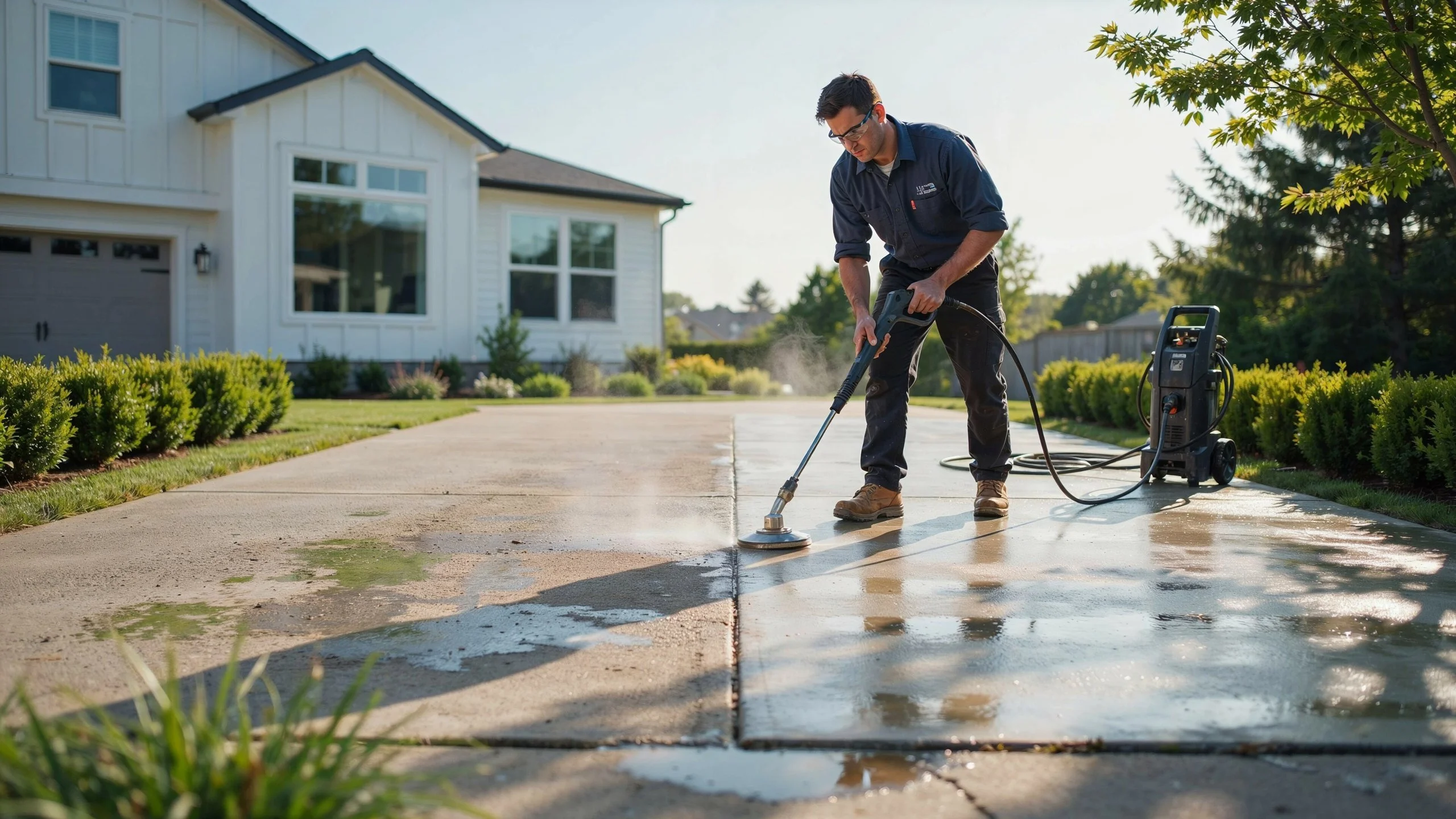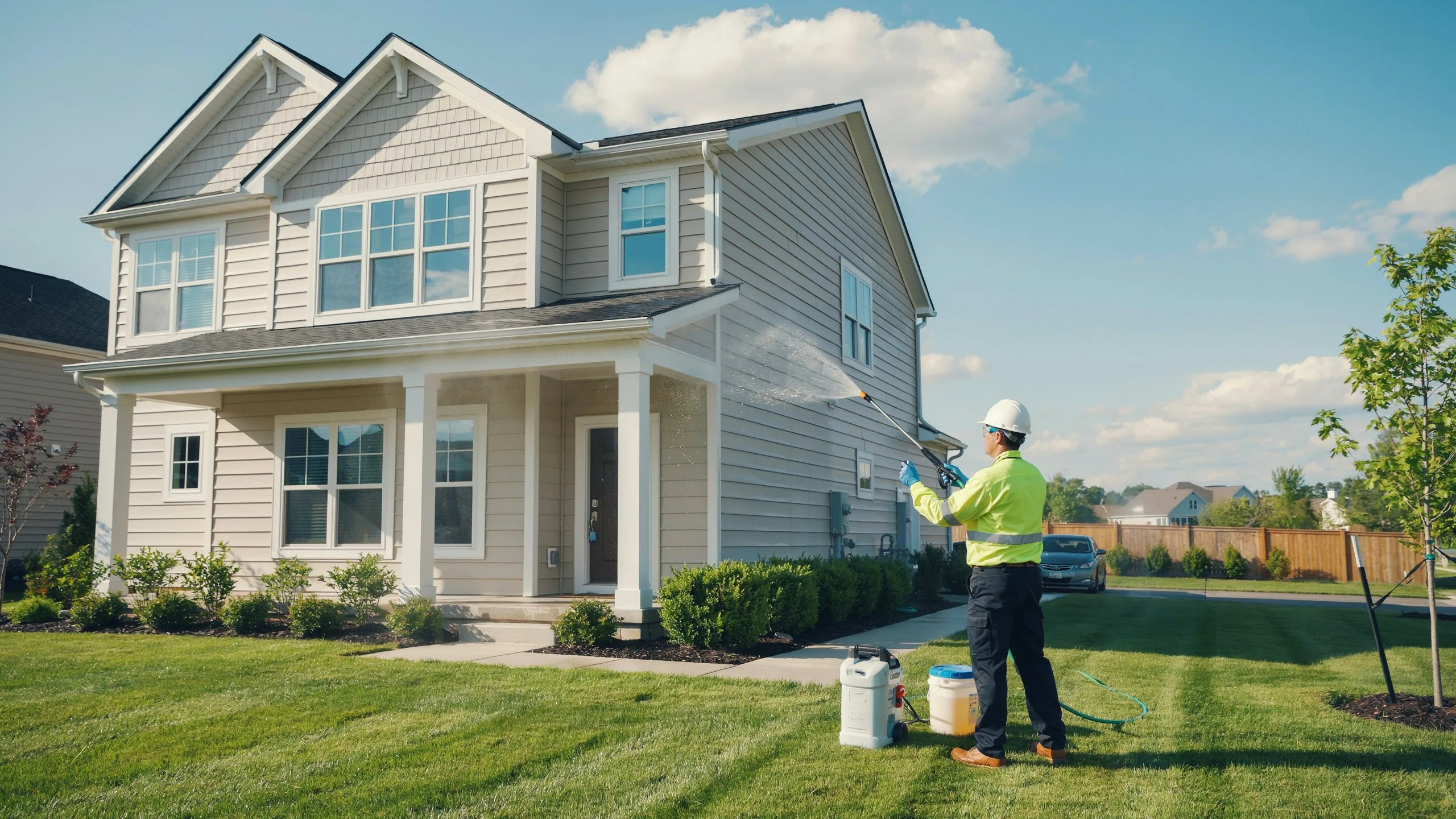
Pressure washing can quickly remove dirt, grime, mildew, and stains from your home. But starting too soon can damage surfaces or outdoor items. So, what should you do before pressure washing your home? Inspect the exterior, move loose items, shut windows, protect electrical parts, clear the work area, and choose a cleaner suited to the surface.
Good pressure washing preparation does more than make cleaning easier. It helps prevent water damage, surface damage, and avoidable safety problems. A few minutes of preparation can also help you get a cleaner and more even result.
Inspect the Exterior
Start with a slow walk around your home. Do not begin pressure washing until you know what surfaces you will clean and what areas need extra care.
Look for cracked siding, loose trim, peeling paint, damaged mortar, broken seals, and loose roof materials. High-pressure water can force its way into weak spots. It can also make an existing problem worse.
Pay close attention to:
- Vinyl, wood, brick, stucco, and painted surfaces
- Window and door frames
- Outdoor lights and electrical outlets
- Gutters and downspouts
- Caulk around windows
- Loose boards or trim
- Cracks in masonry
- Areas with heavy mold or mildew
Different materials need different pressure levels. Wood siding, old paint, and soft masonry can be damaged by too much pressure. If you find major damage, repair it before cleaning. If you are unsure whether a surface can handle pressure washing, test a small hidden area first or ask a professional.
This simple inspection is one of the most important steps when you prepare home for pressure washing.
Remove or Protect Outdoor Items
Next, remove anything that does not need to stay outside.
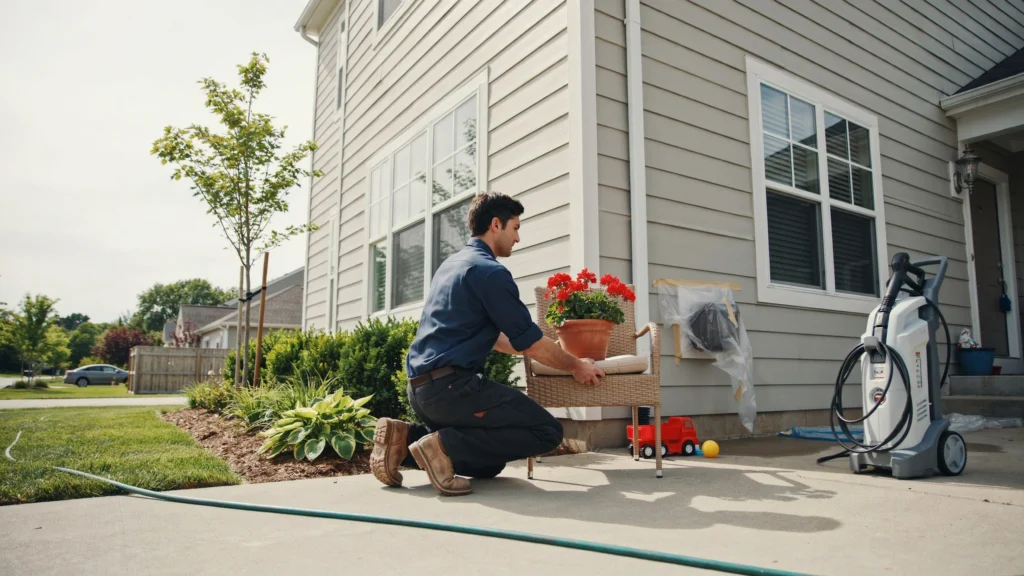
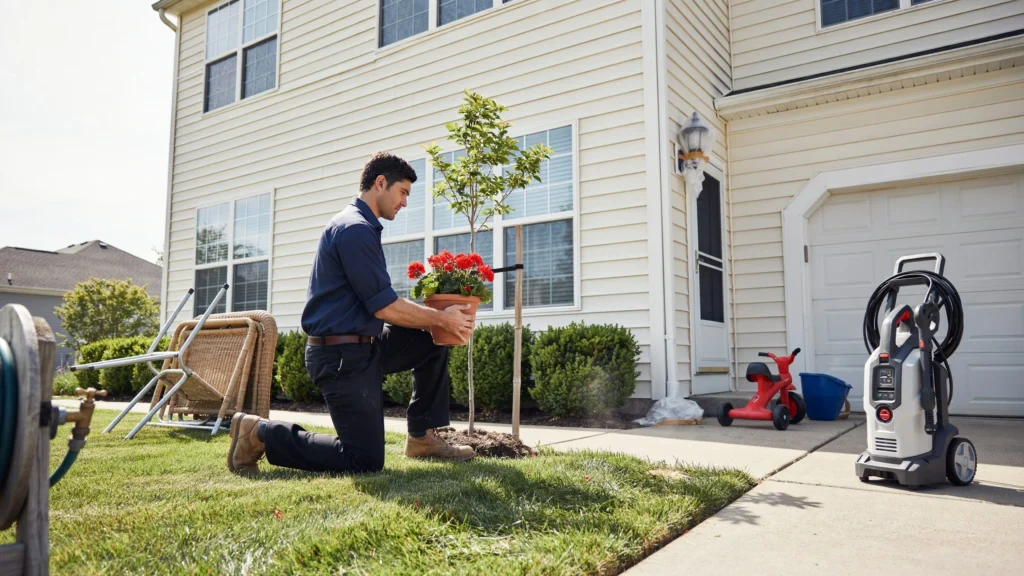
Move patio furniture, grills, children’s toys, garden tools, decorations, and small planters away from the walls. Remove hanging decorations if they are within the spray area. For items that cannot be moved, cover them with a waterproof cover. Secure the covers so they do not blow into the spray path. Plants also need care. Move potted plants when possible. For plants near the house, wet them with clean water before cleaning. This can reduce the amount of cleaning solution that reaches the leaves.
You should also protect delicate outdoor surfaces. Plastic decorations, screens, loose fabric, and fragile garden items can be damaged by strong spray. Do not assume that an item is safe just because it is several feet from the wall. Pressure washing can send water, dirt, and cleaning solution farther than expected.
Close Windows and Doors
Before starting, close every window and exterior door. Check basement windows, garage doors, patio doors, and small bathroom windows. It is easy to miss one when you are focused on the main living areas. Look at the seals around windows and doors as well. A worn seal can allow water to enter when spray hits the frame.
Never aim the wand directly at window edges, door gaps, or damaged seals. Even a properly closed window may not stop high-pressure water from entering through a weak point. Screens deserve extra care, too. They can tear or bend under strong pressure. If you have older windows, use lower pressure around the frames. Keep the spray moving instead of holding it in one spot.
These small steps reduce the chance of water getting inside your home.
Clear the Area
A clean work area makes the job safer. Remove hoses, toys, tools, loose branches, and other trip hazards from the area around your home. Keep walkways clear so you can move without stepping backward onto an object. Check the ground for slippery areas. Moss, algae, and wet leaves can make concrete and other surfaces dangerous.
You should also plan where the pressure washer will sit. Keep the machine on a stable, level surface. Make sure its power source and water connection are suitable for the equipment you use. If you are using an electric pressure washer, keep electrical connections away from standing water. Follow the manufacturer’s instructions for outdoor use. Good pressure washing preparation includes planning the spray direction. Try to work so dirty water does not run across areas you have already cleaned.
Decide What You Will Clean
Do not treat the entire exterior as one surface. Make a quick cleaning plan before turning on the machine. Separate areas by material and condition.
For example, you may have:
- Vinyl siding
- Brick walls
- Concrete walkways
- A wooden deck
- Painted trim
- Garage doors
- Fencing
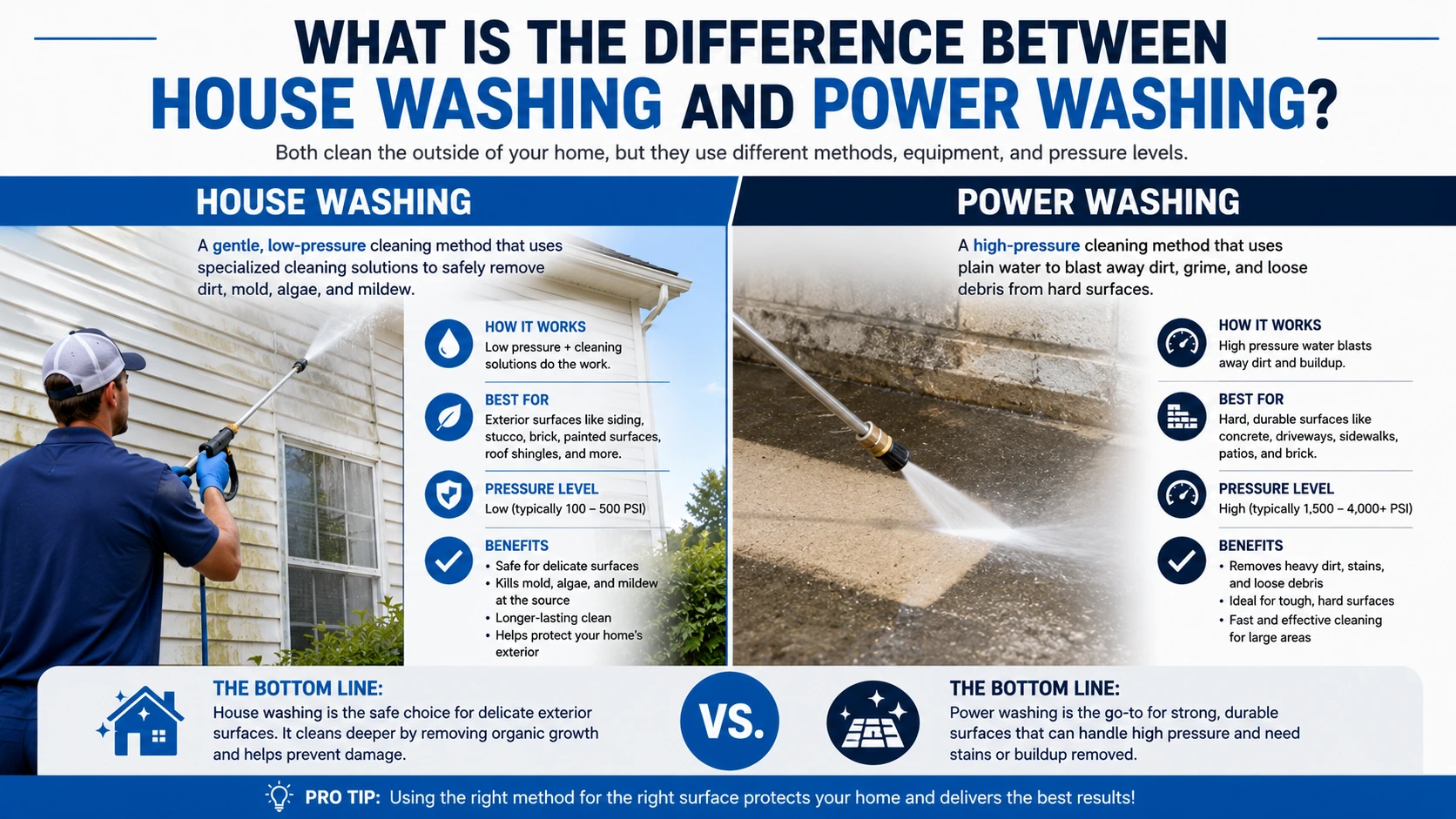
Each surface may require a different pressure level, nozzle, distance, or cleaning method. Some areas may not need pressure washing at all. Fragile screens, damaged paint, old wood, and certain roofing materials can require gentler cleaning methods.
This step also helps you avoid wasting time. Start with the areas that need the most attention. Then move to surfaces that need lighter cleaning.
Choose the Right Cleaning Solution
Cleaning solution can help loosen dirt before pressure washing. But the right product depends on the surface and the type of buildup. Read the product label before applying anything. Follow the mixing directions and never combine cleaning products unless the manufacturer says they are safe to mix. For general exterior cleaning, a suitable house wash product may help remove organic growth and surface grime. Tough stains may need a different treatment.
If you plan to use a local professional, you can also consider a House Cleaning service In north bay from a company that understands local exterior surfaces and cleaning needs. For local homeowners, Bay SoftWash can be a useful option when the surface calls for a gentler exterior cleaning approach. A key point is that stronger does not always mean better. A harsh cleaner or excessive pressure can damage paint, plants, seals, or siding. Also protect nearby plants and follow all label instructions. If the product calls for gloves, eye protection, ventilation, or other precautions, use them.
Protect Electrical and Sensitive Areas
Electrical components deserve special attention before pressure washing. Locate outdoor outlets, light fixtures, cameras, doorbells, electrical panels, and other sensitive equipment. Do not spray directly into these areas. Use covers designed for outdoor electrical protection where appropriate. Make sure the cover itself is suitable for the equipment and conditions.
Do not rely on tape or makeshift plastic wrapping as a substitute for proper protection. Also check vents and openings. Water should not be forced into dryer vents, attic vents, or other openings in the exterior. If you notice exposed wiring or damaged electrical equipment, stop and have the problem addressed before washing.
Plan for Safety
Safety should be part of your pre-pressure washing checklist, not an afterthought. Wear shoes with good traction. Wet concrete and algae-covered surfaces can become very slippery. Eye protection is also important because pressure washing can throw dirt and small debris into the air. Keep children and pets away from the work zone. Do not let anyone stand near the spray path.
Never point the wand at a person or animal. Pressure washers can cause serious injuries when used incorrectly. Be careful when working from ladders. The force of the spray can affect your balance. A safer option may be using an extension wand or hiring a professional for elevated areas. Never spray near power lines. Keep the equipment, hose, and wand away from electrical hazards. These pressure washing safety tips can prevent common accidents and make the job easier to control.
Use the Correct Pressure and Nozzle
Preparation also means choosing the correct equipment settings. More pressure is not automatically better. The goal is to remove dirt without damaging the surface underneath. Start with a wider spray pattern and lower pressure. Keep the wand at a safe distance from the surface. Move closer only when needed and only when the material can handle it.
Test the spray on a small, hidden section first.
Watch for warning signs such as:
- Paint lifting
- Wood fibers becoming rough
- Siding bending
- Mortar breaking apart
- Water getting behind siding
- Surface marks appearing
If you see damage, stop and reduce the pressure or change your cleaning method.
This approach is safer than starting with maximum pressure and trying to correct damage afterward.
Do a Final Walk-Through
Before starting the machine, take one last look around the property. A simple final check can catch things you missed earlier.
Pre-pressure washing checklist
- Inspect walls, trim, windows, and doors
- Repair obvious damage
- Move furniture and outdoor items
- Protect plants and delicate objects
- Close all windows and doors
- Protect sensitive electrical areas
- Clear walkways and trip hazards
- Choose the correct cleaning solution
- Select the proper nozzle and pressure
- Test a small area first
- Put on safety gear
- Keep children and pets away
- Check the hose and equipment
- Plan where dirty water will drain
This final check takes only a few minutes but can prevent costly mistakes.
When Should You Skip DIY Pressure Washing?
Not every cleaning job is a good DIY project. Consider professional help when the home has extensive surface damage, difficult access, high exterior walls, delicate materials, or heavy biological growth. Professional cleaners can also help when you are unsure about pressure levels or cleaning chemicals.
A skilled technician from Bay SoftWash should inspect the surface before choosing a cleaning method. That matters because the safest method for concrete may not be suitable for wood or painted siding. The goal is not simply to make the house look clean. It is to clean it without causing new problems.
Conclusion
So, what should you do before pressure washing your home? Inspect the exterior, protect vulnerable areas, move outdoor items, close openings, clear the work zone, select the right cleaner, and plan your safety steps. Do not rush straight to the pressure washer. Good preparation helps you spot damage, protect your belongings, and choose the right method for each surface.
If you are still wondering what should you do before pressure washing your home, use the checklist above before every project. A careful start can make the cleaning safer, easier, and more effective. Need professional pressure washing services? Contact us today to get started!
FAQs
Should I wet my house before pressure washing?
It depends on the cleaning method and product you use. Some exterior cleaners are applied to a dry surface, while others have different instructions. Always follow the product label.
Should I move furniture before pressure washing?
Yes. Move patio furniture, toys, decorations, tools, and other loose items away from the cleaning area. Cover anything that cannot be moved.
Should windows be open or closed when pressure washing?
Keep windows and exterior doors closed. Avoid spraying directly at window frames, seals, screens, and door gaps.
What should I protect before pressure washing?
Protect plants, outdoor furniture, electrical components, lights, cameras, vents, screens, and fragile decorations. Pay extra attention to anything close to the spray area.
What pressure should I use to wash my house?
There is no single pressure setting that works for every home. The correct setting depends on the material, condition, nozzle, and cleaning method. Start gently and test an inconspicuous area.
Is pressure washing safe for vinyl siding?
It can be, when the equipment and pressure are used correctly. Avoid forcing water behind panels or spraying directly into seams, vents, windows, and damaged areas.