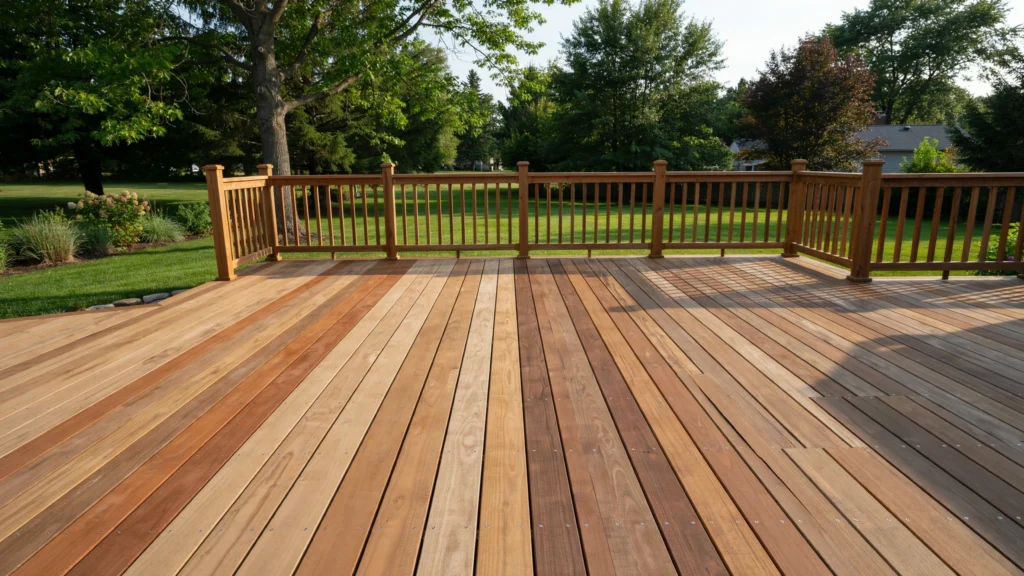
Choosing a deck stain is not only about picking a color you like. The right product should match your wood, weather, sun exposure, and deck condition. Some stains show the natural grain, while others cover more of the wood. Your choice also affects how often you need to maintain the deck.
A good stain can improve the look of outdoor wood while helping protect it from sun and moisture. The key is choosing a product made for exterior wood and applying it to a clean, dry surface.
What Stain Should I Use on My Deck?
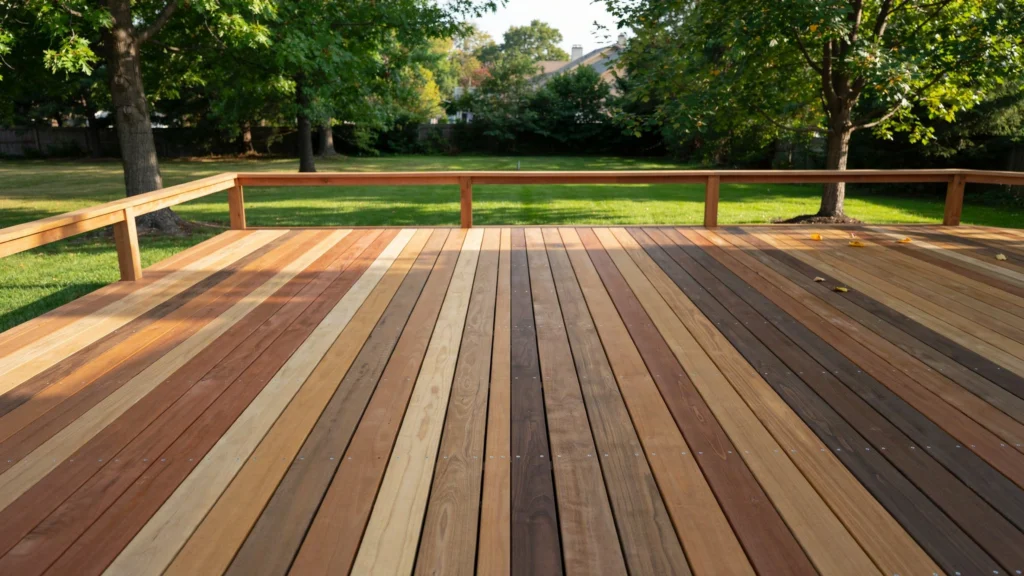
For most wood decks, a semi-transparent stain is a strong choice when you want color while keeping the natural grain visible. It works well on sound wood that still has an attractive surface. A transparent stain is better when you want to show as much grain as possible. A semi-solid stain gives more color while still showing some texture. A solid stain offers the most coverage and can work well when older wood has uneven color.
The best deck stain depends on the deck in front of you. A new cedar deck has different needs than an older pressure-treated deck with faded boards.
Before choosing a product, check these five things:
- Wood type
- Wood age and condition
- Sun exposure
- Moisture and rain exposure
- Desired color and coverage
The right stain should also be labeled for exterior use. Never use an interior wood finish on an outdoor deck.
What Is Deck Stain?
Deck stain is a wood finish made for outdoor surfaces. Depending on the product, it can add color, help reduce moisture exposure, and provide protection from sunlight. Many deck stains contain pigments. Those pigments can help reduce the effects of UV exposure while changing the wood’s appearance. Penetrating stains soak into the wood instead of forming a thick surface layer. The USDA Forest Products Laboratory explains that exterior stains can protect wood from sunlight and moisture. It also notes that penetrating stains are less likely to crack and peel like some film-forming finishes.
Deck stain is not the same as paint. Paint creates a stronger surface film and hides most of the wood grain. Stain usually allows more of the wood’s texture to remain visible. A stain also does not repair rotten or weak boards. If the wood has structural damage, fix that problem before applying any finish.
How to Choose the Right Deck Stain
Consider Your Wood Type
Your wood type can affect how stain looks and performs.
Pressure-treated pine is common on residential decks. It can absorb stain unevenly when the wood is new or has not dried enough.
Cedar has a naturally attractive grain and color. A transparent or semi-transparent stain can preserve much of that appearance.
Redwood also has a rich natural color. A penetrating stain can help maintain the wood’s appearance while adding protection.
Older wood needs a different approach. Gray, dry, or heavily weathered boards may need cleaning and preparation before they can accept a new finish evenly.
Always test your chosen stain on a small hidden area first. The color on a sample board may look different from the finished deck.
Consider the Condition of Your Deck
The condition of the wood matters as much as its species. New wood may need time to dry before staining. Follow the stain manufacturer’s instructions rather than using a fixed waiting period for every deck. Weathered wood may need cleaning to remove dirt, mildew, old residue, and loose fibers.
If the existing finish is peeling, you may need to remove failing material before applying another product. Staining over a weak coating can lead to poor results.
Look closely at:
- Cracked boards
- Soft spots
- Rot
- Loose screws or nails
- Damaged stairs
- Worn railings
- Areas that stay wet
Stain should protect sound wood. It should never be used to hide a safety problem.
Consider Sun and Weather Exposure
A deck in full sun faces heavy UV exposure. A shaded deck may have more moisture and organic buildup. Think about how water moves across the deck. Poor drainage can leave certain boards damp for longer periods. If your deck receives strong sunlight, pigment becomes an important factor. Pigmented stains generally provide more protection against UV exposure than clear finishes.
The USDA Forest Service notes that finish performance depends on factors such as weathering, moisture, wood properties, and exposure. Your local climate should also influence your maintenance plan. A deck exposed to frequent rain may need attention sooner than a covered deck in a dry area.
Oil-Based vs. Water-Based Deck Stain
Both oil-based and water-based products can be used for exterior wood, but they have different characteristics. An oil-based deck stain can penetrate wood well and often creates a rich, natural appearance. It may be a good fit when you want the grain to stand out.
Oil-based products can take longer to dry. They may also require specific cleanup methods, so always follow the product label. A water-based deck stain usually dries faster and is often easier to clean up. Many modern water-based formulas are designed for outdoor wood and provide good color and protection.
Neither type is automatically the best for every deck. Look at the product’s intended use, the condition of your wood, and the manufacturer’s application instructions. Do not choose based only on the words “oil” or “water.” The quality and formula of the individual product matter.
What Color Should I Stain My Deck?
Color should support both the wood and your home. Natural brown and cedar shades are popular because they complement many outdoor spaces. Gray stains can create a softer, modern appearance. Darker colors can create a bold look but may show dirt and wear more clearly. A lighter color can also make worn areas less obvious on a busy deck.
Before buying enough stain for the entire project, test the color on the actual wood. Old wood can change the final color because it absorbs stain differently than new lumber. Look at your test area during different times of day. Sunlight can change how the color appears. If your deck connects directly to the house, consider the siding, trim, doors, and outdoor furniture. The best deck stain should look like part of the overall space.
Should I Use a Transparent or Solid Stain?
This choice comes down to how much wood grain you want to see.
Transparent stain provides the most natural appearance. It works best when the wood is attractive and relatively uniform.
Semi-transparent stain adds more color while keeping much of the grain visible. It is a practical choice for many sound wood decks.
Semi-solid stain offers stronger color and more coverage. It can help create a more even appearance on aging wood.
Solid stain hides most of the natural grain while allowing the wood texture to remain. It can make an older deck look more uniform.
For horizontal deck surfaces, product selection matters. USDA guidance notes that some solid-color stains are less suitable for horizontal surfaces because they can peel under outdoor exposure.
Always check the label to make sure the product is designed for deck floors.
How to Prepare Your Deck Before Staining
Preparation can make or break the finished result. Start by removing furniture, leaves, dirt, and other debris. Clean the surface using a method that suits the wood and existing finish. Mildew and organic growth should be addressed before staining. If an old coating is failing, remove the loose material rather than covering it. Inspect the boards after cleaning. Replace rotten or badly damaged wood before applying stain.
Allow the deck to dry as directed by the product manufacturer. Applying stain to wet wood can affect absorption and drying. If sanding is needed, use it to smooth rough areas and remove loose fibers. Avoid over-sanding the surface if the chosen stain needs the wood to accept the product. Good preparation takes time, but it helps create a more even finish and reduces avoidable problems.
Common Deck Staining Mistakes to Avoid
Several mistakes can make an otherwise good stain job fail early.
Staining dirty wood: Dirt can prevent the product from reaching the wood.
Staining wet boards: Moisture can affect absorption and drying.
Ignoring failing old stain: New stain cannot reliably fix a loose or peeling coating.
Choosing only by color: A great color is useless if the product is wrong for your deck.
Applying too much stain: Extra product does not always mean extra protection. Follow the coverage and application directions.
Skipping a test area: The finished color can change based on the wood underneath.
Ignoring the weather: Rain, high moisture, strong heat, or unsuitable temperatures can affect the application.
Using the wrong product: Choose an exterior wood stain designed for decks and horizontal surfaces.
How Long Does Deck Stain Last?
There is no single lifespan that applies to every deck. Sun, rain, foot traffic, wood type, stain type, preparation, and application all affect how long a finish looks and performs. Horizontal boards usually experience more wear than vertical rails. Areas near stairs and doorways can also fade faster because they receive more foot traffic.
Rather than relying only on a calendar, inspect the surface.
Signs that your deck may need attention include:
- Faded color
- Dry-looking boards
- Uneven appearance
- Increased water absorption
- Worn areas in high-traffic spots
- Peeling or failing finish
A maintenance schedule based on the deck’s actual condition is more useful than blindly staining every year.
Can You Stain an Old Deck?
Yes, an old deck can often be stained if the wood remains sound. Older boards may need more preparation than new lumber. Gray wood, dirt, mildew, and old coatings can affect how evenly the new stain absorbs. Start with an inspection. If boards are soft, rotten, or badly damaged, repair them first.
Then clean the surface and address the old finish. Depending on the existing coating, stripping or sanding may be needed. An older deck can benefit from a semi-transparent, semi-solid, or solid stain depending on its condition and your desired appearance. Do not choose a heavy-coverage stain simply because the wood looks old. First determine why the wood looks worn.
When Should You Hire a Professional?
A small deck may be manageable as a DIY project. A large or badly weathered deck can require much more preparation.
Professional help may make sense when you have:
- Extensive mildew buildup
- Old peeling coatings
- Large areas of weathered wood
- Multiple repairs
- Difficult access
- A large deck
- Little time for preparation
A professional can inspect the surface, identify preparation needs, and help select an appropriate product. The goal is not just to apply stain quickly. The goal is to prepare the wood correctly and create a finish that suits the deck.
Professional Deck Staining Services
If you prefer professional help, Bay SoftWash can assist with the cleaning and preparation needed before staining. For homeowners searching for Deck Staining services north bay, the process should include more than simply brushing stain across the boards. A proper service should begin with an inspection. The deck should then be cleaned and prepared based on its condition. Damaged areas should be identified before the finish is applied.
The stain should be selected for the wood, exposure, and intended use. Application should follow the product directions, including coverage and drying requirements. This approach helps avoid common problems such as uneven color, poor absorption, and premature wear.
Conclusion
So, What Stain Should I Use on My Deck? For many sound wood decks, a semi-transparent stain offers a useful balance between color and natural grain. However, the right choice depends on the wood, condition, exposure, and finish you want. Transparent stains suit attractive wood where grain is the main feature. Semi-solid stains provide more color. Solid stains offer stronger coverage but need careful product selection for horizontal deck boards.
The best deck stain is not simply the one with the highest rating or most attractive label. It is the product that fits your specific deck and can be applied correctly. If your deck needs professional attention, contact us today to discuss your deck staining needs and find the right approach for your outdoor space.
FAQs
What Stain Should I Use on My Deck?
Choose based on your wood, deck condition, exposure, and desired look. A semi-transparent stain is a common choice when you want both color and visible wood grain.
What is the best deck stain for an old deck?
An old deck may benefit from semi-solid or solid stain when the wood has uneven color. However, the surface must be sound and properly prepared first.
Is oil-based or water-based deck stain better?
Both can work well. An oil-based deck stain may provide a rich penetrating appearance, while a water-based deck stain often dries faster and offers easier cleanup.
Should I use transparent or solid stain?
Use transparent stain when you want to preserve natural grain. Choose solid stain when you want more color coverage and a more uniform appearance.
Can I stain a pressure-treated deck?
Yes. Pressure-treated wood can be stained when it is ready to accept the finish. Follow the stain manufacturer’s instructions for moisture and preparation.
Can I stain over old deck stain?
Sometimes. If the existing coating is sound, the right product may work over it. Peeling or failing stain usually needs removal before applying a new finish.