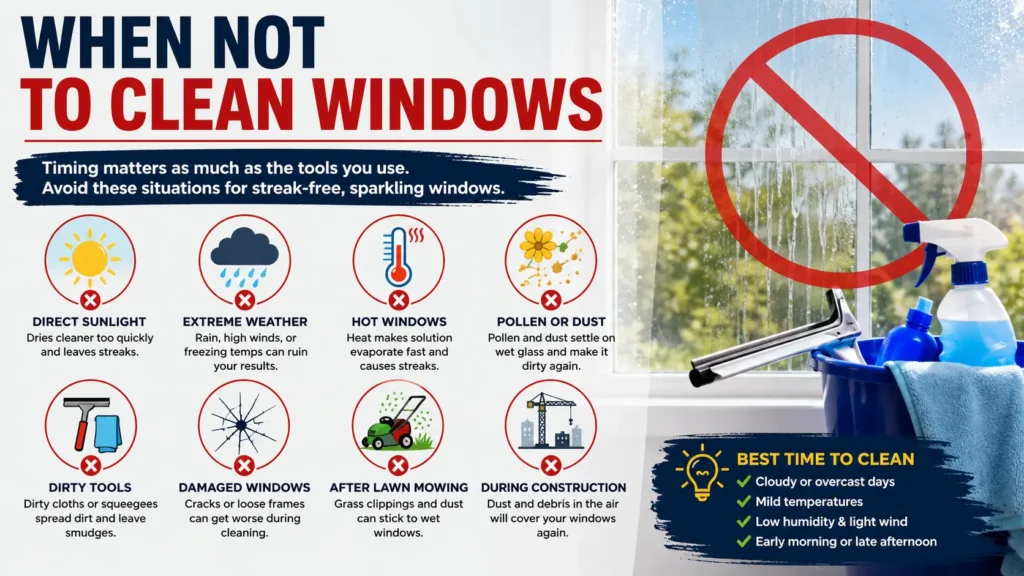
You should never clean windows in direct sunlight, during storms, on scorching hot days, during pollen season, with dirty tools, or when the glass is cracked. Each of these conditions leaves streaks behind, wastes your effort, or puts you at risk. Knowing when not to clean windows saves you time and helps protect your glass from unnecessary damage.
The wrong timing can turn a simple weekend task into a frustrating, streaky mess. At Bay Softwash, we believe the right timing and proper cleaning methods make all the difference. Following these simple tips will help you achieve cleaner, streak-free windows that stay looking their best for longer.
Avoid Cleaning in Direct Sunlight
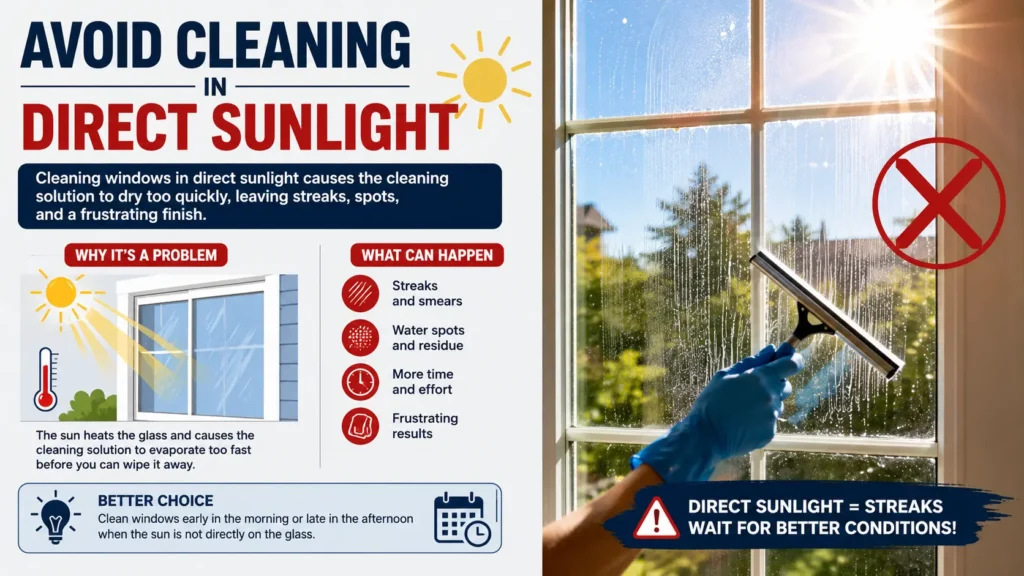
Sunlight is one of the biggest reasons window cleaning goes wrong. When the sun hits the glass, it heats the surface fast. Your cleaning solution dries before you can wipe it away. That leaves behind chalky streaks and water spots that look worse than the dirt you started with.
Professional cleaners work in the shade for a reason. If you clean the south or west side of your house at noon, you are fighting a losing battle. Move to that side of the house later in the day, once the sun has shifted away from it. This one change alone fixes most streaking problems homeowners deal with.
This is a core reason people ask when not to clean windows in the first place. Sun exposure is sneaky because the glass still looks dirty enough to justify cleaning, but the timing works against you every time.
Don’t Clean During Extreme Weather
Rain, wind, and storms all ruin a good window cleaning session. Rain washes away your work before it even dries. Wind blows dust and debris right back onto the glass while you clean, and it can push your ladder off balance if you are working on upper floors.
Heavy wind also dries cleaning solution unevenly, which causes streaks similar to direct sun. If a storm rolled through recently, wait a day or two for dust and pollen to settle before you start. Cleaning in the middle of bad weather is not just useless. It can be dangerous, especially if you are on a ladder near power lines or a steep roofline.
Skip Cleaning When Windows Are Hot
Even without direct sun, glass can stay hot for hours after a warm afternoon. Hot glass causes the same fast-drying problem as sunlight. Water and cleaner evaporate before your squeegee or cloth can catch them, leaving mineral deposits and streaks baked onto the surface.
Touch the glass before you start. If it feels warm, wait until it cools down. Early morning or early evening usually gives you glass that is close to room temperature, which gives your cleaning solution time to work properly instead of flashing off in seconds.
Avoid Cleaning During Pollen or Dust Storms
Spring and early summer bring heavy pollen, and dry regions deal with dust storms throughout the year. Cleaning during either one is a waste of your time. New pollen or dust settles on the glass within hours, sometimes minutes, and you are back to a dirty window almost immediately.
This matters most for homeowners searching for spring window cleaning tips, since pollen season overlaps with the time most people want to refresh their windows after winter. Check a local pollen forecast before you plan a cleaning day. Waiting even 48 hours after a pollen spike or dust event makes a real difference in how long your clean windows actually stay clean.
Don’t Clean with Dirty Tools
A dirty squeegee or grimy cloth undoes all your work. If your tools still have old cleaning residue, dust, or grit on them, you are smearing that grime across the glass instead of removing it. This is one of the most overlooked reasons people ask when not to clean windows and get frustrated with the results.
Rinse your squeegee blade after every few strokes. Use microfiber cloths that have been washed without fabric softener, since softener leaves a film that causes streaking. Keeping your bucket water clean matters too. Once the water looks cloudy or gritty, dump it and start fresh instead of continuing to dip into dirty water.
Avoid Cleaning If Windows Are Damaged
Cracked glass, chipped panes, or damaged seals change the entire situation. Cleaning a cracked window can push the crack further or cause a piece of glass to come loose while you are working. Damaged seals around the frame can also let water seep into places it should not go, leading to mold or wood rot over time.
If you notice cracks, foggy glass between panes, or soft spots in the frame, hold off on cleaning that window yourself. Get it repaired first. A professional can tell you whether it is safe to clean or whether the window needs attention before anything else touches it.
Best Times to Clean Windows
Once you know when not to clean windows, the good windows of opportunity become obvious. Early morning and early evening work best because the sun is lower and the glass stays cool. Overcast days are ideal too, since you get even light without the heat problem sunlight causes.
Each season brings its own best practices. Spring window cleaning tips usually center on timing around pollen, since a window washed right before a pollen spike will look dirty again within a day. Summer window cleaning goes smoothest in the early morning before temperatures climb. Fall window maintenance is a good chance to clear leaves, spider webs, and debris from window tracks before winter weather sets in. Winter window care mostly means picking a mild, dry day above freezing, since cleaning solution can freeze on the glass in cold temperatures and leave a hazy film behind.
If your schedule does not line up with these windows, or your home has second-story glass that is hard to reach safely, professional help makes sense. Bay Softwash offers window cleaning services in North Bay that take the guesswork out of timing, tools, and safety, so your windows get done right the first time without you climbing a ladder in the wrong weather.
Conclusion
Timing changes everything when it comes to clean, streak-free windows. Direct sun, extreme weather, hot glass, pollen, dirty tools, and damaged frames all work against you if you clean at the wrong moment. Once you understand when not to clean windows, you save yourself wasted effort and get results that actually last.
Pick a mild, overcast morning or evening, use clean tools, and check your glass and frames before you start. Small adjustments like these make the difference between a chore you dread and a task that takes twenty minutes and looks great for weeks.
If you’d rather leave the job to professionals, contact Bay Softwash today. Our experienced team provides reliable, streak-free window cleaning that keeps your home looking its best.
FAQs
What is the worst time of day to clean windows?
Midday, when the sun is directly on the glass, is the worst time. The heat dries the cleaning solution too fast and leaves streaks behind.
Can you clean windows in the rain?
No. Rain washes away your cleaning solution before it has a chance to dry properly, so you end up redoing the work once the weather clears.
Is it bad to clean windows in winter?
Cold weather itself is not the problem, but cleaning solution can freeze on the glass below freezing temperatures. Pick a mild, dry winter day instead.
How often should windows be cleaned each year?
Most homes do well with two to four cleanings a year, often timed around spring pollen season and again before winter sets in.
Should I clean windows myself or hire a professional?
Ground-floor windows are usually fine to handle yourself with the right timing and tools. Upper-floor windows or damaged frames are safer left to a professional service.